ARCHANGEL (POSSIBLY)
Protected Area
Foveran Links
Why dive here
With 112+ marine species recorded in the area - including dolphins, dwarf minke whales, humpback whales, ocean sunfish (mola mola) and orcas - ARCHANGEL (POSSIBLY) offers some of Scottish East Coast & Borders's richest wreck diving.
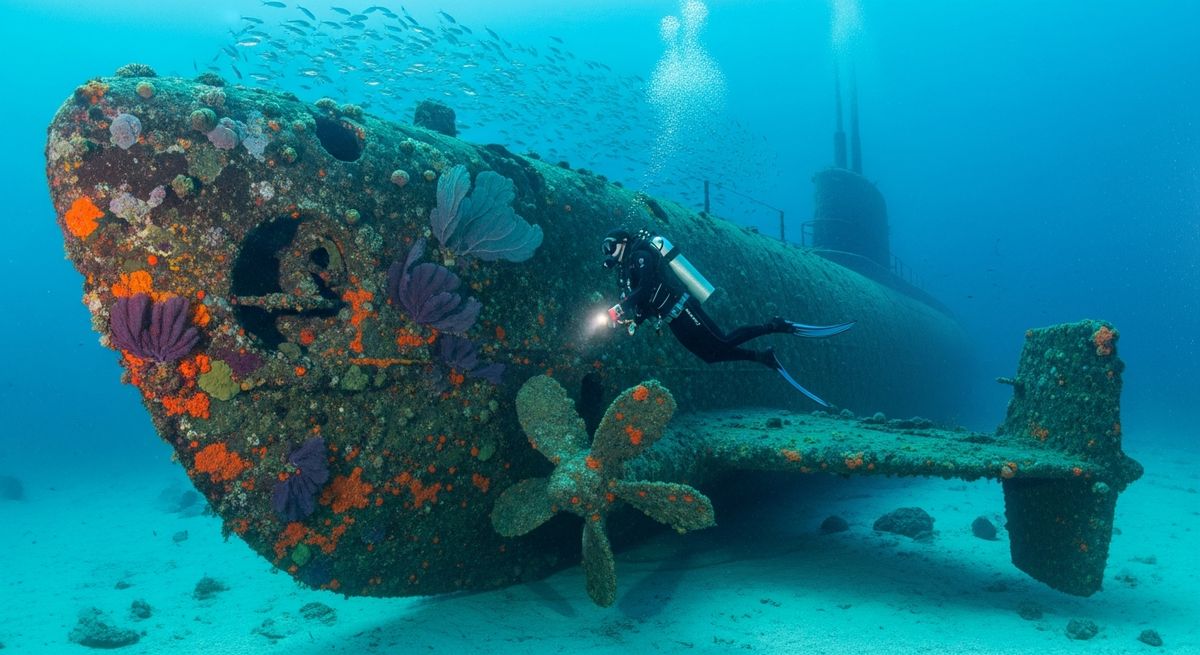
We’ve got to be honest, the Scottish East Coast isn’t often our first pick for a casual dive, but the Archangel is a real exception, a standout site if you get the conditions right. This isn’t a deep dive, sitting at a maximum of 10 metres, so it’s perfect for extending bottom time and really soaking in the history. We love that you can genuinely explore the remains of this 100-metre steamship, built back in 1910. The bow section is particularly intact and quite dramatic, rising from the seabed. You’ll find the wreck well broken in places, but those five huge boilers are still very prominent, a fantastic landmark for navigation. We’ve seen good-sized cod and pollock hanging around the more sheltered sections, and the metalwork is blanketed in plumose anemones, creating a soft, colourful fuzz. Look closely in the nooks and crannies for squat lobsters. Our favourite time to dive it is on a slack tide, with a rising sun, the low angle light really brings out the textures of the wreck. Be prepared for potentially limited visibility, it’s the North Sea after all, but on a good day, it’s incredibly atmospheric.
Typical ARCHANGEL (POSSIBLY) Dive Profile
Illustrative profile based on site depth and type. Actual dive profiles vary - always follow your dive computer and training.
Safety Notes
Wreck site - avoid penetration without wreck diving certification. Watch for sharp metal and entanglement hazards.
ARCHANGEL (POSSIBLY) Wreck History
Year Sunk
1941
Vessel Type
passenger ship
Cause
aircraft
Tonnage
2,488 GRT
The SS Archangel, originally christened the SS St. Petersburg in 1910, was a fast and modern passenger ferry built for the Great Eastern Railway. She served the vital route connecting Britain with continental Europe before being called into service as a troop transport during both World Wars. Her powerful triple-expansion steam turbines made her a valuable asset for moving personnel quickly and efficiently.
On May 16, 1941, her wartime service was cut short when she was attacked by German aircraft off the Scottish coast. The aerial assault was successful, and the ship sank to the seabed. The wreck was later subject to extensive commercial salvage operations, which, combined with the force of the sinking, broke the vessel apart and scattered her remains over a considerable area.
This site, recorded at a depth of 10 metres, represents one part of the extensive debris field of the Archangel. Wreck sites are often recorded as multiple entries when they are heavily broken, with each entry marking a significant section. Divers exploring this area will find a different perspective of the wreck, likely encountering sections of hull plating, machinery, and framework distinct from other parts of the site, all teeming with the rich marine life of the Scottish coast.
Reviews for ARCHANGEL (POSSIBLY)
Conditions
Ocean conditions, forecast and tides for ARCHANGEL (POSSIBLY)
Plan & book
Ways to dive Scottish East Coast & Borders, from day trips to liveaboards.
Day trips & courses
via GetYourGuideGuided dives, courses and snorkel trips with instant booking.
Find dive trips in Scottish East Coast & BordersPlaces to stay
via Booking.comHotels and dive resorts near Scottish East Coast & Borders.
Search stays in Scottish East Coast & BordersDive insurance
Most travel insurance excludes or limits scuba. Check what you need before you go.
Dive insurance explainedPartner links: we may earn a commission if you book, at no extra cost to you. How we make money
Where to Stay near ARCHANGEL (POSSIBLY)
Prices from Booking.com. We may earn a commission at no extra cost to you.