ASHGROVE
Protected Area
Forth Islands
Why dive here
With 112+ marine species recorded in the area - including dolphins, dwarf minke whales, humpback whales, ocean sunfish (mola mola) and orcas - ASHGROVE offers some of Scottish East Coast & Borders's richest wreck diving.
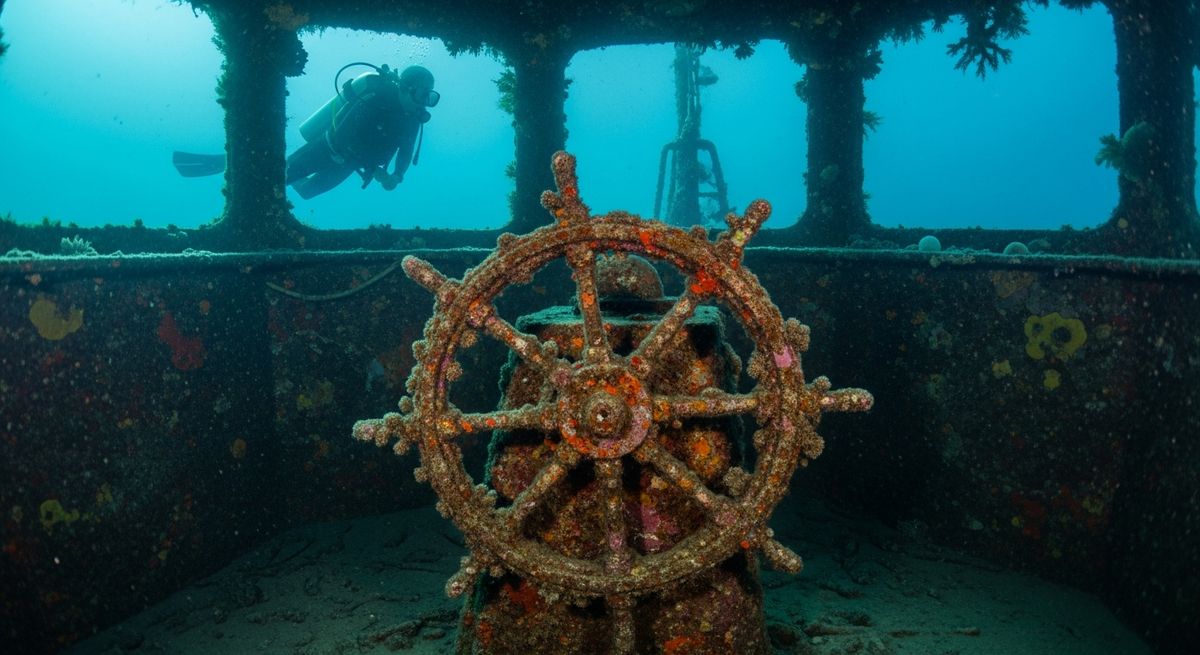
The Ashgrove, a steamship that met its end on the Methil sea wall back in 1912, is a fascinating shore dive, though perhaps not for the reasons you'd initially expect. At barely a meter deep, it’s not about grand coral formations or pelagic encounters here. Instead, we love it for its sheer accessibility and the way it connects you directly to a piece of maritime history. You're essentially wading into an iron hulk that’s been slowly reclaiming itself for over a century. What you'll find is a scatter of metal plates and ribs, surprisingly well-preserved in the chilly North Sea. We’ve spent hours just poking around the fragmented hull, watching crabs scuttle between barnacle-encrusted beams. It's a fantastic spot for photographers looking for interesting textures and light play, especially on a calm day when the surface isn't too choppy. Our favourite time to visit is on a falling tide, just before low water, when more of the wreck gets exposed and the ambient light truly shows off the rust-coloured ironwork. It’s definitely one for the history buffs and macro enthusiasts – think blennies peeking out from behind a rivet, or an anemone clinging to a bent plate. Visibility can be a bit hit or miss, typical of the Firth of Forth, but even in a bit of murk, the sheer presence of the wreck is quite something.
Typical ASHGROVE Dive Profile
Illustrative profile based on site depth and type. Actual dive profiles vary - always follow your dive computer and training.
Safety Notes
Wreck site - avoid penetration without wreck diving certification. Watch for sharp metal and entanglement hazards.
ASHGROVE Wreck History
Year Sunk
1912
Vessel Type
cargo ship
Cause
grounding
Originally christened the HOLDERNESS, the ASHGROVE was a classic iron screw steamship built in 1882 by Earl's Co Ltd in Hull. Powered by a two-cylinder compound engine, she was a typical coastal freighter of the late Victorian era, reliably transporting cargo around the United Kingdom's busy waterways for three decades.
Her final voyage concluded in January 1912 on the Scottish East Coast. During a period of poor weather, the ASHGROVE was driven hard onto the sea wall at Methil. The force of the impact was catastrophic, and the vessel was damaged beyond repair. Declared a total loss, her hull was abandoned to the relentless waves and tides of the North Sea.
Resting in a mere meter of water, the ASHGROVE is less of a scuba dive and more of a historical artifact to be explored at the water's edge. Over a century of exposure to the harsh coastal environment has left the wreck heavily broken and scattered. It serves as an interesting shore exploration for those looking to connect with a piece of local maritime history, a testament to a time when steam was king.
Nearest Dive Centres to ASHGROVE
Dive shops near ASHGROVE
View all dive centres in Scottish East Coast & BordersReviews for ASHGROVE
Conditions
Ocean conditions, forecast and tides for ASHGROVE
Plan & book
Ways to dive Scottish East Coast & Borders, from day trips to liveaboards.
Day trips & courses
via GetYourGuideGuided dives, courses and snorkel trips with instant booking.
Find dive trips in Scottish East Coast & BordersPlaces to stay
via Booking.comHotels and dive resorts near Scottish East Coast & Borders.
Search stays in Scottish East Coast & BordersDive insurance
Most travel insurance excludes or limits scuba. Check what you need before you go.
Dive insurance explainedPartner links: we may earn a commission if you book, at no extra cost to you. How we make money
Where to Stay near ASHGROVE
Prices from Booking.com. We may earn a commission at no extra cost to you.