ATHELDUKE
Protected Area
Farnes East
Why dive here
With 112+ marine species recorded in the area - including dolphins, dwarf minke whales, humpback whales, ocean sunfish (mola mola) and orcas - ATHELDUKE offers some of Scottish East Coast & Borders's richest wreck diving.
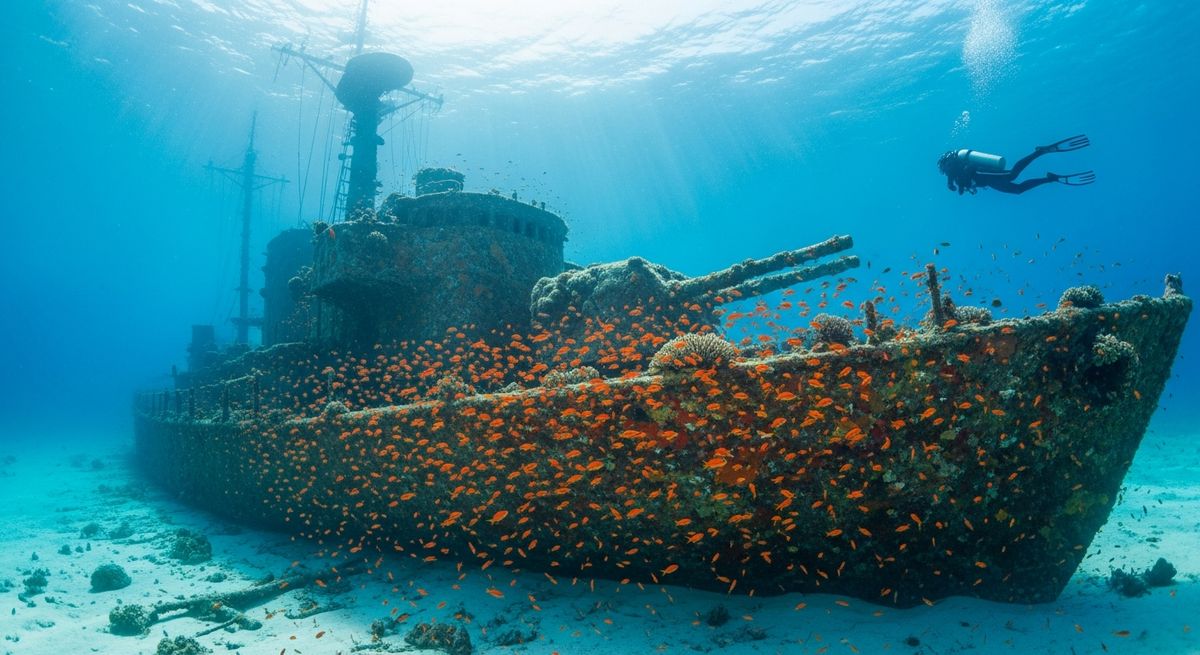
The ATHELDUKE, a tanker sunk in 1945, is a deep, serious wreck dive off the Scottish East Coast. At 54 metres, this isn’t for the casual diver. What you get for the effort, though, is a beautifully intact vessel, 121 metres long, sitting upright and still very much a ship. We love dropping onto the stern, where those twin bronze propellers are still incredibly striking, almost glowing in the low light. The sheer scale of the engine room here is immense, a cavern of machinery to explore, and the depth means the light is always ethereal, a blue gloom that really brings the history alive. Visibility can be highly variable, as you’d expect for the North Sea, but on a good day, you can appreciate the full length of her. Look out for the resident ling and conger eels that have made the hold their home; they are often massive down there. This is a dive for experienced wreck enthusiasts, those who appreciate the silence and the challenge of a proper deep penetration, where meticulous planning and gas management are paramount. Our favourite approach is to take it slow, really soaking in the industrial archaeology and imagining the last moments of this grand old tanker.
Typical ATHELDUKE Dive Profile
Illustrative profile based on site depth and type. Actual dive profiles vary - always follow your dive computer and training.
Safety Notes
Maximum depth 54m exceeds recreational limits (40m). Technical diving certification and equipment required.
Wreck site - avoid penetration without wreck diving certification. Watch for sharp metal and entanglement hazards.
Always perform a 3-minute safety stop at 5m before surfacing.
ATHELDUKE Wreck History
Year Sunk
1945
Vessel Type
tanker
Cause
torpedo
Tonnage
8,966 GRT
The ATHELDUKE was a large British molasses tanker built in 1929. A powerful vessel for its time, it was distinguished by its aft-positioned 12-cylinder oil engine and impressive twin bronze propellers. It served throughout World War II, a dangerous and vital role, transporting essential resources across treacherous seas. Its luck ran out just weeks before the end of the war in Europe, a testament to the relentless nature of the U-boat campaign to the very end.
On April 16, 1945, while sailing off the Scottish coast, the ATHELDUKE was spotted by the German submarine U-1274. A single torpedo struck the tanker, sinking the 8,966-ton vessel and marking it as one of the last Allied ships lost to enemy action in the Atlantic. The sinking was a tragic loss of life and cargo so close to the war's conclusion.
Today, the ATHELDUKE lies at a depth of 54 meters, placing it firmly in the realm of technical diving. For those with the requisite training and experience, the wreck is a spectacular sight. The cold, dark waters of the North Sea have preserved it remarkably well. The sheer size of the tanker is awe-inspiring, but the main attraction for many divers is the stern section, where one can still see the enormous twin bronze propellers, a highlight of this challenging and historic deep dive.
Reviews for ATHELDUKE
Conditions
Ocean conditions, forecast and tides for ATHELDUKE
Plan & book
Ways to dive Scottish East Coast & Borders, from day trips to liveaboards.
Day trips & courses
via GetYourGuideGuided dives, courses and snorkel trips with instant booking.
Find dive trips in Scottish East Coast & BordersPlaces to stay
via Booking.comHotels and dive resorts near Scottish East Coast & Borders.
Search stays in Scottish East Coast & BordersDive insurance
Most travel insurance excludes or limits scuba. Check what you need before you go.
Dive insurance explainedPartner links: we may earn a commission if you book, at no extra cost to you. How we make money
Where to Stay near ATHELDUKE
Prices from Booking.com. We may earn a commission at no extra cost to you.