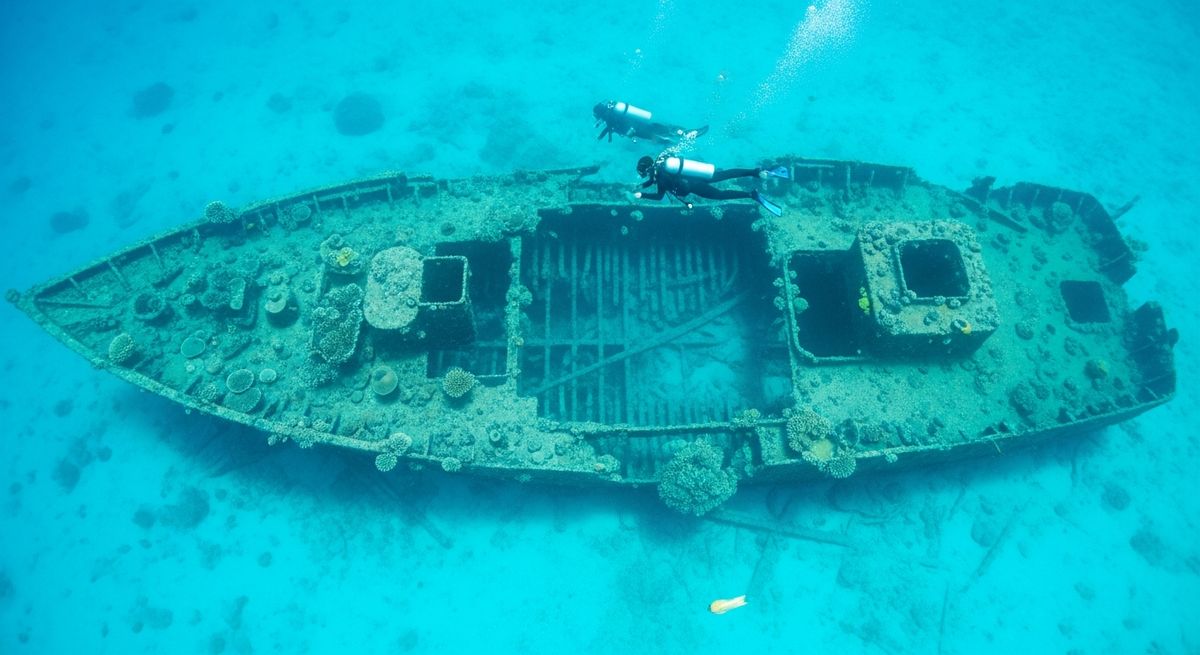
ATHELDUKE (PART)
Protected Area
Farnes East
Why dive here
With 112+ marine species recorded in the area - including dolphins, dwarf minke whales, humpback whales, ocean sunfish (mola mola) and orcas - ATHELDUKE (PART) offers some of Scottish East Coast & Borders's richest wreck diving.
The Athelduke, she’s a proper monster down there, a deep dive for sure at 55 metres, but what a reward. We’re talking about a huge tanker, 121 metres long, and the sheer scale of it hits you as you descend through that often-murky Scottish water. It’s a site for experienced wreck hounds, those who appreciate the silence and the chill of the deep, and who don’t mind getting down there for a proper look around. What we love most about the Athelduke is the intact stern. Those twin bronze propellers are still there, surprisingly clean despite the decades on the seabed, and they just glow under a torch beam. The whole aft section is fantastic for exploration, with plenty of nooks and crannies to peer into, though penetration is for the properly trained. Look for the wolf fish lurking in the deeper recesses, and the massive ling that seem to own certain parts of the wreck. It’s a big canvas for marine life, with plumose anemones carpeting sections and providing a splash of colour against the rusted steel. The visibility can be challenging, even for the East Coast, so pick a day with minimal swell and aim for slack water to truly appreciate her. Our favourite part is navigating the upper deck structures, imagining the ship in her working days, before she met her end in 1945. It’s a humbling experience.
Typical ATHELDUKE (PART) Dive Profile
Illustrative profile based on site depth and type. Actual dive profiles vary - always follow your dive computer and training.
Safety Notes
Maximum depth 55m exceeds recreational limits (40m). Technical diving certification and equipment required.
Wreck site - avoid penetration without wreck diving certification. Watch for sharp metal and entanglement hazards.
Always perform a 3-minute safety stop at 5m before surfacing.
ATHELDUKE (PART) Wreck History
Year Sunk
1945
Vessel Type
tanker
Cause
torpedo
Tonnage
8,466 GRT
The Atheluke was a British molasses tanker built in 1929 for the United Molasses Co. For sixteen years, she served her vital, if unglamorous, role in the merchant navy, surviving the worst of the Battle of the Atlantic. Her luck ran out in the final weeks of the war in Europe. On April 16, 1945, while sailing off the Scottish coast, she was struck by a torpedo from the German U-boat U-1274. The tanker sank quickly, a late casualty in a long and brutal conflict.
Today, the Atheluke lies at a depth of 55 metres, making it a serious dive for experienced technical divers. The wreck is broken, a testament to the violent explosion that sent her to the seabed. The stern section is the most impressive part, sitting upright and featuring the ship's massive, distinctive twin bronze propellers. This deep Scottish wreck offers a poignant glimpse into the final moments of the Second World War at sea.
Reviews for ATHELDUKE (PART)
Conditions
Ocean conditions, forecast and tides for ATHELDUKE (PART)
Plan & book
Ways to dive Scottish East Coast & Borders, from day trips to liveaboards.
Day trips & courses
via GetYourGuideGuided dives, courses and snorkel trips with instant booking.
Find dive trips in Scottish East Coast & BordersPlaces to stay
via Booking.comHotels and dive resorts near Scottish East Coast & Borders.
Search stays in Scottish East Coast & BordersDive insurance
Most travel insurance excludes or limits scuba. Check what you need before you go.
Dive insurance explainedPartner links: we may earn a commission if you book, at no extra cost to you. How we make money
Where to Stay near ATHELDUKE (PART)
Prices from Booking.com. We may earn a commission at no extra cost to you.