ATWING (POSSIBLY)
Protected Area
Teesmouth and Cleveland Coast
Why dive here
With 112+ marine species recorded in the area - including dolphins, dwarf minke whales, humpback whales, ocean sunfish (mola mola) and orcas - ATWING (POSSIBLY) offers some of Scottish East Coast & Borders's richest wreck diving.
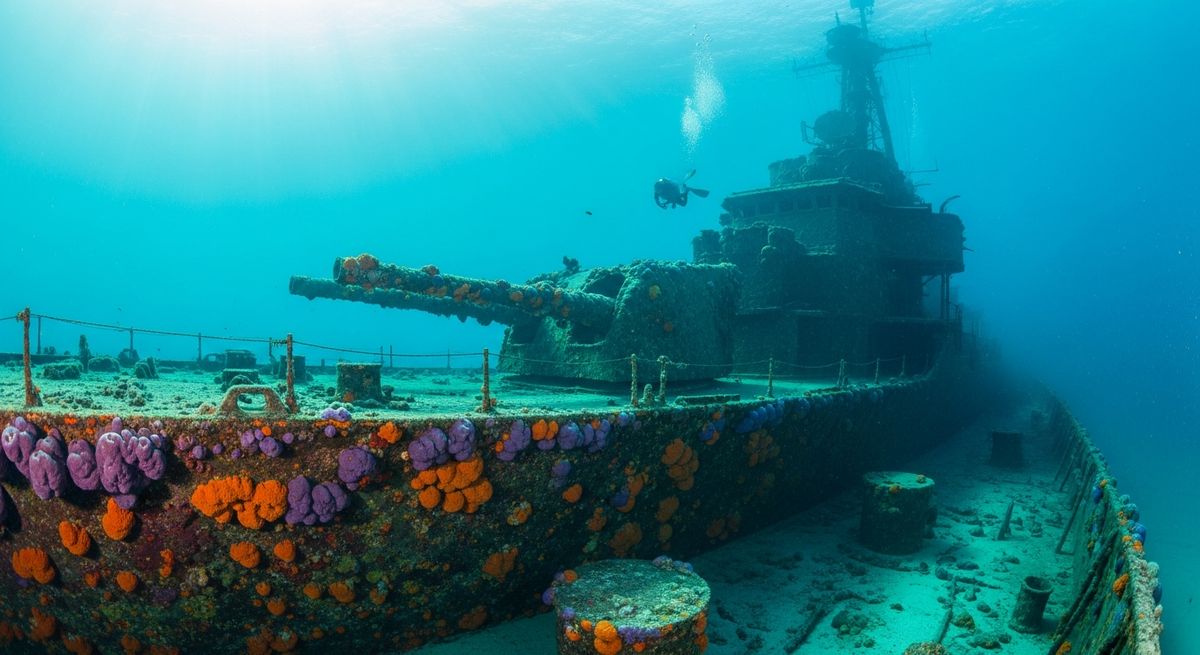
The ATWING is one of those wrecks we keep coming back to off the Scottish East Coast, even if we’re never entirely sure it’s actually the ATWING. That’s part of the charm, frankly. Dropping down to 49 metres, you’re looking at a serious dive, so save this one for when you’re comfortable with depth and maybe a bit of current. What you’ll find is a largely intact steam trawler, probably from the early 20th century, upright and starting to sag in on itself. We love the way the deck plating has peeled back in places, creating these little caves for lobsters and conger eels. Run your hand over the bow and you can still feel the rivets holding her together. It's dark down there, even on a sunny day, so good lights are non-negotiable. Our favourite spot is usually around the stern, where the prop shaft disappears into the gloom, often with a huge ling lurking nearby. This is a dive for wreck lovers who appreciate history and don't mind a bit of a challenge.
Typical ATWING (POSSIBLY) Dive Profile
Illustrative profile based on site depth and type. Actual dive profiles vary - always follow your dive computer and training.
Safety Notes
Maximum depth 49m exceeds recreational limits (40m). Technical diving certification and equipment required.
Wreck site - avoid penetration without wreck diving certification. Watch for sharp metal and entanglement hazards.
Always perform a 3-minute safety stop at 5m before surfacing.
ATWING (POSSIBLY) Wreck History
Vessel Type
unknown
Cause
unknown
Deep off the Scottish East Coast lies a mystery known only as the 'Atwing'. This unidentified wreck presents a compelling challenge for technical divers seeking true exploration. With no known history, date of sinking, or even a confirmed name, every dive on this site is a mission of discovery. The vessel's identity and the story of how it came to rest in the cold, dark waters are secrets waiting to be unlocked by those with the skills and training to reach it.
Sitting at a depth of 49 meters, this is a serious dive reserved for experienced, properly equipped technical divers. The 'Non-dangerous' classification suggests the wreck is relatively stable, without the immediate hazards of extensive netting or unexploded ordnance, but the depth itself demands the utmost respect and meticulous planning. For those who venture down, the Atwing offers the rare chance to explore a piece of history that has yet to be written.
Nearest Dive Centres to ATWING (POSSIBLY)
Dive shops near ATWING (POSSIBLY)
Sunderland Scuba Centre
The Diving Centre Ltd
Aquanorth
Scuba-Life
Reviews for ATWING (POSSIBLY)
Conditions
Ocean conditions, forecast and tides for ATWING (POSSIBLY)
Plan & book
Ways to dive Scottish East Coast & Borders, from day trips to liveaboards.
Day trips & courses
via GetYourGuideGuided dives, courses and snorkel trips with instant booking.
Find dive trips in Scottish East Coast & BordersPlaces to stay
via Booking.comHotels and dive resorts near Scottish East Coast & Borders.
Search stays in Scottish East Coast & BordersDive insurance
Most travel insurance excludes or limits scuba. Check what you need before you go.
Dive insurance explainedPartner links: we may earn a commission if you book, at no extra cost to you. How we make money
Where to Stay near ATWING (POSSIBLY)
Prices from Booking.com. We may earn a commission at no extra cost to you.