AURORA
Protected Area
Teesmouth and Cleveland Coast
Why dive here
With 112+ marine species recorded in the area - including dolphins, dwarf minke whales, humpback whales, ocean sunfish (mola mola) and orcas - AURORA offers some of Scottish East Coast & Borders's richest wreck diving.
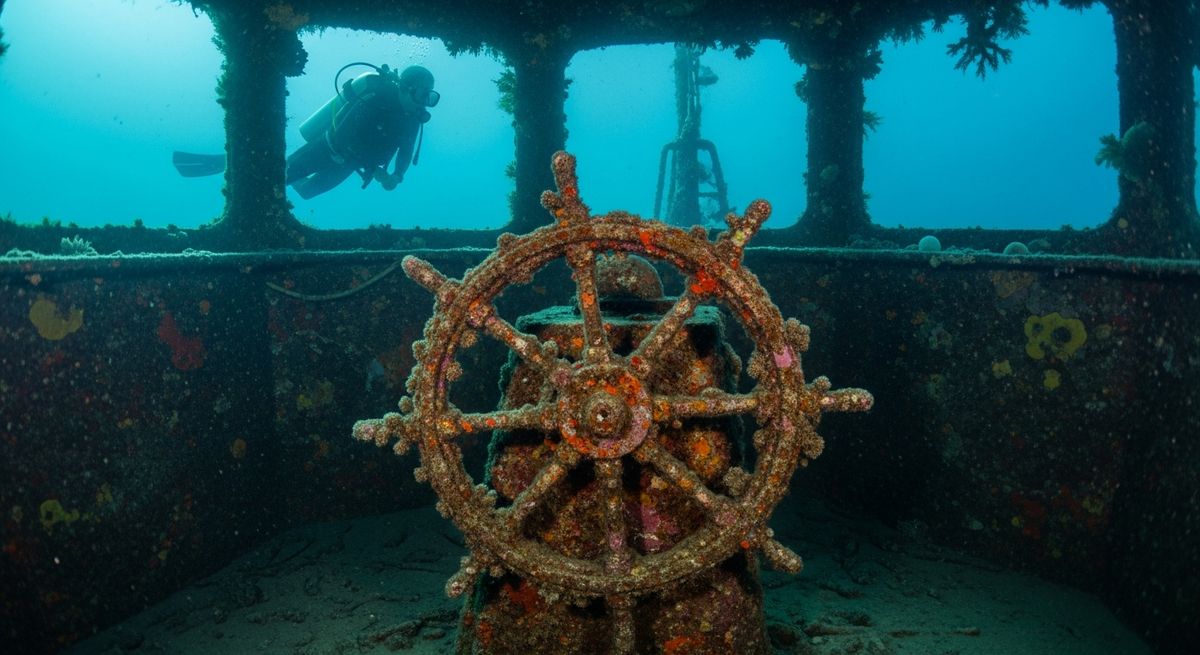
The **Aurora** isn't just another wreck; it's a window into maritime history, lying perfectly upright at 36 metres, a silent testament to a November storm in 1885. We love how intact she is, her iron hull a dark silhouette against the often moody Scottish light. Swimming along her length, you can still trace the lines of her deck, the structure of the bridge, and even peer into the cargo holds, now a gloomy home for enormous conger eels. What truly makes the **Aurora** a standout for us is the atmosphere. It's a deep dive, yes, but the visibility here can be surprisingly good, especially on a settled day. Keep an eye out for nudibranchs, particularly along the deck plating, and the occasional inquisitive wrasse darting between the frames. It’s a site for experienced wreck divers who appreciate exploration and the quiet grandeur of a vessel frozen in time, rather than a riot of colour. We'd suggest checking the tides carefully, as currents can pick up, making the descent and ascent a bit of a workout.
Typical AURORA Dive Profile
Illustrative profile based on site depth and type. Actual dive profiles vary - always follow your dive computer and training.
Safety Notes
Deep dive (36m) - monitor air consumption closely. Advanced certification recommended.
Wreck site - avoid penetration without wreck diving certification. Watch for sharp metal and entanglement hazards.
Always perform a 3-minute safety stop at 5m before surfacing.
AURORA Wreck History
Year Sunk
1885
Vessel Type
cargo ship
Cause
unknown
The steamship Aurora was a product of the booming industrial age, an iron-hulled vessel built in 1883 by the renowned Raylton & Dixon & Co. shipyard in Middlesbrough. Owned by Ebdy, Backlin & Co. of West Hartlepool, she was powered by a modern compound expansion engine turning a single screw. Her career, however, was tragically short. Just two years after her launch, in November 1885, the Aurora was lost to the waves off the Scottish East Coast, taking the story of her final moments with her to the seabed.
Today, the Aurora lies at 36 meters, offering a fascinating glimpse into 19th-century shipbuilding. As with many wrecks of this vintage, the iron hull plates have largely collapsed, spreading the wreckage across the seafloor. However, the more robust components have survived the passage of time. The prime attractions for visiting divers are the ship's boiler and the impressive compound engine, which stand proud of the surrounding debris. Exploring these remnants of Victorian engineering provides a direct connection to a bygone era of steam and steel.
Nearest Dive Centres to AURORA
Dive shops near AURORA
Sunderland Scuba Centre
The Diving Centre Ltd
Aquanorth
Scuba-Life
Aqua Purists
Newcastle University Sub Aqua Society
Reviews for AURORA
Conditions
Ocean conditions, forecast and tides for AURORA
Plan & book
Ways to dive Scottish East Coast & Borders, from day trips to liveaboards.
Day trips & courses
via GetYourGuideGuided dives, courses and snorkel trips with instant booking.
Find dive trips in Scottish East Coast & BordersPlaces to stay
via Booking.comHotels and dive resorts near Scottish East Coast & Borders.
Search stays in Scottish East Coast & BordersDive insurance
Most travel insurance excludes or limits scuba. Check what you need before you go.
Dive insurance explainedPartner links: we may earn a commission if you book, at no extra cost to you. How we make money
Where to Stay near AURORA
Prices from Booking.com. We may earn a commission at no extra cost to you.