BAKU STANDARD
Protected Area
Milton Ness
Why dive here
With 112+ marine species recorded in the area - including dolphins, dwarf minke whales, humpback whales, ocean sunfish (mola mola) and orcas - BAKU STANDARD offers some of Scottish East Coast & Borders's richest wreck diving.
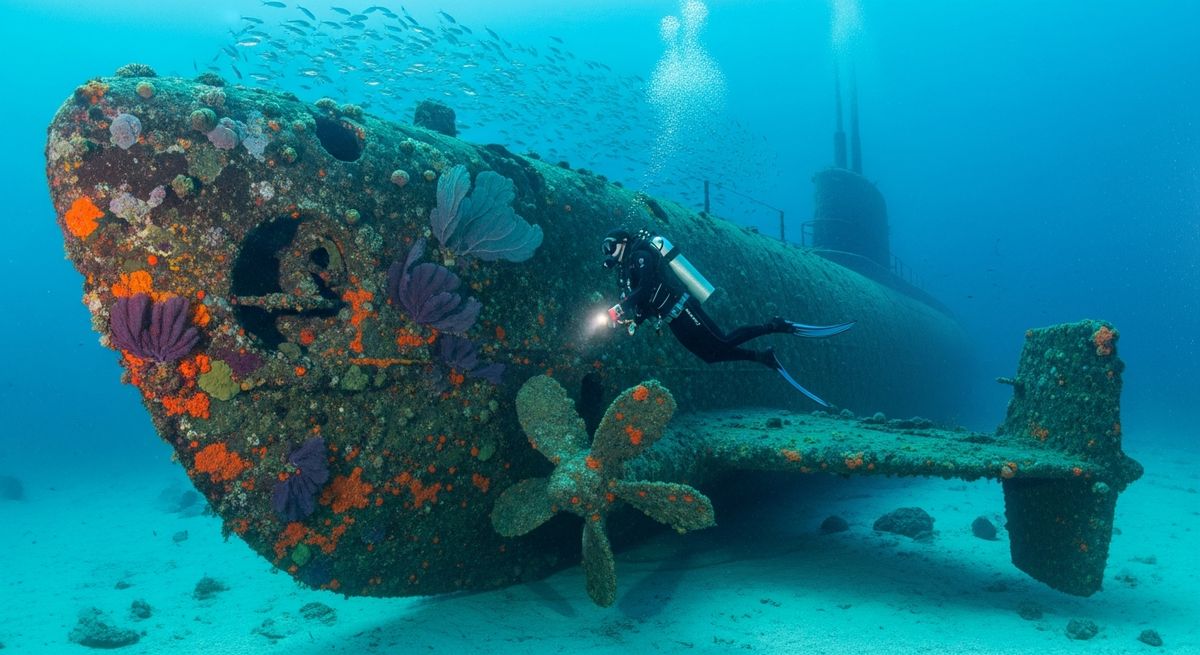
The *Baku Standard* is a proper piece of history, and we love a wreck with a story. Sitting upright at 44 metres, she’s a big tanker, over 100 metres long, sunk by a mine back in 1918. Dropping down, you hit the bow first, often shrouded in a green twilight, and the sheer scale starts to sink in. We always head for the midships, where the two huge boilers are, and the triple-expansion engine. It’s an imposing sight, everything encrusted with plumose anemones, their white tentacles swaying in the current. Visibility can be a gamble, as with many East Coast sites, but when it’s good, the detail on the wreck is fantastic. You’ll find wolf fish tucked into crevices, their grumpy faces peering out, and often a few ling hanging around the deeper sections. Our favourite part is navigating the holds, seeing the huge cargo spaces now home to crabs and lobsters. It’s a dive for experienced wreck enthusiasts who appreciate the challenge and the atmosphere of a deep, historical wreck. Come prepared for cold water, bring good lights, and a proper drysuit.
Typical BAKU STANDARD Dive Profile
Illustrative profile based on site depth and type. Actual dive profiles vary - always follow your dive computer and training.
Safety Notes
Maximum depth 44m exceeds recreational limits (40m). Technical diving certification and equipment required.
Wreck site - avoid penetration without wreck diving certification. Watch for sharp metal and entanglement hazards.
Always perform a 3-minute safety stop at 5m before surfacing.
BAKU STANDARD Wreck History
Year Sunk
1918
Vessel Type
tanker
Cause
torpedo
Tonnage
3,708 GRT
The S.S. 'BAKU STANDARD' was a steam-powered tanker built in 1893 by the renowned W.G. Armstrong, Mitchell & Co. shipyard. For a quarter of a century, she plied the seas, a workhorse of the early oil industry. Her service coincided with the outbreak of World War I, a perilous time for merchant shipping. On February 11, 1918, while sailing off the Scottish coast, she became a target of the German U-boat UB-86. A single torpedo struck the vessel, sealing her fate. The 'BAKU STANDARD' sank beneath the cold North Sea waves, becoming another casualty of the unrestricted submarine warfare that defined the era.
Today, the 'BAKU STANDARD' lies at a depth of 44 meters, making her an exciting challenge for experienced and technically certified divers. The wreck is a classic North Sea dive: dark, atmospheric, and rich with history. Divers can explore the remains of this late-Victorian vessel, identifying key features like her two large boilers and the triple-expansion steam engine mentioned in her original specifications. The wreck is a poignant memorial to the Great War's maritime conflict, offering a deep, rewarding dive into a significant moment in history.
Reviews for BAKU STANDARD
Conditions
Ocean conditions, forecast and tides for BAKU STANDARD
Plan & book
Ways to dive Scottish East Coast & Borders, from day trips to liveaboards.
Day trips & courses
via GetYourGuideGuided dives, courses and snorkel trips with instant booking.
Find dive trips in Scottish East Coast & BordersPlaces to stay
via Booking.comHotels and dive resorts near Scottish East Coast & Borders.
Search stays in Scottish East Coast & BordersDive insurance
Most travel insurance excludes or limits scuba. Check what you need before you go.
Dive insurance explainedPartner links: we may earn a commission if you book, at no extra cost to you. How we make money
Where to Stay near BAKU STANDARD
Prices from Booking.com. We may earn a commission at no extra cost to you.