BALTANGLIA
Protected Area
Farnes East
Why dive here
With 112+ marine species recorded in the area - including dolphins, dwarf minke whales, humpback whales, ocean sunfish (mola mola) and orcas - BALTANGLIA offers some of Scottish East Coast & Borders's richest wreck diving.
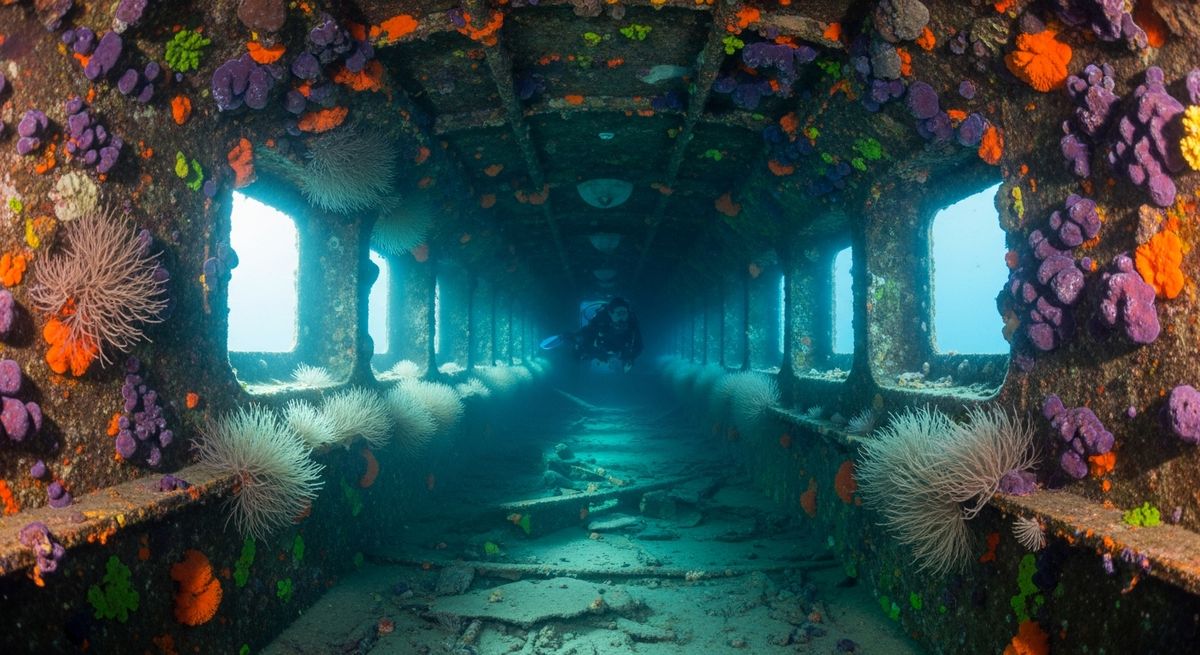
The Baltanglia, a casualty of a January storm in 1940, lies upright and largely intact at 59 metres – a proper deep wreck for those with the training. We’ve always been drawn to wrecks that tell a story, and the Baltanglia certainly does. Descending onto her deck, the scale of this 77-metre steamer becomes apparent. The bridge structure is still there, and you can peer into what was once the wheelhouse, though the cold Scottish waters have long since claimed any wooden fittings. Our favourite part is exploring the stern; the massive propeller is still in place, often covered in dense clusters of plumose anemones, their white tentacles swaying with the current. Keep an eye out for conger eels lurking in the deeper holds, and we’ve spotted wolf fish patrolling the outer edges of the wreck on several occasions. Visibility here can be excellent on a good day, but it’s still the North Sea, so be prepared for a bit of gloom. It’s a serious dive, one for experienced technical divers comfortable with deco, but the reward is a genuinely impressive piece of history colonised by robust marine life.
Typical BALTANGLIA Dive Profile
Illustrative profile based on site depth and type. Actual dive profiles vary - always follow your dive computer and training.
Safety Notes
Maximum depth 59m exceeds recreational limits (40m). Technical diving certification and equipment required.
Wreck site - avoid penetration without wreck diving certification. Watch for sharp metal and entanglement hazards.
Always perform a 3-minute safety stop at 5m before surfacing.
BALTANGLIA Wreck History
Year Sunk
1940
Vessel Type
cargo ship
Cause
torpedo
Tonnage
1,523 GRT
The SS Baltanglia was a British steam cargo ship with a varied career before its wartime demise. Built in 1921 by the Ardrossan Dry Dock & Shipbuilding Co., it began life as the Laatefos, later being renamed the Langford in 1923 before finally sailing as the Baltanglia. With a triple-expansion engine and a single screw, it was a typical freighter of its era, plying the trade routes of the North Sea and the Atlantic.
Its service came to a violent end in the early months of World War II. On January 23, 1940, while sailing unescorted from Norway to Leith, Scotland, with a cargo of wood pulp, the Baltanglia was intercepted by the German U-boat U-19. A single torpedo struck the vessel, sinking it swiftly and tragically with the loss of all 20 crew members. The attack was a stark example of the brutal U-boat campaign that targeted Allied merchant shipping from the war's outset.
Today, the wreck of the Baltanglia lies at a depth of 59 meters off the Scottish coast, placing it firmly in the realm of technical diving. The deep, cold waters have preserved the wreck remarkably well, though it is showing signs of collapse. Divers who make the challenging descent are rewarded with the sight of a largely intact vessel, its boilers and engine visible, standing as a silent memorial to the mariners who were lost in the Battle of the Atlantic.
Reviews for BALTANGLIA
Conditions
Ocean conditions, forecast and tides for BALTANGLIA
Plan & book
Ways to dive Scottish East Coast & Borders, from day trips to liveaboards.
Day trips & courses
via GetYourGuideGuided dives, courses and snorkel trips with instant booking.
Find dive trips in Scottish East Coast & BordersPlaces to stay
via Booking.comHotels and dive resorts near Scottish East Coast & Borders.
Search stays in Scottish East Coast & BordersDive insurance
Most travel insurance excludes or limits scuba. Check what you need before you go.
Dive insurance explainedPartner links: we may earn a commission if you book, at no extra cost to you. How we make money
Where to Stay near BALTANGLIA
Prices from Booking.com. We may earn a commission at no extra cost to you.