BALZAC
Protected Area
Noses Point
Why dive here
With 112+ marine species recorded in the area - including dolphins, dwarf minke whales, humpback whales, ocean sunfish (mola mola) and orcas - BALZAC offers some of Scottish East Coast & Borders's richest wreck diving.
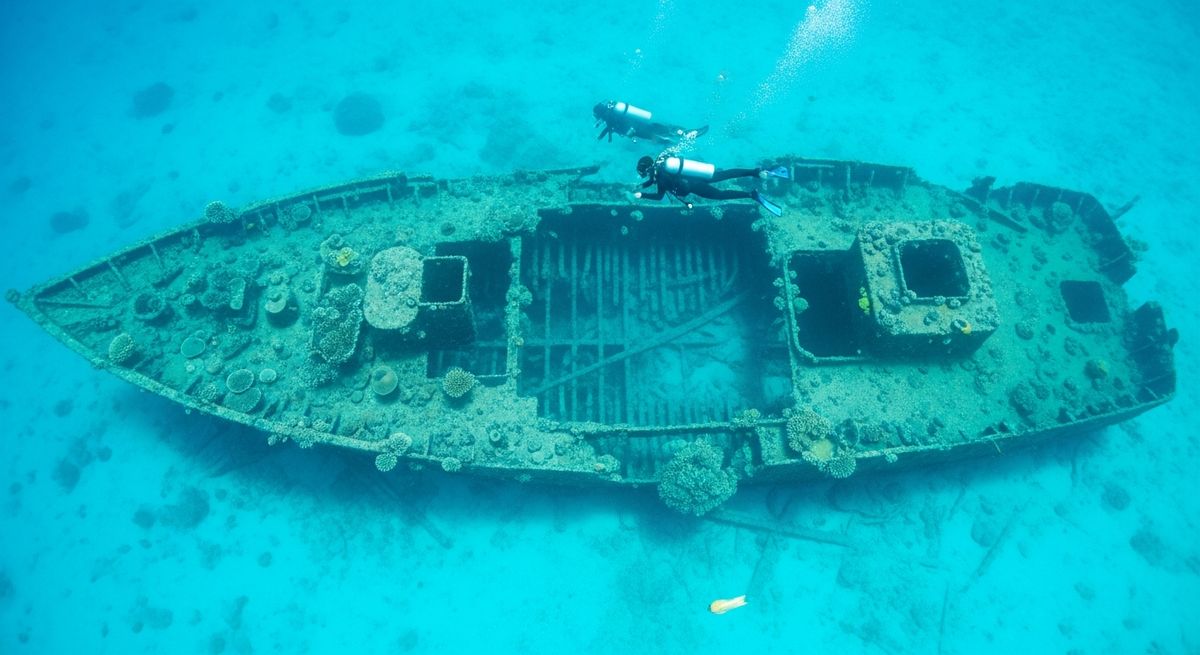
We love the Balzac for its sheer presence on the seabed. It’s a proper ship, sunk in 1940, and you feel that history when you descend. Dropping onto the wreck at 13m, the bow comes into view first, rising up from the sand. The ship is largely intact, with much of its structure still holding together, unlike some of the more broken-up sites around here. You can swim through a few open sections, feeling the cool water swirl around you as you pass through what were once working compartments. Our favourite part is exploring the engine room, where the big 6-cylinder oil engine still sits, a silent monument to its past. Look closely and you’ll find plenty of inquisitive wrasse darting in and out of the plating, and sometimes a ling or a hefty conger eel tucked away in a dark corner. The visibility can be variable, so we'd suggest picking a calm day with minimal swell for the best experience. It’s a site that suits divers who appreciate historical wrecks and enjoy a good rummage.
Typical BALZAC Dive Profile
Illustrative profile based on site depth and type. Actual dive profiles vary - always follow your dive computer and training.
Safety Notes
Wreck site - avoid penetration without wreck diving certification. Watch for sharp metal and entanglement hazards.
Always perform a 3-minute safety stop at 5m before surfacing.
BALZAC Wreck History
Year Sunk
1940
Vessel Type
cargo ship
Cause
air attack
The history of British merchant shipping is dominated by famous companies like Lamport and Holt. Founded in Liverpool in 1845, the line became a major player in the trade routes to the east coast of South America. The company was eventually taken over by the Royal Mail Steam Packet Company in 1911 and later became part of the Vestey Group's Blue Star Line in 1944, before ceasing to trade in 1991. Its legacy is intertwined with the growth of global trade and the great age of steam.
The wreck itself is the Norwegian motor vessel Balzac, owned by A/S Ganger Rolf (Fred Olsen) at the time of her loss. Built in Denmark in 1921, she was a modern vessel for her time. Her career came to an abrupt end on July 26, 1940, during the early stages of World War II. While on passage off the Scottish coast, she fell victim to a German aerial attack and was sunk. Today, the Balzac lies in just 13 meters of water, making her a fantastic and highly accessible wreck for novice divers. The shallow depth allows for long bottom times to explore the scattered remains of this wartime casualty.
Nearest Dive Centres to BALZAC
Dive shops near BALZAC
Sunderland Scuba Centre
The Diving Centre Ltd
Aquanorth
Scuba-Life
Aqua Purists
Newcastle University Sub Aqua Society
Reviews for BALZAC
Conditions
Ocean conditions, forecast and tides for BALZAC
Plan & book
Ways to dive Scottish East Coast & Borders, from day trips to liveaboards.
Day trips & courses
via GetYourGuideGuided dives, courses and snorkel trips with instant booking.
Find dive trips in Scottish East Coast & BordersPlaces to stay
via Booking.comHotels and dive resorts near Scottish East Coast & Borders.
Search stays in Scottish East Coast & BordersDive insurance
Most travel insurance excludes or limits scuba. Check what you need before you go.
Dive insurance explainedPartner links: we may earn a commission if you book, at no extra cost to you. How we make money
Where to Stay near BALZAC
Prices from Booking.com. We may earn a commission at no extra cost to you.