BANGARTH
Protected Area
Coquet to St Mary's
Why dive here
With 112+ marine species recorded in the area - including dolphins, dwarf minke whales, humpback whales, ocean sunfish (mola mola) and orcas - BANGARTH offers some of Scottish East Coast & Borders's richest wreck diving.
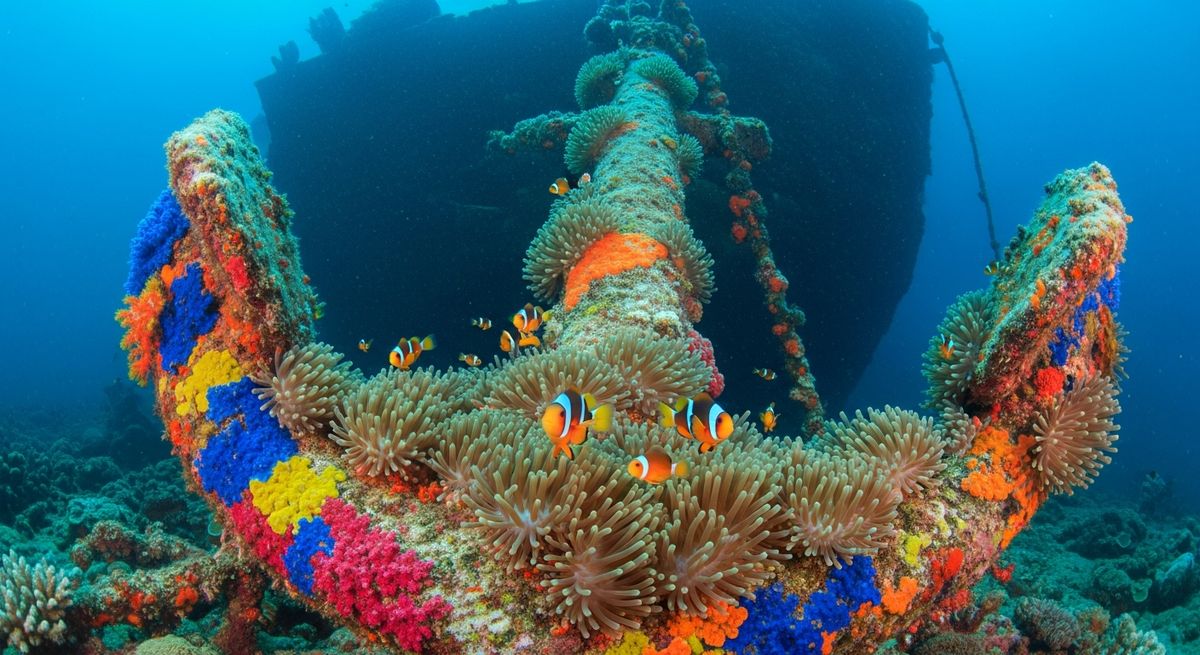
We love a good wreck that tells a story, and Bangarth, off the Scottish East Coast, certainly fits the bill. This auxiliary collier, sunk in 1917, now rests upright at 46 meters, a shadowy silhouette against the green murk. Dropping onto her deck, you’re immediately struck by the sheer scale; 83 metres long, her two boilers are a prominent feature, and you can easily explore the engine room, feeling the tight squeeze as you duck under a bulkhead. Visibility here can be a real lottery, but on a good day, the light filtering down creates an eerie, almost cathedral-like atmosphere within the holds, where cod and ling lurk. We’ve often seen conger eels poking their heads out from twisted metal, and the deck itself is carpeted in jewel anemones and dead man’s fingers. This isn’t a dive for the faint of heart or the inexperienced; the depth and potential for strong currents demand good air consumption and advanced skills. But for those who relish the challenge, Bangarth offers a deep dive into maritime history, a palpable sense of the past clinging to every rivet and plate. Our advice? Pick your slack tide carefully, and be prepared for a proper Scottish adventure.
Typical BANGARTH Dive Profile
Illustrative profile based on site depth and type. Actual dive profiles vary - always follow your dive computer and training.
Safety Notes
Maximum depth 46m exceeds recreational limits (40m). Technical diving certification and equipment required.
Wreck site - avoid penetration without wreck diving certification. Watch for sharp metal and entanglement hazards.
Always perform a 3-minute safety stop at 5m before surfacing.
BANGARTH Wreck History
Year Sunk
1917
Vessel Type
cargo ship
Cause
torpedo
Tonnage
1,873 GRT
Launched in 1906, the SS Bangarth served as a collier, a hardworking steamship designed to transport coal. With the outbreak of World War I, she was put into service as a Royal Navy Auxiliary Collier, tasked with the critical mission of supplying coal to fuel the warships of the British fleet. Her service came to a sudden end on December 13, 1917, while sailing in a convoy off the rugged coast of St Abb's Head, Scotland. She was struck by a torpedo from the German submarine UB-77 and sank quickly, though fortunately, all but two of her crew were rescued.
Lying at 46 meters, the Bangarth is a challenging and rewarding dive for experienced and technical divers. The wreck sits on its port side and remains remarkably intact for a vessel of its age. Its sheer size is impressive, and divers can explore the superstructure, holds, and the prominent boilers and engine block. The dark, cool waters of the North Sea have preserved the wreck well, and it is now draped in anemones and frequented by wolf-fish, ling, and large cod, making it one of the classic deep wreck dives on the Scottish coast.
Nearest Dive Centres to BANGARTH
Dive shops near BANGARTH
Northumbria Scuba Divers
Aquanorth
Scuba-Life
Aqua Purists
Newcastle University Sub Aqua Society
The Diving Centre Ltd
Reviews for BANGARTH
Conditions
Ocean conditions, forecast and tides for BANGARTH
Plan & book
Ways to dive Scottish East Coast & Borders, from day trips to liveaboards.
Day trips & courses
via GetYourGuideGuided dives, courses and snorkel trips with instant booking.
Find dive trips in Scottish East Coast & BordersPlaces to stay
via Booking.comHotels and dive resorts near Scottish East Coast & Borders.
Search stays in Scottish East Coast & BordersDive insurance
Most travel insurance excludes or limits scuba. Check what you need before you go.
Dive insurance explainedPartner links: we may earn a commission if you book, at no extra cost to you. How we make money
Where to Stay near BANGARTH
Prices from Booking.com. We may earn a commission at no extra cost to you.