BEN ATTOW
Protected Area
Isle of May
Why dive here
With 112+ marine species recorded in the area - including dolphins, dwarf minke whales, humpback whales, ocean sunfish (mola mola) and orcas - BEN ATTOW offers some of Scottish East Coast & Borders's richest wreck diving.
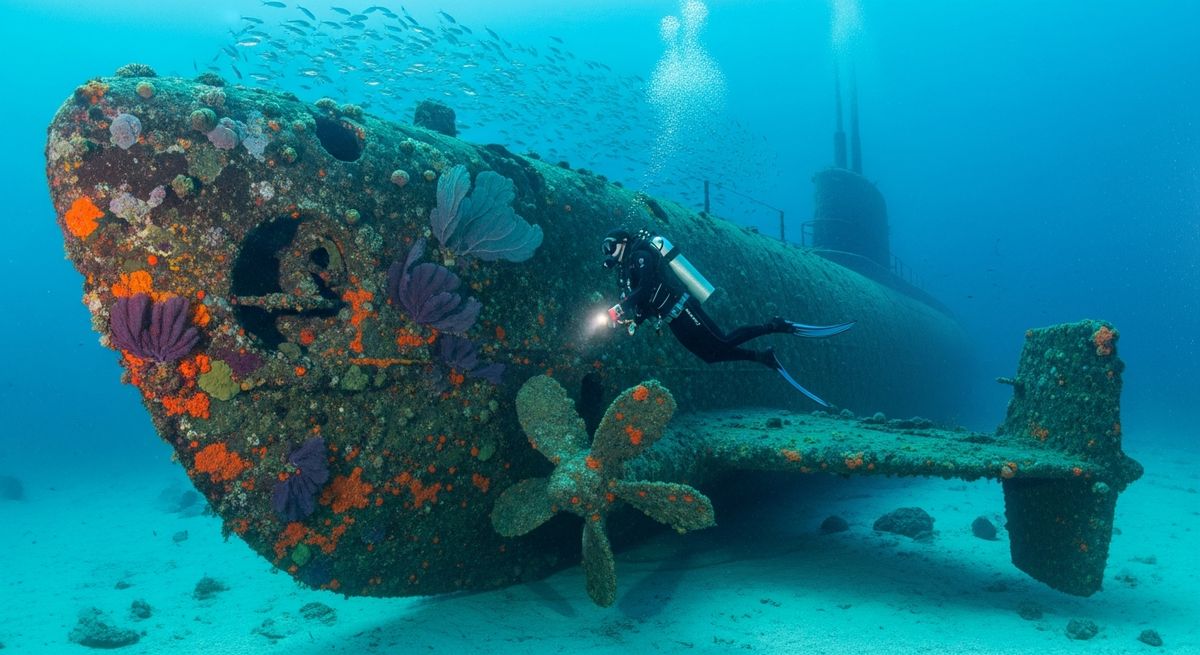
The Ben Attow isn’t a shallow potter, we’ll tell you that much. Dropping onto her takes a bit of commitment, especially when the North Sea decides to be herself. But get down there, and you’re visiting a proper piece of history. This old trawler, built in Aberdeen in 1900, sits upright at 55 metres, a dark silhouette against the murk. We love the way the light filters down, or often just doesn’t, adding to the atmosphere. Her story, mined on her way back to Dundee in 1940, makes the dive feel a bit more poignant. You can still make out the single boiler and the triple-expansion engine, mostly intact, which is always a treat for the mechanical enthusiasts among us. Over the years, she’s become home to some surprisingly vibrant life for a deep wreck in these waters. Expect to see plenty of wrasse darting through the superstructure, conger eels tucked into shadowy corners, and often, some impressive plumose anemones blooming off her plates. It’s a challenging dive, certainly, best suited for experienced divers comfortable with deeper excursions and often limited visibility, but the character of this wreck makes it well worth the effort.
Typical BEN ATTOW Dive Profile
Illustrative profile based on site depth and type. Actual dive profiles vary - always follow your dive computer and training.
Safety Notes
Maximum depth 55m exceeds recreational limits (40m). Technical diving certification and equipment required.
Wreck site - avoid penetration without wreck diving certification. Watch for sharp metal and entanglement hazards.
Always perform a 3-minute safety stop at 5m before surfacing.
BEN ATTOW Wreck History
Year Sunk
1940
Vessel Type
fishing vessel
Cause
unknown
The SS Ben Attow was a quintessential Aberdeen steam trawler, built in 1900 by the renowned Hall Russel shipyard. For four decades, she plied the cold, productive waters of the North Sea, a workhorse of the Scottish fishing fleet. Owned by J. Craig of Aberdeen, she was powered by a triple-expansion steam engine, a testament to the engineering of her time. Her career, like that of many vessels, was cut short by the outbreak of the Second World War.
On February 27, 1940, while on a passage from Dundee for a fishing expedition, the Ben Attow met her fate. In the early, dangerous days of the war at sea, many ships were lost to mines or U-boat attacks. While the specific cause isn't listed, it's highly probable she struck a mine. Today, she rests in 55 meters of water off the Scottish coast. This is a challenging technical dive, reserved for experienced, properly equipped divers. Those who make the descent will find the remains of a historic trawler, a silent monument to the perils faced by civilian sailors during wartime.
Nearest Dive Centres to BEN ATTOW
Dive shops near BEN ATTOW
View all dive centres in Scottish East Coast & BordersReviews for BEN ATTOW
Conditions
Ocean conditions, forecast and tides for BEN ATTOW
Plan & book
Ways to dive Scottish East Coast & Borders, from day trips to liveaboards.
Day trips & courses
via GetYourGuideGuided dives, courses and snorkel trips with instant booking.
Find dive trips in Scottish East Coast & BordersPlaces to stay
via Booking.comHotels and dive resorts near Scottish East Coast & Borders.
Search stays in Scottish East Coast & BordersDive insurance
Most travel insurance excludes or limits scuba. Check what you need before you go.
Dive insurance explainedPartner links: we may earn a commission if you book, at no extra cost to you. How we make money
Where to Stay near BEN ATTOW
Prices from Booking.com. We may earn a commission at no extra cost to you.