BISHOP BURTON (PROBABLY)
Protected Area
Cove
Why dive here
With 112+ marine species recorded in the area - including dolphins, dwarf minke whales, humpback whales, ocean sunfish (mola mola) and orcas - BISHOP BURTON (PROBABLY) offers some of Scottish East Coast & Borders's richest wreck diving.
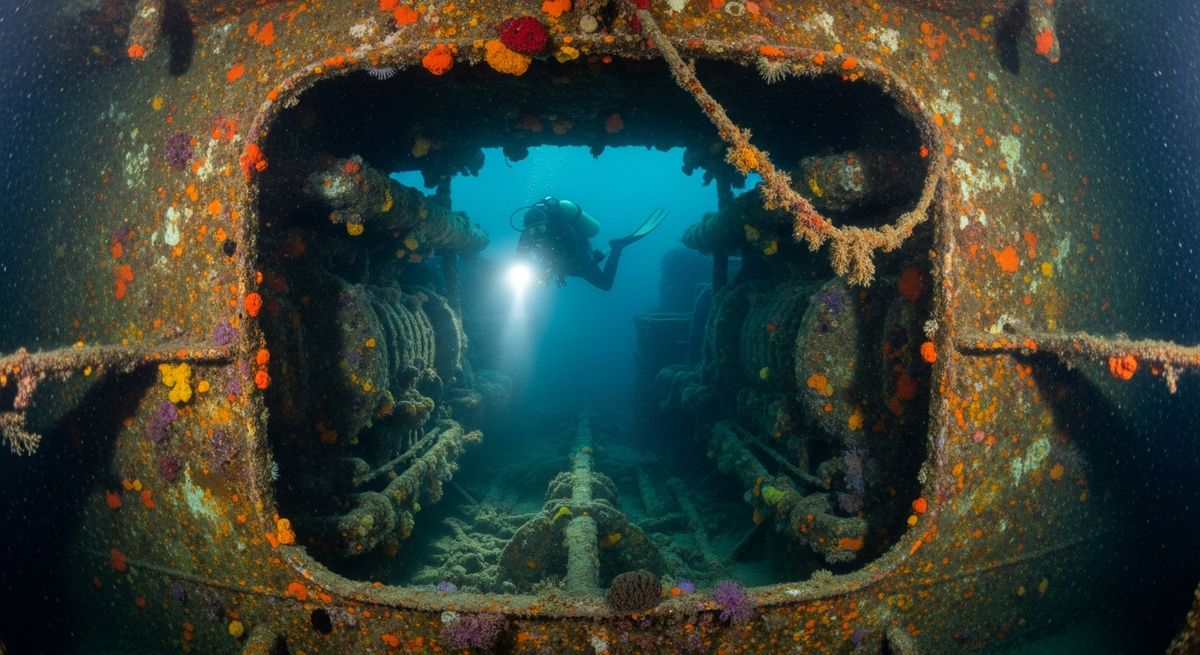
Diving the *Bishop Burton* is a proper Scottish wreck dive, the kind where you earn your stripes. We've explored her a few times, and each visit offers something new, even if it’s just better visibility or a different current. She lies upright, a stern trawler just shy of 26 metres long, which makes her manageable enough for a good look around on a single dive. The wheelhouse is usually the first thing we head for; it’s largely intact and feels like stepping back in time. You can still imagine the skipper at the helm, which adds a certain poignancy to the dive. The wreck went down in '85, so she’s been on the seabed for long enough to properly become part of the environment. The exposed metalwork is covered in anemones – mostly plumose, waving gently in the current – and dead man’s fingers add splashes of orange and yellow. Ling and conger eels are common residents, often peeking out from behind plates or from inside the engine room, if you're brave enough to poke your head in. The stern is a particularly atmospheric spot, with the trawl gear still evident and often patrolled by inquisitive wrasse. We find that the best conditions are typically on a slack tide, with a high chance of a thermocline, so be prepared for a temperature drop. It’s a dive that rewards good buoyancy and a calm approach, a real taste of North Sea wreck diving.
Typical BISHOP BURTON (PROBABLY) Dive Profile
Illustrative profile based on site depth and type. Actual dive profiles vary - always follow your dive computer and training.
Safety Notes
Maximum depth 59m exceeds recreational limits (40m). Technical diving certification and equipment required.
Wreck site - avoid penetration without wreck diving certification. Watch for sharp metal and entanglement hazards.
Always perform a 3-minute safety stop at 5m before surfacing.
BISHOP BURTON (PROBABLY) Wreck History
Year Sunk
1985
Vessel Type
fishing vessel
Cause
unknown
The Bishop Burton was a modern stern trawler, built in 1975 by the Beverly Shipbuilding Co. and powered by a robust 850 horsepower, 12-cylinder engine. Owned at the time of her loss by Mike Burton, she was a workhorse of the Scottish fishing fleet, designed to handle the demanding conditions of the North Sea.
On January 29, 1985, her career was cut short when the crew reported that the vessel was taking on water in the engine room. Despite their efforts to save her, the Bishop Burton succumbed to the ingress of water and foundered, sinking beneath the waves off the Scottish East Coast. The 'Probably' in her identification adds a small touch of mystery, suggesting that while evidence points to this wreck being the Bishop Burton, absolute certainty remains elusive.
Resting at 59 meters, this wreck is a serious undertaking, reserved for experienced technical divers with trimix training. The depth and cold, often dark, waters of the North Sea demand respect and meticulous planning. For those qualified to make the descent, the Bishop Burton offers a rewarding sight. As a relatively recent loss, she is likely to be well-preserved, with her trawling gear, superstructure, and deck features still recognizable. Exploring the area around the engine room, where her troubles began, provides a poignant connection to the vessel's final moments.
Reviews for BISHOP BURTON (PROBABLY)
Conditions
Ocean conditions, forecast and tides for BISHOP BURTON (PROBABLY)
Plan & book
Ways to dive Scottish East Coast & Borders, from day trips to liveaboards.
Day trips & courses
via GetYourGuideGuided dives, courses and snorkel trips with instant booking.
Find dive trips in Scottish East Coast & BordersPlaces to stay
via Booking.comHotels and dive resorts near Scottish East Coast & Borders.
Search stays in Scottish East Coast & BordersDive insurance
Most travel insurance excludes or limits scuba. Check what you need before you go.
Dive insurance explainedPartner links: we may earn a commission if you book, at no extra cost to you. How we make money
Where to Stay near BISHOP BURTON (PROBABLY)
Prices from Booking.com. We may earn a commission at no extra cost to you.