BLAIRHALL
Protected Area
Tynemouth to Seaton Sluice
Why dive here
With 112+ marine species recorded in the area - including dolphins, dwarf minke whales, humpback whales, ocean sunfish (mola mola) and orcas - BLAIRHALL offers some of Scottish East Coast & Borders's richest wreck diving.
The Blairhall is a proper dive, one we really rate for a taste of North Sea wreck diving. She’s a steamship, torpedoed in 1918, and lies in 41 metres. That depth means you’ll want to be comfortable with your decompression procedures, but the rewards are there. We love the way she’s mostly intact, lying on her port side, with the bow often the most dramatic section to explore. You can still make out the large cargo holds and some of the superstructure, giving you a real sense of her scale. Visibility here can swing wildly, typical for the East Coast, but on a good day, when the light penetrates, it's quite atmospheric. Even when it's murky, running a line and feeling your way around the heavy plating is an experience in itself. The wreck has become a solid habitat; expect to see plenty of wrasse darting in and out, conger eels tucked into dark corners, and often decent sized ling lurking deeper inside. It’s a site for those who appreciate history and the silent, slow reclamation by the sea. Our best advice? Pick your weather window carefully, because that 41-meter swim against a chop is no fun.
Typical BLAIRHALL Dive Profile
Illustrative profile based on site depth and type. Actual dive profiles vary - always follow your dive computer and training.
Safety Notes
Maximum depth 41m exceeds recreational limits (40m). Technical diving certification and equipment required.
Wreck site - avoid penetration without wreck diving certification. Watch for sharp metal and entanglement hazards.
Always perform a 3-minute safety stop at 5m before surfacing.
BLAIRHALL Wreck History
Year Sunk
1918
Vessel Type
cargo ship
Cause
torpedo
The SS Blairhall was a British steamship that became another victim of Germany's unrestricted submarine warfare during the final months of World War I. On July 26, 1918, she was steaming in ballast-carrying no cargo-on a short coastal passage from Middlesbrough to the River Tyne. The waters off the northeast coast of England were a hunting ground for U-boats, and the Blairhall's luck ran out when she was spotted by an enemy submarine. A single torpedo struck the vessel, sealing her fate and sending her to the bottom three to five miles east-north-east of Sunderland.
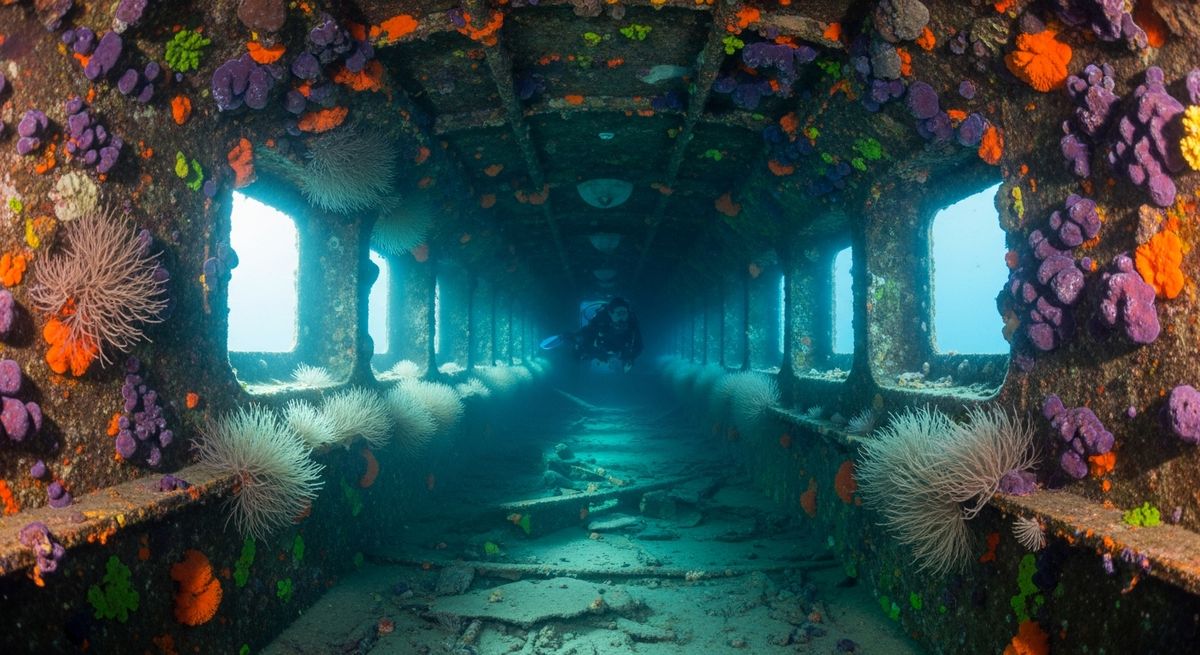
Today, the Blairhall rests at a depth of 41 metres, making her a dive for experienced and suitably qualified enthusiasts. The wreck is a classic WWI casualty, largely intact but showing the clear signs of her violent end. Divers can explore the ship's structure, including her boilers and deck features, which are now draped in a vibrant tapestry of marine life. The depth means visibility can be excellent, revealing a ghostly silhouette that serves as a poignant memorial to the perils of wartime shipping.
Nearest Dive Centres to BLAIRHALL
Dive shops near BLAIRHALL
The Diving Centre Ltd
Sunderland Scuba Centre
Aquanorth
Scuba-Life
Northumbria Scuba Divers
Aqua Purists
Reviews for BLAIRHALL
Conditions
Ocean conditions, forecast and tides for BLAIRHALL
Plan & book
Ways to dive Scottish East Coast & Borders, from day trips to liveaboards.
Day trips & courses
via GetYourGuideGuided dives, courses and snorkel trips with instant booking.
Find dive trips in Scottish East Coast & BordersPlaces to stay
via Booking.comHotels and dive resorts near Scottish East Coast & Borders.
Search stays in Scottish East Coast & BordersDive insurance
Most travel insurance excludes or limits scuba. Check what you need before you go.
Dive insurance explainedPartner links: we may earn a commission if you book, at no extra cost to you. How we make money
Where to Stay near BLAIRHALL
Prices from Booking.com. We may earn a commission at no extra cost to you.