BOYNE CASTLE
Protected Area
St Abb`s Head to Fast Castle
Why dive here
With 112+ marine species recorded in the area - including dolphins, dwarf minke whales, humpback whales, ocean sunfish (mola mola) and orcas - BOYNE CASTLE offers some of Scottish East Coast & Borders's richest wreck diving.
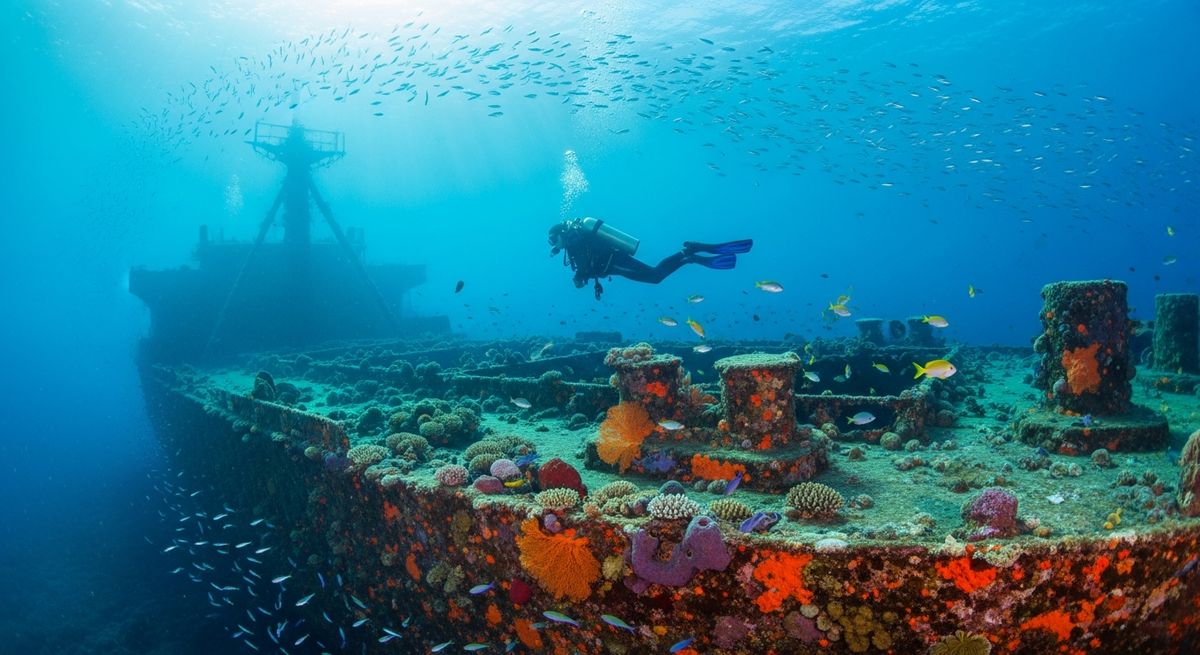
Boyne Castle, now that’s a proper dive. At 59 metres, it’s certainly not for everyone, but if you’re tech-qualified, this steamship is an absolute beauty. We love the way she sits upright on the seabed, almost as if she just decided to stop for a rest. Dropping down, you’ll start to pick out the distinct silhouette of her single boiler and the compound expansion engine. There's a real sense of history here, the wood of the decking long gone, leaving the skeletal steel structure for you to explore. The visibility can be a bit hit-and-miss, typical for Scottish waters, but when it's good, you can appreciate the sheer size of her – 35.7 metres of pure history. Our favourite part has to be the stern, where you can often find conger eels peering out from gaps in the plating, and the prop shaft tunnel is an interesting swim-through if you’re careful. Keep an eye out for inquisitive wrasse darting in and out of the nooks and crannies. We’d suggest picking a slack tide for the best conditions; otherwise, the current can make navigating the descent line a real workout. This wreck suits divers who appreciate historical integrity and don’t mind a bit of a challenge.
Typical BOYNE CASTLE Dive Profile
Illustrative profile based on site depth and type. Actual dive profiles vary - always follow your dive computer and training.
Safety Notes
Maximum depth 59m exceeds recreational limits (40m). Technical diving certification and equipment required.
Wreck site - avoid penetration without wreck diving certification. Watch for sharp metal and entanglement hazards.
Always perform a 3-minute safety stop at 5m before surfacing.
BOYNE CASTLE Wreck History
Year Sunk
1917
Vessel Type
cargo ship
Cause
torpedo
Tonnage
227 GRT
The SS Boyne Castle was a small steamship built in 1909 by the Dundee Shipbuilding Co. for the Banffshire Steam Shipping Co. For years, she plied the coastal routes of the United Kingdom, a typical workhorse of her era. With the outbreak of the First World War, these merchant vessels became prime targets for Germany's U-boat fleet. On February 7, 1917, while on passage, the Boyne Castle's fate was sealed when it was attacked and sunk by a torpedo from the German submarine UC-47, captained by Paul Hundius.
Resting at a depth of 59 meters off the Scottish East Coast, the Boyne Castle is a classic WWI wreck that demands technical diving certification and experience. The depth has helped preserve the wreck from the worst of the sea's effects, and divers can explore a vessel frozen in time for over a century. Highlights of the dive include the ship's single boiler and compound expansion engine, which stand proud of the seabed. Exploring this casualty of war offers a somber reminder of the conflict that once raged in these now-peaceful waters.
Nearest Dive Centres to BOYNE CASTLE
Dive shops near BOYNE CASTLE
View all dive centres in Scottish East Coast & BordersReviews for BOYNE CASTLE
Conditions
Ocean conditions, forecast and tides for BOYNE CASTLE
Plan & book
Ways to dive Scottish East Coast & Borders, from day trips to liveaboards.
Day trips & courses
via GetYourGuideGuided dives, courses and snorkel trips with instant booking.
Find dive trips in Scottish East Coast & BordersPlaces to stay
via Booking.comHotels and dive resorts near Scottish East Coast & Borders.
Search stays in Scottish East Coast & BordersDive insurance
Most travel insurance excludes or limits scuba. Check what you need before you go.
Dive insurance explainedPartner links: we may earn a commission if you book, at no extra cost to you. How we make money
Where to Stay near BOYNE CASTLE
Prices from Booking.com. We may earn a commission at no extra cost to you.