BRITANNIA
Protected Area
Farne Islands
Why dive here
With 112+ marine species recorded in the area - including dolphins, dwarf minke whales, humpback whales, ocean sunfish (mola mola) and orcas - BRITANNIA offers some of Scottish East Coast & Borders's richest wreck diving.
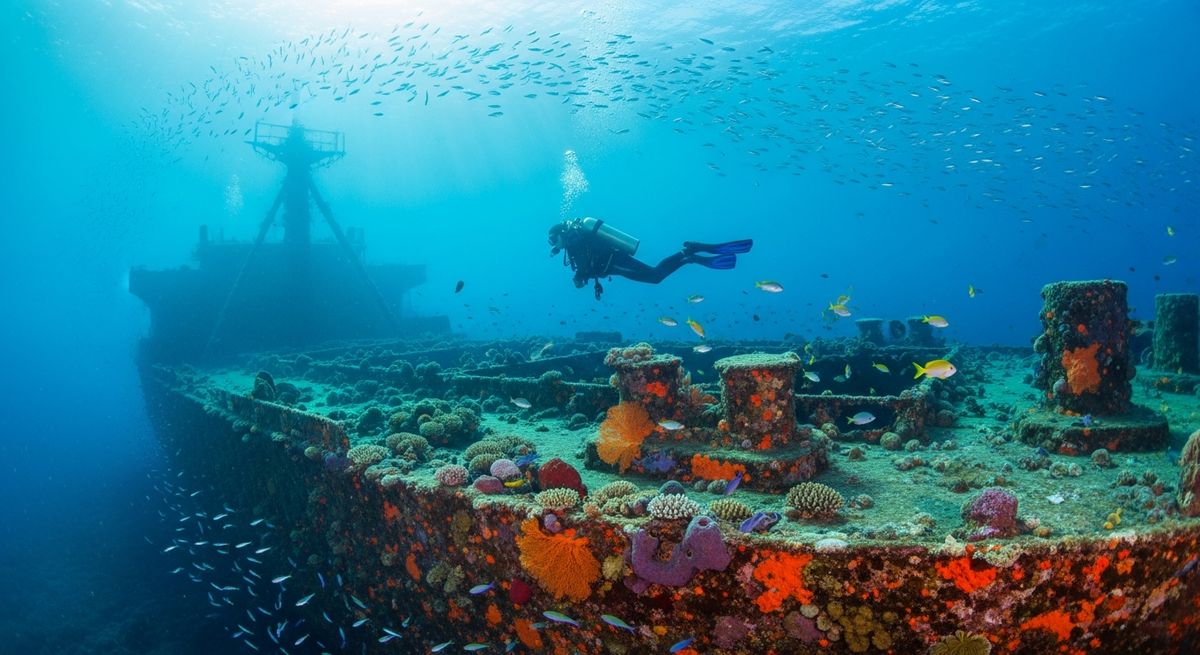
We’ve spent a fair few days diving around the Scottish East Coast, and while the Britannia sits shallow, it’s a site we always enjoy. This isn’t a deep, dramatic plummet into the abyss; it’s a friendly, accessible wreck, perfect for divers who appreciate history without the pressure of extreme depths. The Britannia, a steamship that ran aground on Crumstone Rock in 1915, now lies broken but still recognisable at a maximum of 6m. When the visibility is good, which we’ve found is often the case on a calm day, the wreck truly comes alive. You can pick out the boiler, a prominent feature, and the stern section often holds the most interest. Schools of small pollack weave through the skeletal remains, and we’ve seen plenty of inquisitive wrasse darting in and out of the plating. It’s a great spot for macro life too; keep an eye out for nudibranchs on the encrusting sponges and anemones that cling to the metalwork. Our favourite part has to be tracing the outline of the hull, imagining the ship in its former glory. It’s a fantastic dive for newer wreck enthusiasts or those looking for a relaxed second dive.
Typical BRITANNIA Dive Profile
Illustrative profile based on site depth and type. Actual dive profiles vary - always follow your dive computer and training.
Safety Notes
Wreck site - avoid penetration without wreck diving certification. Watch for sharp metal and entanglement hazards.
BRITANNIA Wreck History
Year Sunk
1915
Vessel Type
cargo ship
Cause
grounding
On September 25, 1915, during the height of the First World War, the 64-meter steamship Britannia was lost to a common maritime foe: fog. The vessel was navigating the Scottish coast when it ran hard aground on Crumstone Rock, a notorious navigational hazard. Unable to free itself, the ship was battered by the sea and eventually sank, becoming another victim of the unforgiving coastline.
Today, the Britannia lies in just 6 meters of water, making it a fantastic and highly accessible dive site. The shallow depth allows for ample bottom time and good natural light, illuminating the wreckage. The vessel is broken up, with sections of the hull, boilers, and steam machinery scattered around the base of the rock it struck over a century ago. It’s a dive rich in history, offering a tangible connection to the age of steam while showcasing how nature quickly reclaims man-made structures.
Nearest Dive Centres to BRITANNIA
Dive shops near BRITANNIA
View all dive centres in Scottish East Coast & BordersReviews for BRITANNIA
Conditions
Ocean conditions, forecast and tides for BRITANNIA
Plan & book
Ways to dive Scottish East Coast & Borders, from day trips to liveaboards.
Day trips & courses
via GetYourGuideGuided dives, courses and snorkel trips with instant booking.
Find dive trips in Scottish East Coast & BordersPlaces to stay
via Booking.comHotels and dive resorts near Scottish East Coast & Borders.
Search stays in Scottish East Coast & BordersDive insurance
Most travel insurance excludes or limits scuba. Check what you need before you go.
Dive insurance explainedPartner links: we may earn a commission if you book, at no extra cost to you. How we make money
Where to Stay near BRITANNIA
Prices from Booking.com. We may earn a commission at no extra cost to you.