BRITISH OFFICER (AFTER PART)
Protected Area
Tynemouth to Seaton Sluice
Why dive here
With 112+ marine species recorded in the area - including dolphins, dwarf minke whales, humpback whales, ocean sunfish (mola mola) and orcas - BRITISH OFFICER (AFTER PART) offers some of Scottish East Coast & Borders's richest wreck diving.
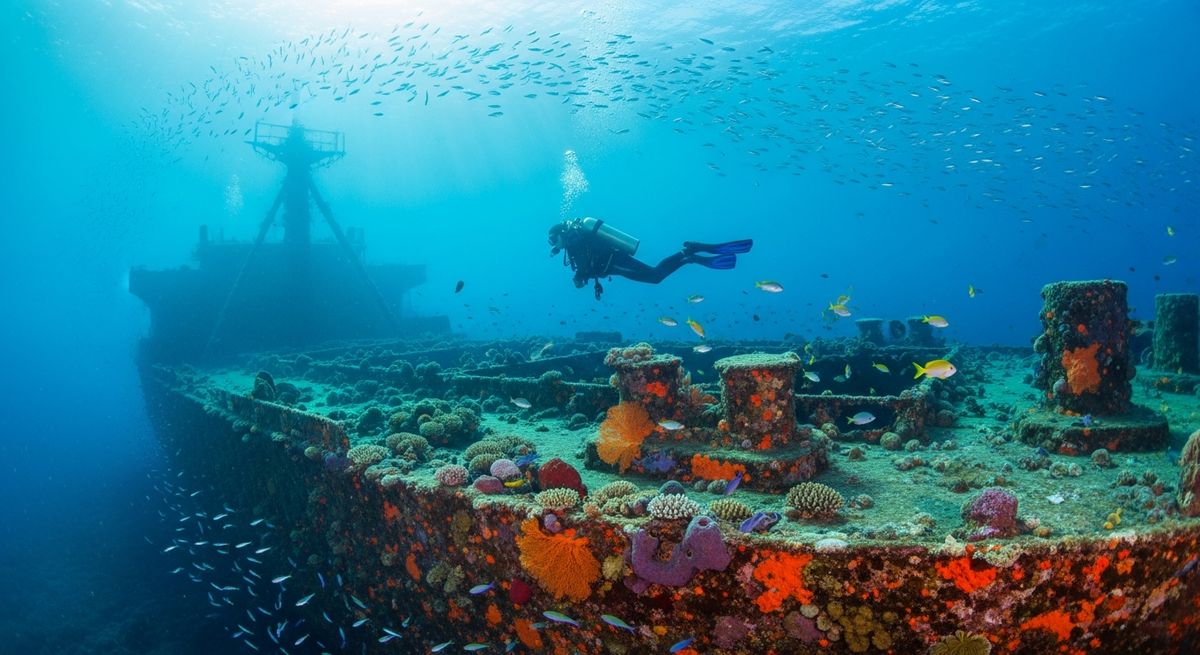
The British Officer’s stern section, resting at 13 metres, is a proper dive, especially on a day with decent vis. We’re not talking tropical colours, obviously, but the structure itself is fascinating. You drop onto a jumble of twisted metal, part of the stern, with the propeller and rudder still clearly identifiable. It’s a good size for an hour’s exploration, letting you poke around without feeling rushed. Our favourite part is weaving through the skeletal remains of the superstructure, where crabs seem to be having a permanent convention. We’ve seen conger eels tucked into some of the bigger gaps, just their heads peeking out, looking grumpy. The steel plates are draped in anemones, mostly plumose, swaying gently, and the odd nudibranch can be found if you slow down and actually look. It’s a rewarding wreck for those who appreciate history and don't mind a bit of a chill; a drysuit is definitely our recommendation. It’s perfect for divers who enjoy taking their time and really getting to grips with a site.
Typical BRITISH OFFICER (AFTER PART) Dive Profile
Illustrative profile based on site depth and type. Actual dive profiles vary - always follow your dive computer and training.
Safety Notes
Wreck site - avoid penetration without wreck diving certification. Watch for sharp metal and entanglement hazards.
Always perform a 3-minute safety stop at 5m before surfacing.
BRITISH OFFICER (AFTER PART) Wreck History
Year Sunk
1940
Vessel Type
tanker
Cause
torpedo
Tonnage
6,991 GRT
The British Officer was a tanker built in 1922 for the British Tanker Co. Ltd. During the Second World War, she served a vital role in transporting fuel. On December 1, 1940, while off the Scottish coast, she was struck by a torpedo from the German U-boat U-52. The explosion was catastrophic, breaking the tanker in two. The bow section sank almost immediately, but the stern remained stubbornly afloat.
An attempt was made to tow the surviving aft part of the ship to safety, but the notoriously rough North Sea had other plans. The stern section was eventually overwhelmed by heavy weather and sank. Today, the wreck of the 'After Part' lies in just 13 metres of water, making it a highly accessible dive. While heavily salvaged and broken over the decades, divers can still identify the ship's massive boilers and turbine machinery, offering a tangible connection to this dramatic WWII event.
Nearest Dive Centres to BRITISH OFFICER (AFTER PART)
Dive shops near BRITISH OFFICER (AFTER PART)
Aquanorth
The Diving Centre Ltd
Northumbria Scuba Divers
Scuba-Life
Sunderland Scuba Centre
Aqua Purists
Reviews for BRITISH OFFICER (AFTER PART)
Conditions
Ocean conditions, forecast and tides for BRITISH OFFICER (AFTER PART)
Plan & book
Ways to dive Scottish East Coast & Borders, from day trips to liveaboards.
Day trips & courses
via GetYourGuideGuided dives, courses and snorkel trips with instant booking.
Find dive trips in Scottish East Coast & BordersPlaces to stay
via Booking.comHotels and dive resorts near Scottish East Coast & Borders.
Search stays in Scottish East Coast & BordersDive insurance
Most travel insurance excludes or limits scuba. Check what you need before you go.
Dive insurance explainedPartner links: we may earn a commission if you book, at no extra cost to you. How we make money
Where to Stay near BRITISH OFFICER (AFTER PART)
Prices from Booking.com. We may earn a commission at no extra cost to you.