BROTHERS JOY
Protected Area
Noses Point
Why dive here
With 112+ marine species recorded in the area - including dolphins, dwarf minke whales, humpback whales, ocean sunfish (mola mola) and orcas - BROTHERS JOY offers some of Scottish East Coast & Borders's richest wreck diving.
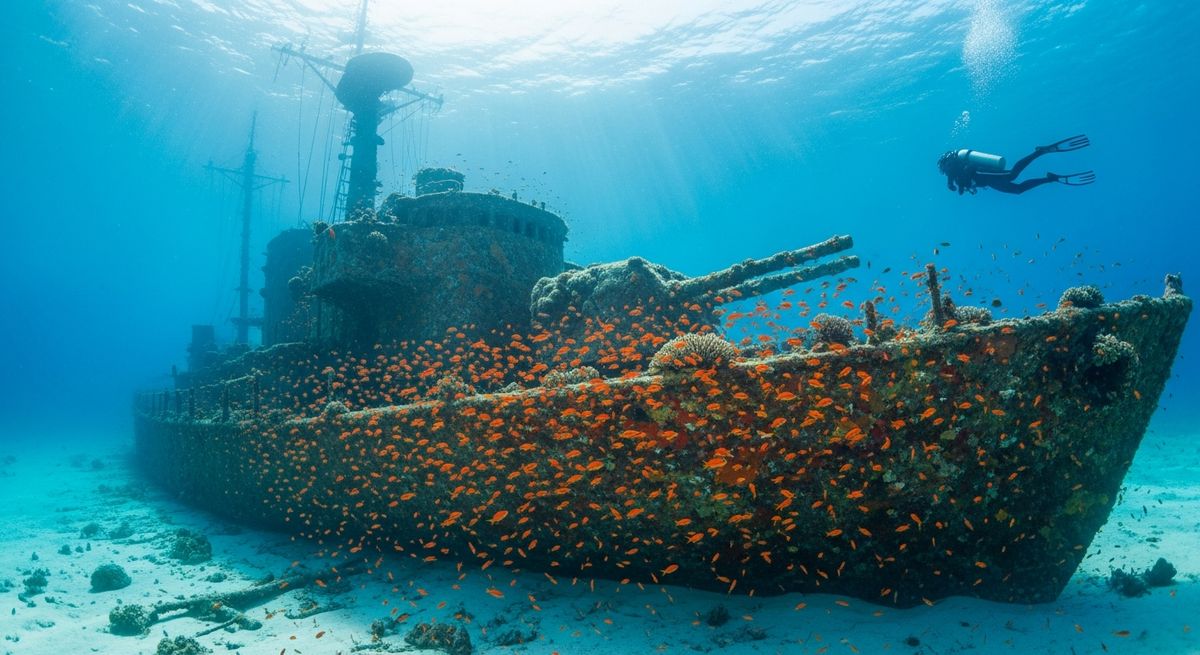
The Brothers Joy isn't just a wreck; it’s a time capsule lying deep off the Scottish coast, and we absolutely love diving it. Dropping onto her at 47 metres, you immediately feel the history. She sank in 1979 after a collision, and it’s a stark reminder of the fishing dangers in these waters. The visibility can be variable, as expected for Scotland, but when it's good, you can make out the trawler’s lines, her superstructure still largely intact. Our favourite part is the stern, where the prop is still visible, often surrounded by curious wrasse and a few ling lurking in the shadows. Penetration here is possible for experienced wreck divers, with the wheelhouse offering a glimpse into a frozen moment. We always find conger eels tucked into various nooks and crannies, their heads poking out from rusting plates, eyeing you cautiously. It’s a serious dive, definitely for experienced cold water wreck enthusiasts, requiring good planning and appropriate gas, but the Brothers Joy delivers a profoundly atmospheric experience that few other sites can match. We'd suggest aiming for slack water, as currents can pick up significantly out here.
Typical BROTHERS JOY Dive Profile
Illustrative profile based on site depth and type. Actual dive profiles vary - always follow your dive computer and training.
Safety Notes
Maximum depth 47m exceeds recreational limits (40m). Technical diving certification and equipment required.
Wreck site - avoid penetration without wreck diving certification. Watch for sharp metal and entanglement hazards.
Always perform a 3-minute safety stop at 5m before surfacing.
BROTHERS JOY Wreck History
Year Sunk
1979
Vessel Type
fishing vessel
Cause
collision
Tonnage
134 GRT
The Brothers Joy was a Scottish fishing trawler, a workhorse of the North Sea fishing fleet. For years, it plied the productive but often-treacherous waters off the Scottish coast, contributing to the region's rich maritime economy.
The vessel's career came to an abrupt end on August 9, 1979. In a sudden and tragic incident, the relatively small fishing boat was involved in a collision with the much larger motor tanker Jacqueline Broere. The impact was catastrophic for the Brothers Joy, and it sank quickly beneath the waves. The wreck has since been classified as non-dangerous, meaning it poses no significant hazard to modern navigation.
Resting at a depth of 47 metres, the Brothers Joy is a deep dive for technical or experienced recreational divers. As a more modern wreck, it is more likely to be relatively intact compared to its older counterparts. Divers can explore the superstructure of a 1970s-era trawler, from its wheelhouse to its fishing gear. The wreck acts as an artificial reef, attracting a dense concentration of marine life, making it a vibrant and fascinating site for those qualified to explore its depths.
Nearest Dive Centres to BROTHERS JOY
Dive shops near BROTHERS JOY
Sunderland Scuba Centre
The Diving Centre Ltd
Aquanorth
Scuba-Life
Northumbria Scuba Divers
Aqua Purists
Reviews for BROTHERS JOY
Conditions
Ocean conditions, forecast and tides for BROTHERS JOY
Plan & book
Ways to dive Scottish East Coast & Borders, from day trips to liveaboards.
Day trips & courses
via GetYourGuideGuided dives, courses and snorkel trips with instant booking.
Find dive trips in Scottish East Coast & BordersPlaces to stay
via Booking.comHotels and dive resorts near Scottish East Coast & Borders.
Search stays in Scottish East Coast & BordersDive insurance
Most travel insurance excludes or limits scuba. Check what you need before you go.
Dive insurance explainedPartner links: we may earn a commission if you book, at no extra cost to you. How we make money
Where to Stay near BROTHERS JOY
Prices from Booking.com. We may earn a commission at no extra cost to you.