BURNSTONE
Protected Area
Firth of Forth Banks Complex
Why dive here
With 112+ marine species recorded in the area - including dolphins, dwarf minke whales, humpback whales, ocean sunfish (mola mola) and orcas - BURNSTONE offers some of Scottish East Coast & Borders's richest wreck diving.
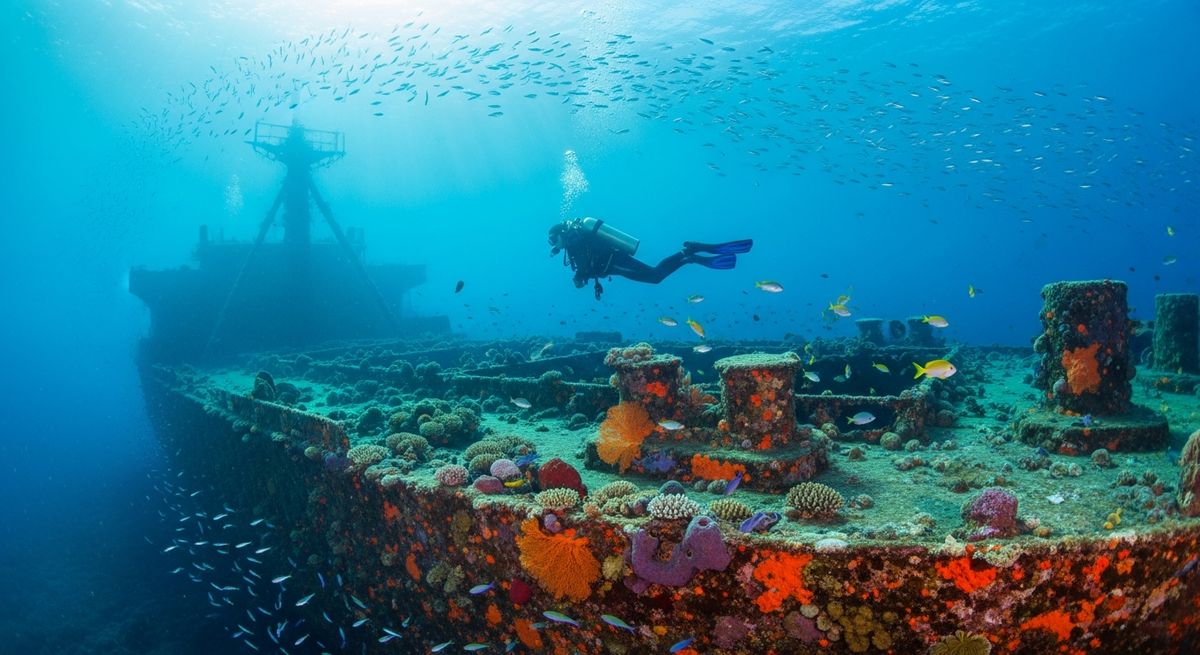
The Burnstone, or what’s left of her, is a proper Scottish wreck, deep and moody, exactly what we look for when the visibility gods are smiling. She went down in 1918, a steamship that ran into a mine, and now she sits upright at 53 metres. Descending, you can really feel the cold embrace of the North Sea, but it’s worth it. We love tracing the deck, seeing the broken machinery, the sheer scale of her. You’ll find plenty of life clinging to the metal – dead man’s fingers everywhere, sometimes a wolf-fish peering out from a dark corner. Our favourite dive here is to explore the midships, where the hull plates have buckled and twisted, creating these incredible swim-throughs if you're careful and properly trained for overhead environments. It’s a dive for experienced deep wreck enthusiasts, no question. The currents can pick up, so timing your slack water is key, and be prepared for low light, even on a sunny day. Bring a good torch, a bright one, to really pick out the details.
Typical BURNSTONE Dive Profile
Illustrative profile based on site depth and type. Actual dive profiles vary - always follow your dive computer and training.
Safety Notes
Maximum depth 53m exceeds recreational limits (40m). Technical diving certification and equipment required.
Wreck site - avoid penetration without wreck diving certification. Watch for sharp metal and entanglement hazards.
Always perform a 3-minute safety stop at 5m before surfacing.
BURNSTONE Wreck History
Year Sunk
1918
Vessel Type
cargo ship
Cause
torpedo
Tonnage
2,079 GRT
Originally launched as the SS Kilsyth in 1903, the steamship Burnstone served as a collier, a vital link in the chain of coal distribution around the British Isles. For 15 years, she steamed through calm and storm, a sturdy and reliable vessel built by Craig, Taylor & Co. in Stockton-on-Tees. During World War I, her role became even more critical, transporting coal to fuel the warships of the Royal Navy's Grand Fleet.
On March 19, 1918, during the final year of the war, the Burnstone was on a mission to deliver coal from the Tyne to the major naval base at Scapa Flow. Off St Abb's Head, she crossed paths with the German submarine UB-62. A single torpedo found its mark, and the Burnstone sank beneath the waves, one of the many merchant ships lost to the U-boat menace in the North Sea.
Lying at a depth of over 50 meters, the SS Burnstone is now a premier technical dive. The wreck is a challenging but hugely rewarding experience for certified trimix divers. She sits upright and is remarkably intact, offering a ghostly and atmospheric exploration. Divers can navigate the decks, peer into the holds, and marvel at the well-preserved triple-expansion engine and boilers, a silent monument to the perils faced by the merchant navy during the Great War.
Reviews for BURNSTONE
Conditions
Ocean conditions, forecast and tides for BURNSTONE
Plan & book
Ways to dive Scottish East Coast & Borders, from day trips to liveaboards.
Day trips & courses
via GetYourGuideGuided dives, courses and snorkel trips with instant booking.
Find dive trips in Scottish East Coast & BordersPlaces to stay
via Booking.comHotels and dive resorts near Scottish East Coast & Borders.
Search stays in Scottish East Coast & BordersDive insurance
Most travel insurance excludes or limits scuba. Check what you need before you go.
Dive insurance explainedPartner links: we may earn a commission if you book, at no extra cost to you. How we make money
Where to Stay near BURNSTONE
Prices from Booking.com. We may earn a commission at no extra cost to you.