CAIRNAVON
Protected Area
Bullers of Buchan Coast
Why dive here
With 112+ marine species recorded in the area - including dolphins, dwarf minke whales, humpback whales, ocean sunfish (mola mola) and orcas - CAIRNAVON offers some of Scottish East Coast & Borders's richest wreck diving.
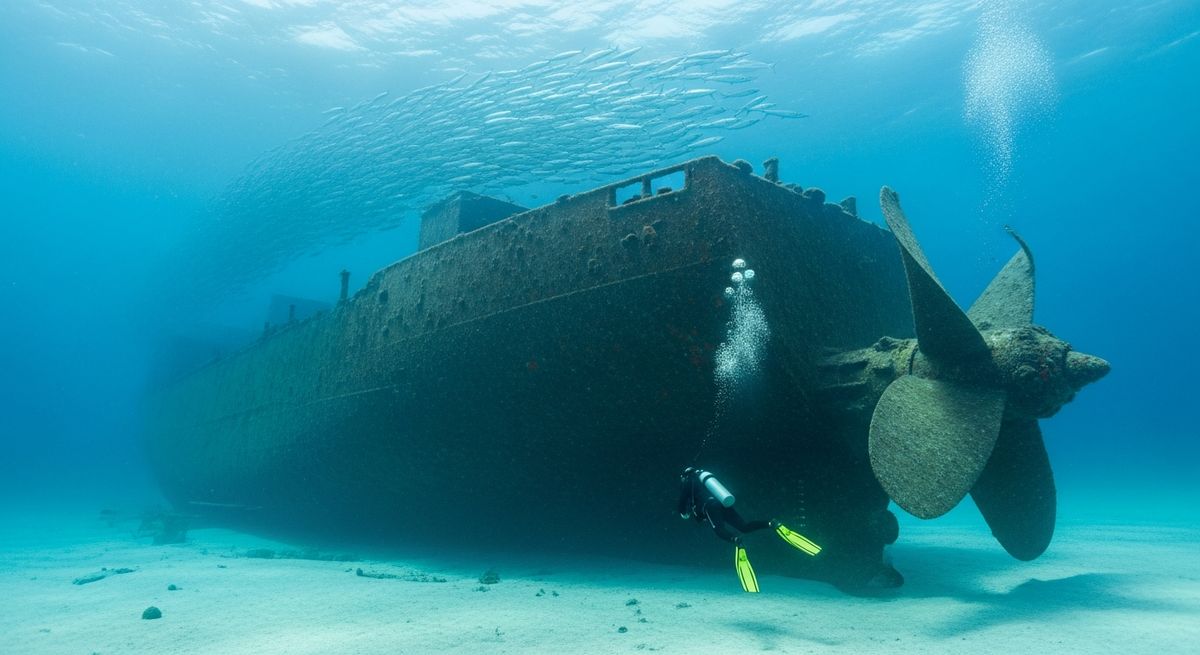
The Cairnavon, just south of Buchan Ness, is a really solid North Sea wreck. Not one of those bits of scattered debris, this is a proper ship, upright and largely intact. We love how the bow points north, sitting on a sandy seabed at 25 metres. Dropping onto the deck, you immediately get a sense of its scale – 125 metres long, a huge vessel built just after the First World War. What makes the Cairnavon special is the penetration potential. The holds are still open and explorable, and we’ve spent many dives picking through them, shining lights into the gloom. Look out for the triple-expansion engine towards the stern, it’s a seriously impressive piece of engineering. On the outside, expect to see plenty of wolf fish lurking in the crevices and ling snaking around the larger plates. The visibility here can be excellent, though if there’s been a bit of weather, it will drop, so pick your day. It’s a site for experienced wreck divers comfortable with depth and overhead environments.
Typical CAIRNAVON Dive Profile
Illustrative profile based on site depth and type. Actual dive profiles vary - always follow your dive computer and training.
Safety Notes
Depth of 25m - Advanced Open Water certification recommended.
Wreck site - avoid penetration without wreck diving certification. Watch for sharp metal and entanglement hazards.
Always perform a 3-minute safety stop at 5m before surfacing.
CAIRNAVON Wreck History
Year Sunk
1925
Vessel Type
cargo ship
Cause
grounding
The SS Cairnavon had a brief but busy life, serving the Cairn Line on the transatlantic route. Built in 1920, the steamship was a modern vessel for its time, powered by a 513 NHP triple-expansion engine. For five years, it plied the route between the UK and Canada, transporting cargo vital to post-war trade. Its career came to an abrupt end on November 1, 1925, during a passage from Leith, Scotland, to Montreal. Caught in treacherous conditions, the Cairnavon ran aground just south of its departure point and was lost to the sea.
Resting at 25 meters on the seabed off the Scottish East Coast, the Cairnavon is a classic wreck dive. The cold, nutrient-rich waters have encouraged a vibrant ecosystem to flourish on its remains. While nearly a century of immersion has caused the hull to collapse in places, the wreck is still recognizable. Divers can identify key features like the large boilers and the impressive triple-expansion engine, which stands proud of the surrounding wreckage. The site is a playground for marine life, with large shoals of fish, colorful anemones, and crustaceans hiding in the debris.
Reviews for CAIRNAVON
Conditions
Ocean conditions, forecast and tides for CAIRNAVON
Plan & book
Ways to dive Scottish East Coast & Borders, from day trips to liveaboards.
Day trips & courses
via GetYourGuideGuided dives, courses and snorkel trips with instant booking.
Find dive trips in Scottish East Coast & BordersPlaces to stay
via Booking.comHotels and dive resorts near Scottish East Coast & Borders.
Search stays in Scottish East Coast & BordersDive insurance
Most travel insurance excludes or limits scuba. Check what you need before you go.
Dive insurance explainedPartner links: we may earn a commission if you book, at no extra cost to you. How we make money
Where to Stay near CAIRNAVON
Prices from Booking.com. We may earn a commission at no extra cost to you.