CAIRNGLEN
Protected Area
Tynemouth to Seaton Sluice
Why dive here
With 112+ marine species recorded in the area - including dolphins, dwarf minke whales, humpback whales, ocean sunfish (mola mola) and orcas - CAIRNGLEN offers some of Scottish East Coast & Borders's richest wreck diving.
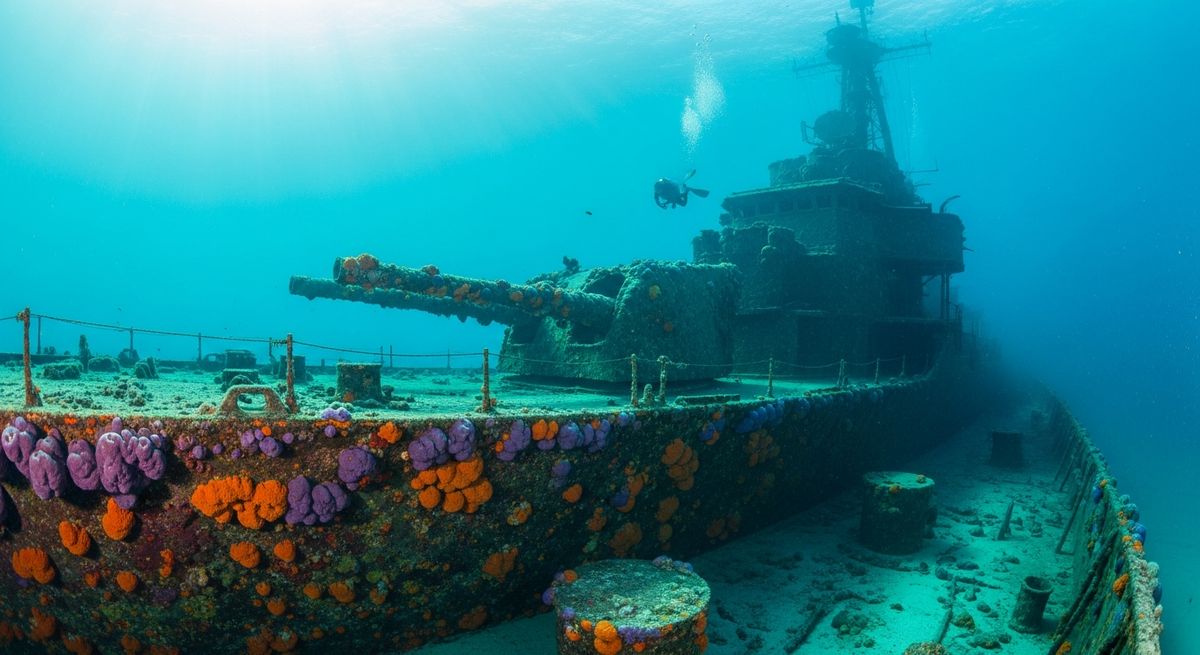
We love a good shallow wreck, and Cairnglen delivers on the Scottish East Coast. At only 3 metres deep, it's less a dive and more a proper snorkel or very short scuba exploration, but don’t let that put you off. This 122-metre steamship, sunk in 1940, offers a surprising amount of detail for such a shallow wreck. You’ll weave through sections of deck plating, catch glimpses of the three massive boilers, and trace the lines of the hull, now draped in green fronds of kelp. Sunlight dapples through the water, illuminating schools of saithe that ghost between the rusting metal, and we’ve often spotted lobsters tucked into crevices. It’s an accessible slice of history, perfect for a quick dip on a calm day when the visibility clears up, letting you really appreciate the scale of the vessel. We'd suggest aiming for a slack tide to avoid any surface chop, making the swim much more pleasant.
Typical CAIRNGLEN Dive Profile
Illustrative profile based on site depth and type. Actual dive profiles vary - always follow your dive computer and training.
Safety Notes
Wreck site - avoid penetration without wreck diving certification. Watch for sharp metal and entanglement hazards.
CAIRNGLEN Wreck History
Year Sunk
1940
Vessel Type
cargo ship
Cause
torpedo
Tonnage
5,019 GRT
The SS Cairnglen was a 5,019 GRT steamship built in 1926 for the Cairn Line of Steamships. With the outbreak of the Second World War, it became a vital part of the Allied war effort, transporting goods across the treacherous North Atlantic. In October 1940, while sailing as part of Convoy OB-229, the Cairnglen was targeted by the German U-boat U-38. On October 22, a torpedo struck the vessel, crippling it and sending it to the bottom off the Scottish coast. The sinking was a stark reminder of the deadly efficiency of the U-boat wolfpacks during the Battle of the Atlantic.
What makes the Cairnglen an extraordinary dive site is its extreme shallow depth of just 3 meters. This makes it one of the most accessible wrecks in the region, suitable for snorkelers and novice divers as well as seasoned explorers. Having been battered by waves and storms for decades, the wreck is extensively broken up and scattered across the seabed. Exploring the site feels like a shallow-water scavenger hunt, with divers able to easily identify the massive boilers, sections of the turbine engines, and twisted hull plates. The wreckage is carpeted in kelp and seaweed, providing a rich habitat for small fish and crustaceans, making it a lively and interesting site despite its fragmented state.
Nearest Dive Centres to CAIRNGLEN
Dive shops near CAIRNGLEN
Aquanorth
The Diving Centre Ltd
Sunderland Scuba Centre
Scuba-Life
Northumbria Scuba Divers
Aqua Purists
Reviews for CAIRNGLEN
Conditions
Ocean conditions, forecast and tides for CAIRNGLEN
Plan & book
Ways to dive Scottish East Coast & Borders, from day trips to liveaboards.
Day trips & courses
via GetYourGuideGuided dives, courses and snorkel trips with instant booking.
Find dive trips in Scottish East Coast & BordersPlaces to stay
via Booking.comHotels and dive resorts near Scottish East Coast & Borders.
Search stays in Scottish East Coast & BordersDive insurance
Most travel insurance excludes or limits scuba. Check what you need before you go.
Dive insurance explainedPartner links: we may earn a commission if you book, at no extra cost to you. How we make money
Where to Stay near CAIRNGLEN
Prices from Booking.com. We may earn a commission at no extra cost to you.