CALIFORNIA (POSSIBLY)
Protected Area
St Mary's Island
Why dive here
With 112+ marine species recorded in the area - including dolphins, dwarf minke whales, humpback whales, ocean sunfish (mola mola) and orcas - CALIFORNIA (POSSIBLY) offers some of Scottish East Coast & Borders's richest wreck diving.
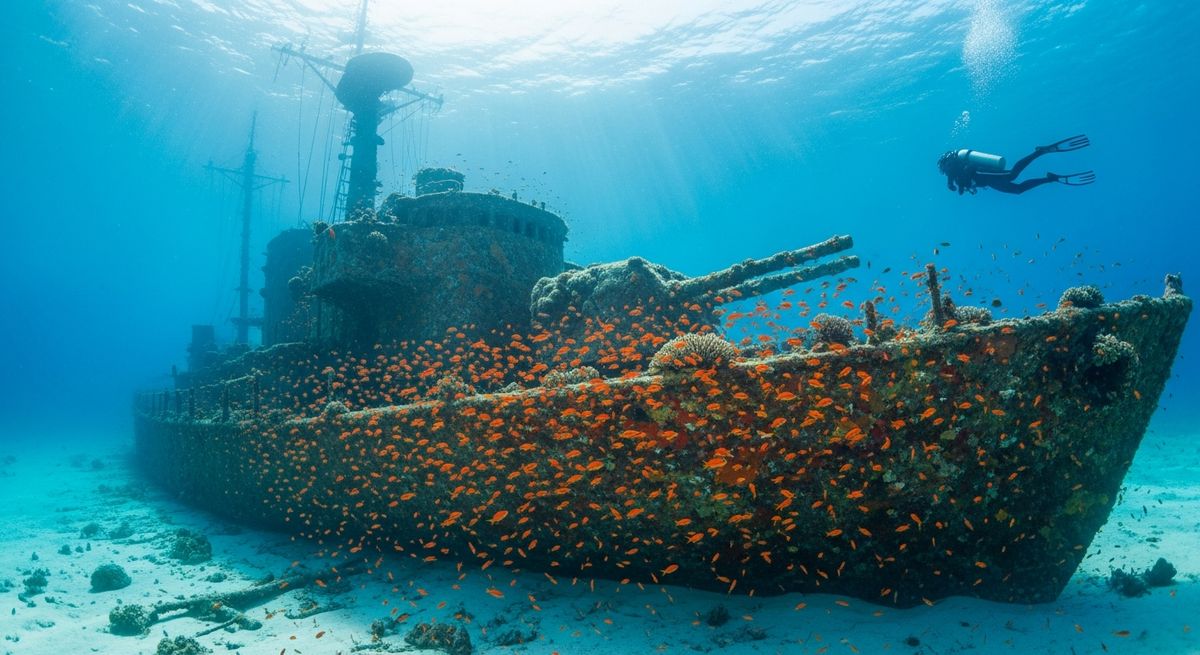
The *California* isn't just a wreck; it's a piece of maritime history, a sailing vessel lost long ago, now settled into the East Coast seabed. We love sites like this, where you can almost feel the past as you glide over the decaying timbers. What makes this wreck particularly special is its accessible depth, a real bonus for divers who want to explore without deep deco obligations. We've found the visibility here can be a bit of a lottery, as it often is in these waters, but when it's good, the detail on the old hull is surprisingly intricate. Keep an eye out for the resident crabs that scuttle amongst the ribs of the ship, and the wrasse that dart in and out of the deeper crevices. Our favourite time to dive the *California* is on a slack tide, usually an hour either side of high or low water; it really opens up the site for leisurely exploration. This wreck suits divers who appreciate history and enjoy the hunt for smaller, more elusive marine life. It’s a rewarding dive, especially if you take the time to really look at the structure itself.
Safety Notes
Wreck site - avoid penetration without wreck diving certification. Watch for sharp metal and entanglement hazards.
CALIFORNIA (POSSIBLY) Wreck History
Vessel Type
sailing vessel
Cause
unknown
The identity of the vessel known only as the 'California (Possibly)' is a mystery lost to the waves of the North Sea. Lying on the Scottish East Coast, this sailing vessel's story, her crew, and the year she met her end are all unknown. At a depth of 0 meters, her remains are exposed to the elements, visible to anyone exploring the coastline at low tide. This accessibility makes it a fascinating site not just for divers, but for coastal hikers and historians alike. Divers and snorkelers can explore the scattered timbers and hull sections in the shallow, sunlit water, discovering the small crabs, fish, and anemones that have made a new home in the wreckage. It's a tangible, if anonymous, connection to the region's rich maritime past.
Nearest Dive Centres to CALIFORNIA (POSSIBLY)
Dive shops near CALIFORNIA (POSSIBLY)
Northumbria Scuba Divers
Aquanorth
Scuba-Life
The Diving Centre Ltd
Aqua Purists
Newcastle University Sub Aqua Society
Reviews for CALIFORNIA (POSSIBLY)
Conditions
Ocean conditions, forecast and tides for CALIFORNIA (POSSIBLY)
Plan & book
Ways to dive Scottish East Coast & Borders, from day trips to liveaboards.
Day trips & courses
via GetYourGuideGuided dives, courses and snorkel trips with instant booking.
Find dive trips in Scottish East Coast & BordersPlaces to stay
via Booking.comHotels and dive resorts near Scottish East Coast & Borders.
Search stays in Scottish East Coast & BordersDive insurance
Most travel insurance excludes or limits scuba. Check what you need before you go.
Dive insurance explainedPartner links: we may earn a commission if you book, at no extra cost to you. How we make money
Where to Stay near CALIFORNIA (POSSIBLY)
Prices from Booking.com. We may earn a commission at no extra cost to you.