CANGINIAN
Protected Area
Whiting Ness - Ethie Haven
Why dive here
With 112+ marine species recorded in the area - including dolphins, dwarf minke whales, humpback whales, ocean sunfish (mola mola) and orcas - CANGINIAN offers some of Scottish East Coast & Borders's richest wreck diving.
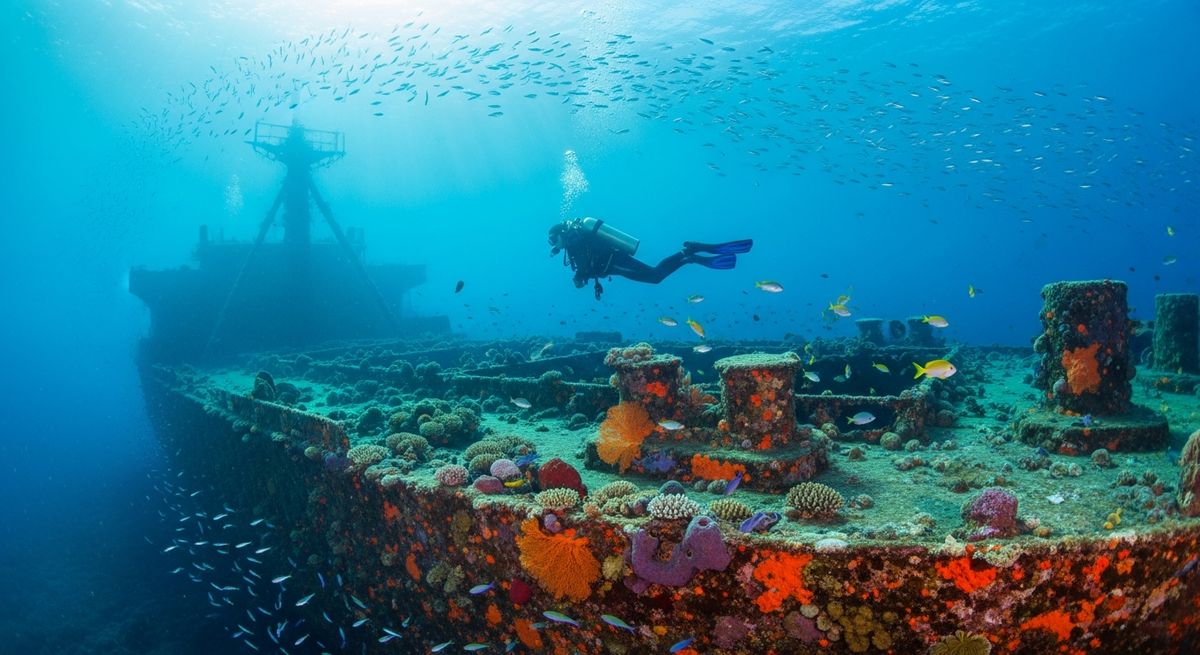
Canginian is one of those wrecks that really sticks with you. Dropping down onto her, you often find the visibility is surprisingly good for the North Sea, sometimes pushing 10 metres. The steamship sits upright at 53 metres, relatively intact despite her century on the seabed. We love exploring the bow, where the anchor chains spill out, draped in plumose anemones, their frilly polyps catching the gentle current. Further back, the single boiler stands proud, a massive steel cylinder now completely encrusted with dead man’s fingers – it glows orange in your torch beam. Her engine room is mostly open, a jumble of twisted metal that still hints at the triple expansion engine once housed within. Look closely and you’ll spot crab species scuttling in the shadows, and we’ve even come across ling lurking in the deeper recesses. The deck plating is mostly gone, leaving an exposed skeletal framework for you to fin through, feeling the cool water swirl around you. It’s a dive for experienced wreck enthusiasts comfortable with deeper profiles and the chill of Scottish waters. Come prepared for a proper deep wreck adventure; it’s not one for the faint of heart, but truly rewarding.
Typical CANGINIAN Dive Profile
Illustrative profile based on site depth and type. Actual dive profiles vary - always follow your dive computer and training.
Safety Notes
Maximum depth 53m exceeds recreational limits (40m). Technical diving certification and equipment required.
Wreck site - avoid penetration without wreck diving certification. Watch for sharp metal and entanglement hazards.
Always perform a 3-minute safety stop at 5m before surfacing.
CANGINIAN Wreck History
Year Sunk
1916
Vessel Type
cargo ship
Cause
torpedo
Tonnage
1,371 GRT
Built in 1900 by Mackie & Thomson in Glasgow, the SS Canginian was a British steamship typical of the era. Owned by the Caningan SS Co Ltd, she was powered by a triple-expansion engine and spent her career transporting goods along the vital trade routes of the North Sea.
Her service came to a sudden and violent end during the height of the First World War. On November 17, 1916, while on passage from Methil, the Canginian was intercepted by the German submarine U-58. She was sunk by torpedo, a common fate for merchant vessels operating in waters heavily patrolled by U-boats during the unrestricted submarine warfare campaign.
Today, the Canginian rests at a depth of 53 meters off the Scottish East Coast, placing her firmly in the realm of technical diving. The wreck is a sombre but fascinating window into maritime history. Divers who are qualified to reach these depths can explore the remains of this wartime casualty, identifying her single boiler and engine block, now encrusted with a century of marine growth.
Reviews for CANGINIAN
Conditions
Ocean conditions, forecast and tides for CANGINIAN
Plan & book
Ways to dive Scottish East Coast & Borders, from day trips to liveaboards.
Day trips & courses
via GetYourGuideGuided dives, courses and snorkel trips with instant booking.
Find dive trips in Scottish East Coast & BordersPlaces to stay
via Booking.comHotels and dive resorts near Scottish East Coast & Borders.
Search stays in Scottish East Coast & BordersDive insurance
Most travel insurance excludes or limits scuba. Check what you need before you go.
Dive insurance explainedPartner links: we may earn a commission if you book, at no extra cost to you. How we make money
Where to Stay near CANGINIAN
Prices from Booking.com. We may earn a commission at no extra cost to you.