CAP CAVALL
Protected Area
Isle of May
Why dive here
With 112+ marine species recorded in the area - including dolphins, dwarf minke whales, humpback whales, ocean sunfish (mola mola) and orcas - CAP CAVALL offers some of Scottish East Coast & Borders's richest wreck diving.
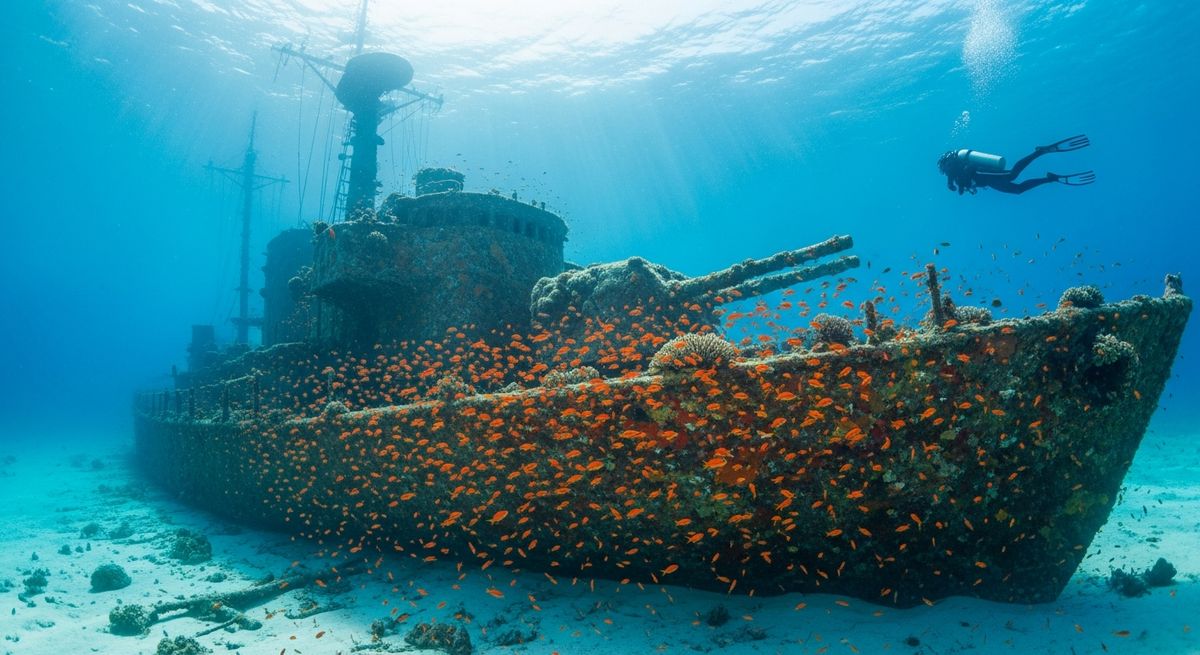
Cap Cavall, scuttled in ‘85, sits upright in a tidy 10 metres. We love an intentionally sunk wreck, and this one delivers. It’s a fishing vessel, 16.5m long, not huge, but perfectly sized for a relaxed rummage around. The wheelhouse is still there, largely intact, and you can peer through the windows. Below deck, the hold is open, a dark space that always feels a bit eerie, but in a good way. What makes it a standout for us isn't just the wreck itself, but how it's become a home. The hull is thick with dead man's fingers and anemones. Look closely and you’ll find plenty of scuttling crabs, often a few lobsters tucked into crevices, and we’ve seen some surprisingly chunky conger eels here, always a thrill. Visibility can be hit or miss, typical for the East Coast, but on a good day, with a bit of sunlight filtering down, it’s a genuinely engaging dive. It’s an easy, shallow dive, perfect for photographers wanting to spend some time composing shots, or newer wreck divers looking to gain confidence without strong currents or deep deco obligations. Our pick for a leisurely afternoon dive.
Typical CAP CAVALL Dive Profile
Illustrative profile based on site depth and type. Actual dive profiles vary - always follow your dive computer and training.
Safety Notes
Wreck site - avoid penetration without wreck diving certification. Watch for sharp metal and entanglement hazards.
CAP CAVALL Wreck History
Year Sunk
1985
Vessel Type
fishing vessel
Cause
scuttled
The Cap Cavall was a 16.5-meter wooden-hulled fishing vessel that worked the waters off the Scottish coast. By the mid-1980s, the vessel had reached the end of its economic life. Rather than let it rot in a harbor, its owner decided to give it a new purpose. On July 3rd, 1985, the Cap Cavall was intentionally sunk, or scuttled, to become an artificial reef and a point of interest for scuba divers exploring the renowned St Abbs and Eyemouth Voluntary Marine Reserve.
Today, the Cap Cavall rests on a sandy seabed at a depth of 10 meters, making it a perfect site for entry-level divers and those undertaking training. Over the decades, the wooden structure has broken down significantly, but the wreck's recognizable shape is still present. It is now completely enveloped in marine life, with colorful anemones, dead man's fingers, and sea urchins covering its remains. Divers can expect to find ballan wrasse, pollack, and numerous crustaceans sheltering within the wreckage, transforming this retired fishing boat into a vibrant underwater habitat.
Nearest Dive Centres to CAP CAVALL
Dive shops near CAP CAVALL
View all dive centres in Scottish East Coast & BordersReviews for CAP CAVALL
Conditions
Ocean conditions, forecast and tides for CAP CAVALL
Plan & book
Ways to dive Scottish East Coast & Borders, from day trips to liveaboards.
Day trips & courses
via GetYourGuideGuided dives, courses and snorkel trips with instant booking.
Find dive trips in Scottish East Coast & BordersPlaces to stay
via Booking.comHotels and dive resorts near Scottish East Coast & Borders.
Search stays in Scottish East Coast & BordersDive insurance
Most travel insurance excludes or limits scuba. Check what you need before you go.
Dive insurance explainedPartner links: we may earn a commission if you book, at no extra cost to you. How we make money
Where to Stay near CAP CAVALL
Prices from Booking.com. We may earn a commission at no extra cost to you.