CARIBOU
Protected Area
Noses Point
Why dive here
With 112+ marine species recorded in the area - including dolphins, dwarf minke whales, humpback whales, ocean sunfish (mola mola) and orcas - CARIBOU offers some of Scottish East Coast & Borders's richest wreck diving.
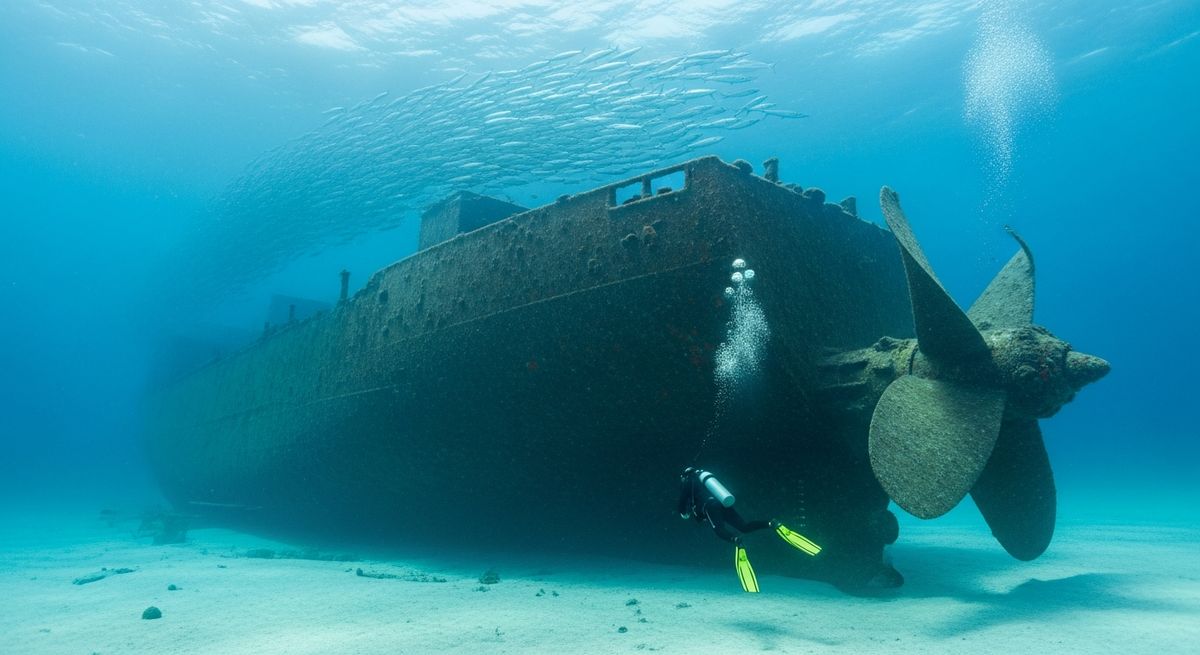
The Caribou, a yacht sunk back in '59 after a collision, isn't just another lump of metal on the seabed. We love it because it’s a proper dive for wreck enthusiasts, sitting upright and largely intact at 36 metres. Drop down the line and you’ll find her mast still standing proud, stretching up towards shallower water. Inside, the saloon is surprisingly open, an easy swim-through if you’re comfortable with overhead environments and your buoyancy is dialled in. We’ve spent many a dive poking around, imagining her final moments. Look closely at the decking; it’s now completely encrusted with dead man’s fingers and bright anemones, miniature gardens thriving in the gloom. Conger eels often peer out from nooks and crannies in the hull, and the occasional ling cruises by, a shadow against the dark steel. It’s a dive that rewards slow exploration rather than a quick dash. Best dived on slack water, obviously, to truly appreciate the detail.
Typical CARIBOU Dive Profile
Illustrative profile based on site depth and type. Actual dive profiles vary - always follow your dive computer and training.
Safety Notes
Deep dive (36m) - monitor air consumption closely. Advanced certification recommended.
Wreck site - avoid penetration without wreck diving certification. Watch for sharp metal and entanglement hazards.
Always perform a 3-minute safety stop at 5m before surfacing.
CARIBOU Wreck History
Year Sunk
1959
Vessel Type
yacht
Cause
collision
The Caribou was a private yacht whose final voyage concluded tragically on July 4th, 1959. While navigating the waters of the Scottish East Coast, the vessel was involved in a collision with another sailing craft and sank. Its story is a somber reminder of the potential dangers of navigating busy maritime routes, even for smaller pleasure craft.
Now lying at a depth of 36 meters (118 feet), the Caribou is a dive for more experienced adventurers. The wreck is officially classified as a 'dangerous wreck,' meaning divers should exercise caution due to potential entanglement hazards like fishing nets or the wreck's own deteriorating structure. For those with the requisite training and preparation, the Caribou offers a fascinating glimpse into a mid-20th century yacht, preserved in the cold, clear waters off the UK coast. The marine life is typical of the North Sea, with an abundance of crustaceans and cold-water fish making their home on the wreckage.
Nearest Dive Centres to CARIBOU
Dive shops near CARIBOU
Sunderland Scuba Centre
The Diving Centre Ltd
Aquanorth
Scuba-Life
Aqua Purists
Northumbria Scuba Divers
Reviews for CARIBOU
Conditions
Ocean conditions, forecast and tides for CARIBOU
Plan & book
Ways to dive Scottish East Coast & Borders, from day trips to liveaboards.
Day trips & courses
via GetYourGuideGuided dives, courses and snorkel trips with instant booking.
Find dive trips in Scottish East Coast & BordersPlaces to stay
via Booking.comHotels and dive resorts near Scottish East Coast & Borders.
Search stays in Scottish East Coast & BordersDive insurance
Most travel insurance excludes or limits scuba. Check what you need before you go.
Dive insurance explainedPartner links: we may earn a commission if you book, at no extra cost to you. How we make money
Where to Stay near CARIBOU
Prices from Booking.com. We may earn a commission at no extra cost to you.