CARMARTHEN COAST
Protected Area
Durham Coast
Why dive here
With 112+ marine species recorded in the area - including dolphins, dwarf minke whales, humpback whales, ocean sunfish (mola mola) and orcas - CARMARTHEN COAST offers some of Scottish East Coast & Borders's richest wreck diving.
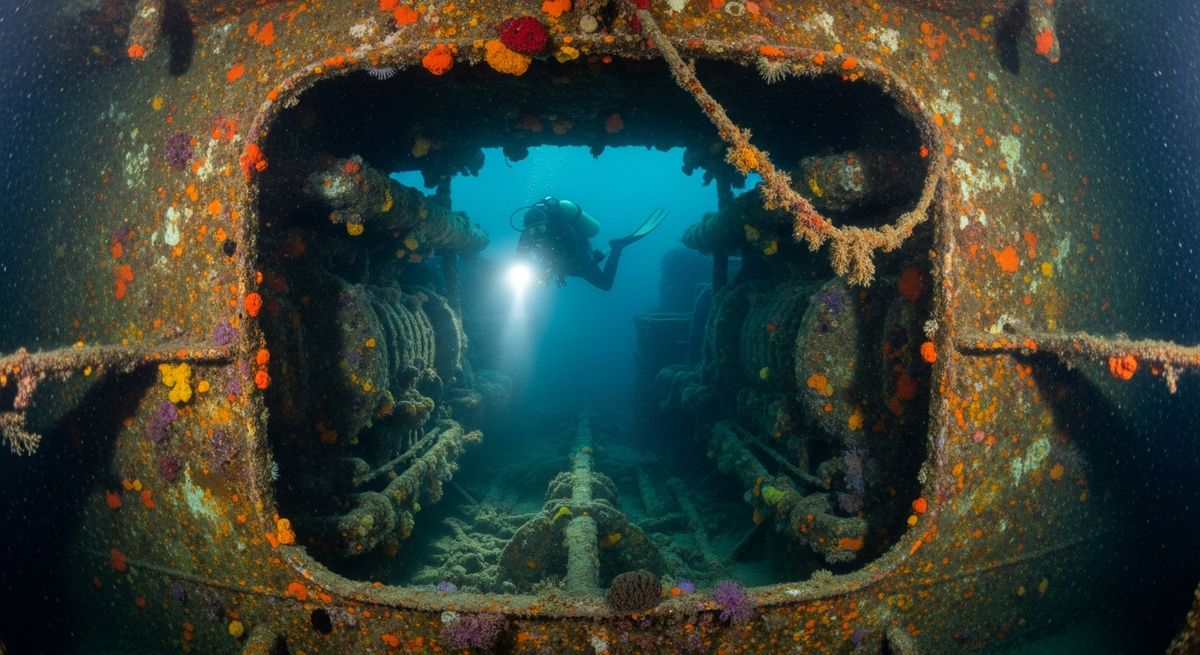
The Carmarthen Coast isn't a dive you just drop onto; it’s a proper expedition, and that’s why we love it. This steamship, sunk way back in 1939, sits upright at 26 metres, offering a remarkably intact look at a piece of maritime history. We’ve found the bow to be particularly atmospheric, often swathed in green light, with visibility typically around the 5-10 metre mark. What really sells the Carmarthen Coast for us is the feeling of discovery. Her two boilers are still prominent, and if you’re careful and experienced, there are swim-throughs into the engine room that are just fantastic. Expect to find plenty of crabs and lobsters tucked into every crevice, along with the usual suspects like blennies and small wrasse darting through the superstructure. It's a dive for those who appreciate wrecks with genuine character and a bit of a challenge, definitely not for the faint of heart or absolute beginners. Our top tip? Pick your slack tide window carefully, as currents here can be robust.
Typical CARMARTHEN COAST Dive Profile
Illustrative profile based on site depth and type. Actual dive profiles vary - always follow your dive computer and training.
Safety Notes
Depth of 26m - Advanced Open Water certification recommended.
Wreck site - avoid penetration without wreck diving certification. Watch for sharp metal and entanglement hazards.
Always perform a 3-minute safety stop at 5m before surfacing.
CARMARTHEN COAST Wreck History
Year Sunk
1939
Vessel Type
cargo ship
Cause
mine
Tonnage
973 GRT
Built in 1921 by the Ardrossan Dry Dock & Shipbuilding Co, the vessel that would become the SS Carmarthen Coast began her life as the Langfjord, later being renamed Nova. By the time of her loss, she was sailing for the well-known Coast Lines Ltd. A typical coastal cargo ship of her time, she was powered by a triple-expansion steam engine and spent nearly two decades plying the trade routes around Europe.
With the outbreak of the Second World War in September 1939, the North Sea became one of the most dangerous shipping lanes in the world. On November 9, 1939, while steaming off the Scottish coast, the Carmarthen Coast's luck ran out. She struck a naval mine that had been laid by a German destroyer, part of an extensive and deadly minefield. The explosion was catastrophic, and the ship sank quickly, becoming an early casualty of the new conflict.
Today, the Carmarthen Coast rests in 26 meters of water, making her an excellent dive for Advanced Open Water certified divers and above. The wreck is located on the Scottish East Coast, an area known for its rich but sometimes challenging dive conditions. The vessel is substantially intact, offering divers the chance to explore the decks, holds, and superstructure. The cold, nutrient-rich water supports a stunning array of marine life, with colorful anemones, dead man's fingers, and schooling fish covering the wartime relic.
Nearest Dive Centres to CARMARTHEN COAST
Dive shops near CARMARTHEN COAST
Sunderland Scuba Centre
The Diving Centre Ltd
Aquanorth
Scuba-Life
Aqua Purists
Newcastle University Sub Aqua Society
Reviews for CARMARTHEN COAST
Conditions
Ocean conditions, forecast and tides for CARMARTHEN COAST
Plan & book
Ways to dive Scottish East Coast & Borders, from day trips to liveaboards.
Day trips & courses
via GetYourGuideGuided dives, courses and snorkel trips with instant booking.
Find dive trips in Scottish East Coast & BordersPlaces to stay
via Booking.comHotels and dive resorts near Scottish East Coast & Borders.
Search stays in Scottish East Coast & BordersDive insurance
Most travel insurance excludes or limits scuba. Check what you need before you go.
Dive insurance explainedPartner links: we may earn a commission if you book, at no extra cost to you. How we make money
Where to Stay near CARMARTHEN COAST
Prices from Booking.com. We may earn a commission at no extra cost to you.