CARMARTHEN COAST (POSSIBLY)
Protected Area
Durham
Why dive here
With 112+ marine species recorded in the area - including dolphins, dwarf minke whales, humpback whales, ocean sunfish (mola mola) and orcas - CARMARTHEN COAST (POSSIBLY) offers some of Scottish East Coast & Borders's richest wreck diving.
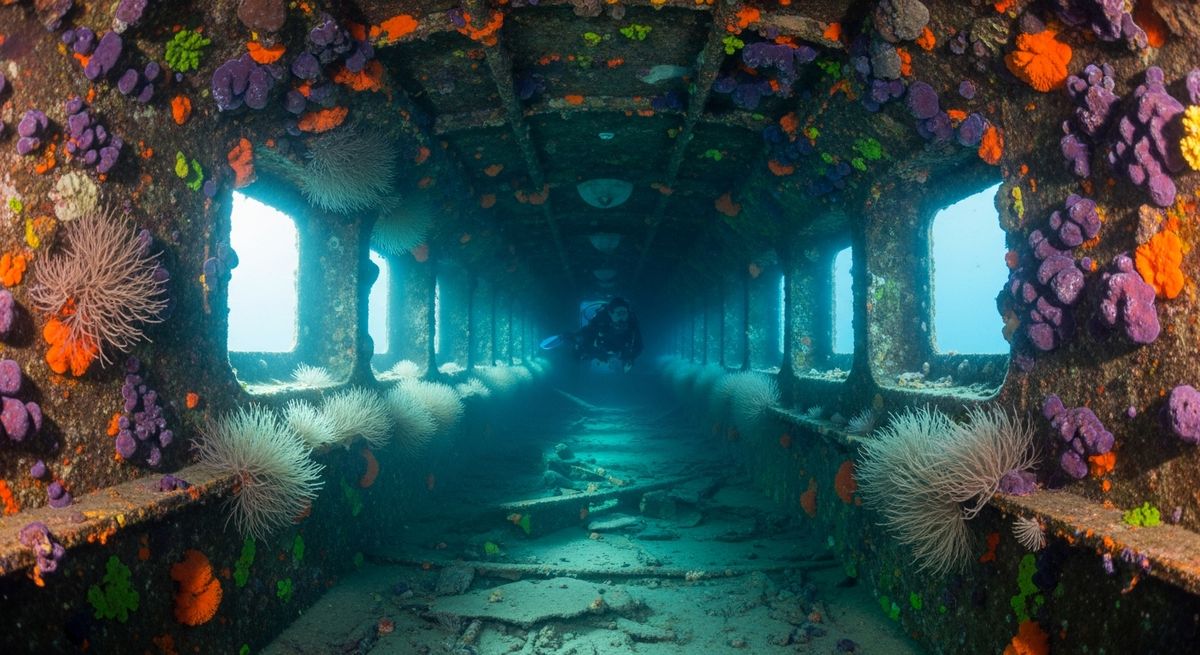
The Carmarthen Coast is a proper East Coast wreck, sitting upright and largely intact at 43 metres. We love dropping down onto the bow, often finding it shrouded in the green gloom that makes Scottish wreck diving so atmospheric. She's a steamship, sunk in '39, and you can still pick out the two boilers and the triple expansion engine. It’s a great rummage for experienced cold water divers who appreciate the history and the sheer scale of these old vessels. Visibility here can swing wildly; we’ve had days of 15 metres where the whole ship stretched out below, and others where you’re hugging the plating, feeling your way along. Even on murkier days, the wreck provides plenty to explore, with openings into cargo holds that often house inquisitive conger eels. Keep an eye out for ling lurking in the deeper shadows, and the occasional wolfish face peering from a crevice. It’s a dive that rewards repeat visits, always revealing new details as the light shifts and the currents sculpt the seabed around her.
Typical CARMARTHEN COAST (POSSIBLY) Dive Profile
Illustrative profile based on site depth and type. Actual dive profiles vary - always follow your dive computer and training.
Safety Notes
Maximum depth 43m exceeds recreational limits (40m). Technical diving certification and equipment required.
Wreck site - avoid penetration without wreck diving certification. Watch for sharp metal and entanglement hazards.
Always perform a 3-minute safety stop at 5m before surfacing.
CARMARTHEN COAST (POSSIBLY) Wreck History
Year Sunk
1939
Vessel Type
cargo ship
Cause
mine
Tonnage
973 GRT
The SS Carmarthen Coast was a 973 GRT coastal cargo ship built in 1921. After serving under two previous names, Langfjord and Nova, she was acquired by Coast Lines Ltd. For 18 years, she reliably transported goods around the British Isles and to the continent, a workhorse of the British merchant marine fleet leading up to the Second World War.
Her peaceful career ended just two months into the war. On November 9, 1939, the Carmarthen Coast was sailing in the North Sea when she hit a mine laid by a German warship. The ensuing explosion tore through the hull, and the ship was lost beneath the waves, a testament to the immediate and lethal threat that German minefields posed to Allied shipping in the early days of the conflict.
This particular chart position, marked 'Carmarthen Coast (Possibly),' lies at 43 meters and presents a thrilling challenge for technical divers. It is significantly deeper than the main, confirmed wreck site, raising intriguing questions. This could be a large section of the vessel, such as the stern, that broke away during the sinking and drifted to a deeper resting place. Alternatively, it could be another, as-yet-unidentified wreck from the same period. For decompression divers, this site offers a deep, atmospheric dive into history, with the added allure of potentially solving a piece of this wreck's puzzle.
Nearest Dive Centres to CARMARTHEN COAST (POSSIBLY)
Dive shops near CARMARTHEN COAST (POSSIBLY)
Sunderland Scuba Centre
The Diving Centre Ltd
Aquanorth
Scuba-Life
Aqua Purists
Newcastle University Sub Aqua Society
Reviews for CARMARTHEN COAST (POSSIBLY)
Conditions
Ocean conditions, forecast and tides for CARMARTHEN COAST (POSSIBLY)
Plan & book
Ways to dive Scottish East Coast & Borders, from day trips to liveaboards.
Day trips & courses
via GetYourGuideGuided dives, courses and snorkel trips with instant booking.
Find dive trips in Scottish East Coast & BordersPlaces to stay
via Booking.comHotels and dive resorts near Scottish East Coast & Borders.
Search stays in Scottish East Coast & BordersDive insurance
Most travel insurance excludes or limits scuba. Check what you need before you go.
Dive insurance explainedPartner links: we may earn a commission if you book, at no extra cost to you. How we make money
Where to Stay near CARMARTHEN COAST (POSSIBLY)
Prices from Booking.com. We may earn a commission at no extra cost to you.