CECILIA (POSSIBLY) (OR ANGELA MADRE)
Protected Area
Tynemouth to Seaton Sluice
Why dive here
With 112+ marine species recorded in the area - including dolphins, dwarf minke whales, humpback whales, ocean sunfish (mola mola) and orcas - CECILIA (POSSIBLY) (OR ANGELA MADRE) offers some of Scottish East Coast & Borders's richest wreck diving.
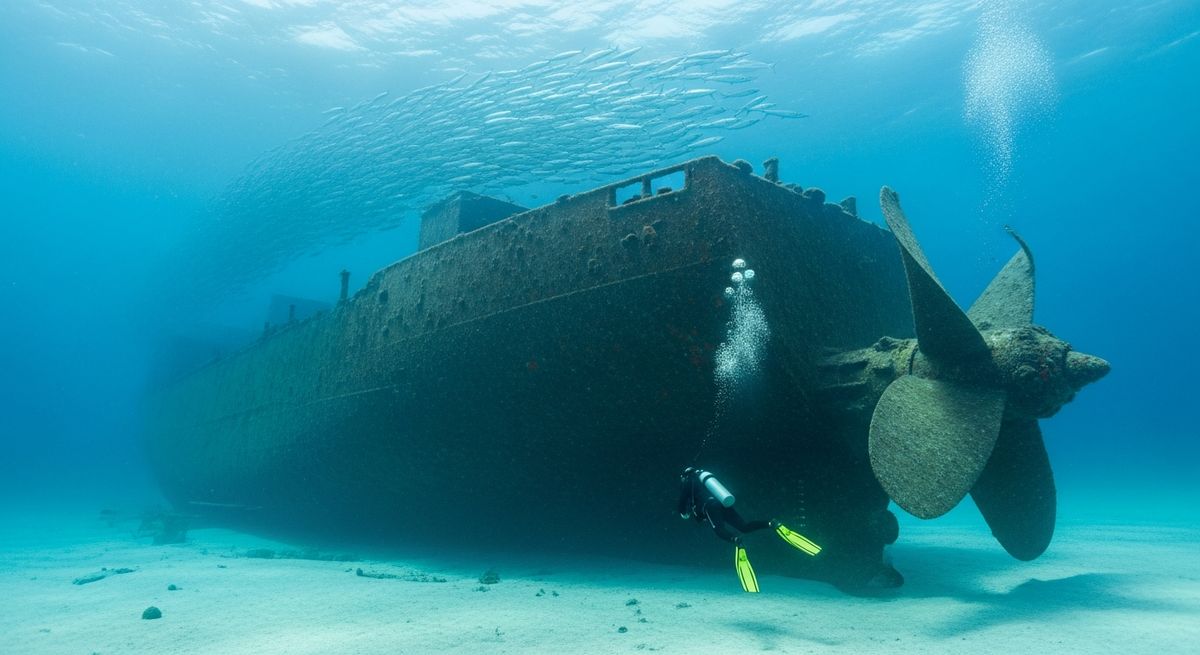
Forget your tropical dreams for a moment. The CECILIA, or possibly the ANGELA MADRE, is proper British diving, and we absolutely love it for that. This isn't some deep, dark mystery; it’s a shallow, accessible wreck sitting at just 6m. We've always found it a brilliant way to spend an hour, especially when the light cuts through the green water. This iron barque, sunk way back in 1881, lies scattered but still offers plenty of structure to explore. You can trace the lines of the hull, spotting ribs and plates, and in the calmer sections, the sand ripples softly. It’s not about grand swim-throughs here; it’s about appreciating the history, feeling the cool surge against your drysuit, and observing the resident critters. Lobsters often peek out from under plating, and we’ve seen some surprisingly large cod hanging about the larger sections. Our favourite moments are finding the small, intricate sections, almost like miniature gardens, where anemones and dead man's fingers have taken hold. If you appreciate the ghosts of maritime history and don't mind a bit of chill, this wreck is a solid shout.
Typical CECILIA (POSSIBLY) (OR ANGELA MADRE) Dive Profile
Illustrative profile based on site depth and type. Actual dive profiles vary - always follow your dive computer and training.
Safety Notes
Wreck site - avoid penetration without wreck diving certification. Watch for sharp metal and entanglement hazards.
Nearest Dive Centres to CECILIA (POSSIBLY) (OR ANGELA MADRE)
Dive shops near CECILIA (POSSIBLY) (OR ANGELA MADRE)
The Diving Centre Ltd
Aquanorth
Sunderland Scuba Centre
Scuba-Life
Aqua Purists
Northumbria Scuba Divers
Reviews for CECILIA (POSSIBLY) (OR ANGELA MADRE)
Conditions
Ocean conditions, forecast and tides for CECILIA (POSSIBLY) (OR ANGELA MADRE)
Plan & book
Ways to dive Scottish East Coast & Borders, from day trips to liveaboards.
Day trips & courses
via GetYourGuideGuided dives, courses and snorkel trips with instant booking.
Find dive trips in Scottish East Coast & BordersPlaces to stay
via Booking.comHotels and dive resorts near Scottish East Coast & Borders.
Search stays in Scottish East Coast & BordersDive insurance
Most travel insurance excludes or limits scuba. Check what you need before you go.
Dive insurance explainedPartner links: we may earn a commission if you book, at no extra cost to you. How we make money
Where to Stay near CECILIA (POSSIBLY) (OR ANGELA MADRE)
Prices from Booking.com. We may earn a commission at no extra cost to you.