COASTAL EMPEROR
Protected Area
Donmouth
Why dive here
With 112+ marine species recorded in the area - including dolphins, dwarf minke whales, humpback whales, ocean sunfish (mola mola) and orcas - COASTAL EMPEROR offers some of Scottish East Coast & Borders's richest wreck diving.
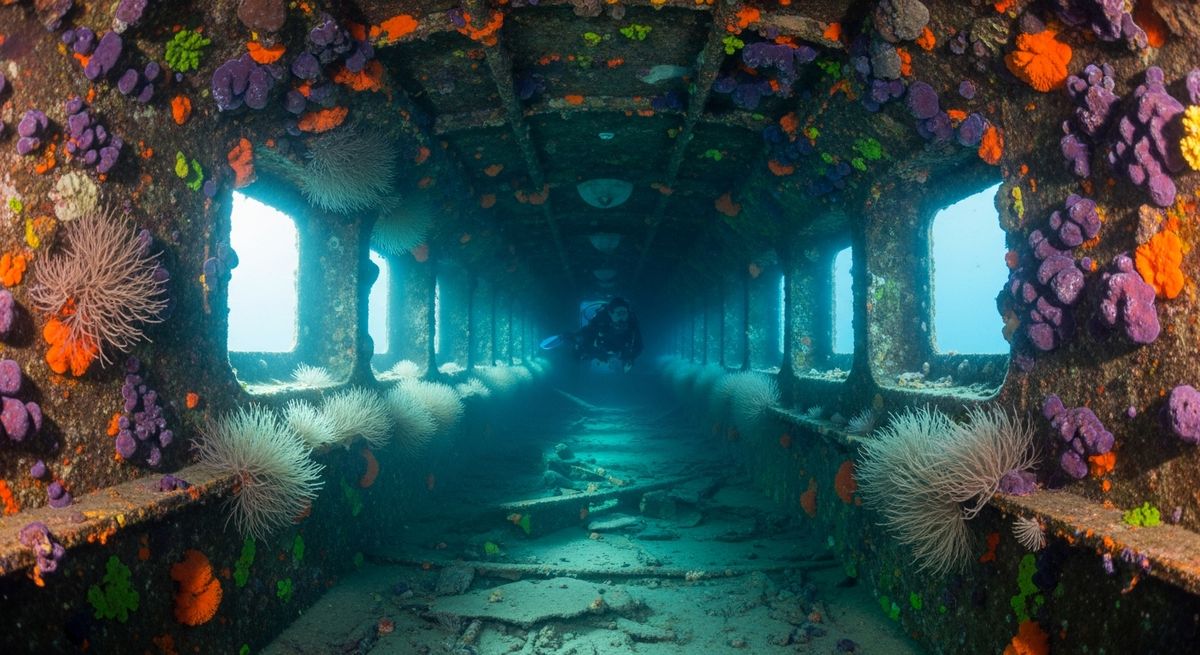
The Coastal Emperor, what a beauty. She’s a trawler, sank back in '78, and we love her because she’s so accessible. Sitting in about 10 meters, she’s a fantastic introduction to wreck diving, especially in the North Sea. The bridge structure is still quite intact, and we often find ourselves poking around the wheelhouse, imagining the old skippers. You can get into the engine room, too, if you’re comfortable with a bit of overhead. For critters, she’s a magnet. Lobsters often peer out from under plating, and the resident conger eels are usually pretty visible, coiled up in pipes. We’ve seen juvenile cod tucked into nooks and crannies, and those vibrant jewel anemones add a surprising splash of colour against the steel. The visibility can be hit or miss, typical for Scotland, but on a good day, when the sun penetrates, the whole wreck shimmers. It’s not a deep dive, which means plenty of bottom time to really explore her character. We’d suggest going at slack tide, it just makes the whole experience much more relaxing.
Typical COASTAL EMPEROR Dive Profile
Illustrative profile based on site depth and type. Actual dive profiles vary - always follow your dive computer and training.
Safety Notes
Wreck site - avoid penetration without wreck diving certification. Watch for sharp metal and entanglement hazards.
Reviews for COASTAL EMPEROR
Conditions
Ocean conditions, forecast and tides for COASTAL EMPEROR
Plan & book
Ways to dive Scottish East Coast & Borders, from day trips to liveaboards.
Day trips & courses
via GetYourGuideGuided dives, courses and snorkel trips with instant booking.
Find dive trips in Scottish East Coast & BordersPlaces to stay
via Booking.comHotels and dive resorts near Scottish East Coast & Borders.
Search stays in Scottish East Coast & BordersDive insurance
Most travel insurance excludes or limits scuba. Check what you need before you go.
Dive insurance explainedPartner links: we may earn a commission if you book, at no extra cost to you. How we make money
Where to Stay near COASTAL EMPEROR
Prices from Booking.com. We may earn a commission at no extra cost to you.