GUDBRAND (POSSIBLY)
Protected Area
Coquet to St Mary's
Why dive here
With 112+ marine species recorded in the area - including dolphins, dwarf minke whales, humpback whales, ocean sunfish (mola mola) and orcas - GUDBRAND (POSSIBLY) offers some of Scottish East Coast & Borders's richest wreck diving.
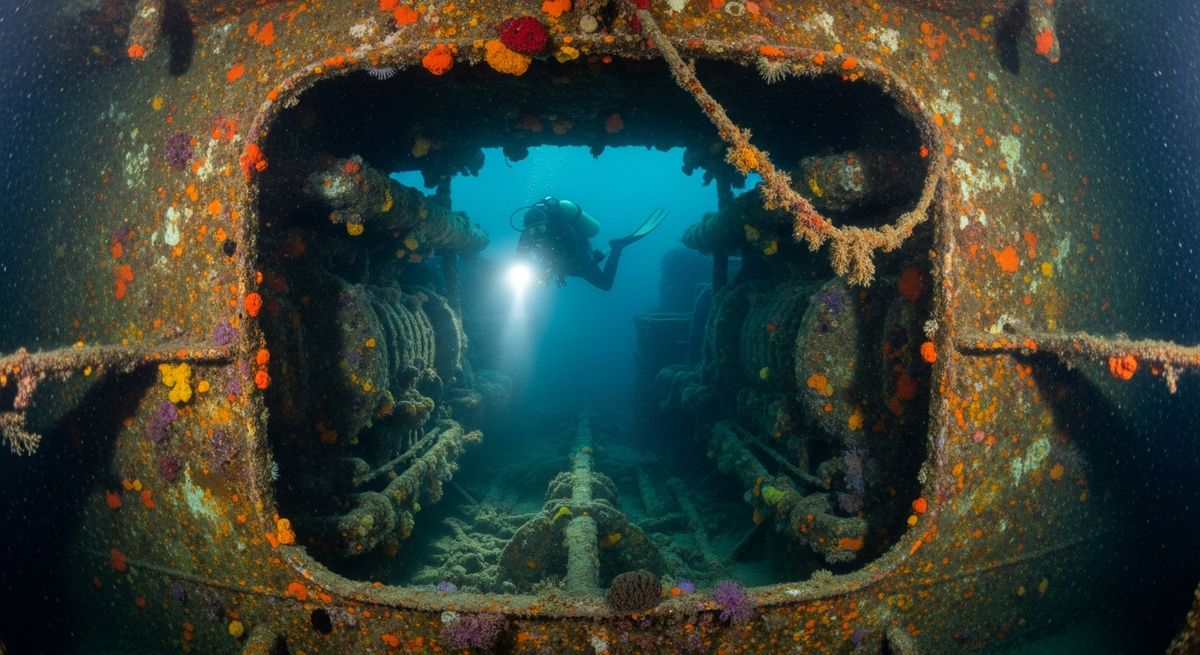
The Gudbrand, likely, lies deep and broken on the seabed, a proper technical dive for those who love their history with a side of strong current. We’re talking 48 metres here, so proper planning and gas management are non-negotiable. What’s left of this torpedoed steamer, sunk by UC 60 in 1917, is spread out, giving you a real sense of the violence of its end. Our favourite parts are the two massive boilers, still standing proud, absolutely caked in dead man's fingers and anemones. You'll spend your time navigating the debris field, poking around for signs of the triple expansion engine, and seeing what critters have made homes in the twisted metal. We’ve spotted some hefty conger eels here, tucked away in the darker corners, and the occasional ling slinking past. Visibility can be a real gamble – sometimes it’s a murky green soup, other times you get decent light penetration, enough to appreciate the scale of the wreckage. It’s a challenging dive, certainly not for the faint of heart, but for wreck enthusiasts seeking a piece of wartime history, it’s a rewarding plunge.
Typical GUDBRAND (POSSIBLY) Dive Profile
Illustrative profile based on site depth and type. Actual dive profiles vary - always follow your dive computer and training.
Safety Notes
Maximum depth 48m exceeds recreational limits (40m). Technical diving certification and equipment required.
Wreck site - avoid penetration without wreck diving certification. Watch for sharp metal and entanglement hazards.
Always perform a 3-minute safety stop at 5m before surfacing.
Nearest Dive Centres to GUDBRAND (POSSIBLY)
Dive shops near GUDBRAND (POSSIBLY)
Northumbria Scuba Divers
Aquanorth
Scuba-Life
The Diving Centre Ltd
Aqua Purists
Newcastle University Sub Aqua Society
Reviews for GUDBRAND (POSSIBLY)
Conditions
Ocean conditions, forecast and tides for GUDBRAND (POSSIBLY)
Plan & book
Ways to dive Scottish East Coast & Borders, from day trips to liveaboards.
Day trips & courses
via GetYourGuideGuided dives, courses and snorkel trips with instant booking.
Find dive trips in Scottish East Coast & BordersPlaces to stay
via Booking.comHotels and dive resorts near Scottish East Coast & Borders.
Search stays in Scottish East Coast & BordersDive insurance
Most travel insurance excludes or limits scuba. Check what you need before you go.
Dive insurance explainedPartner links: we may earn a commission if you book, at no extra cost to you. How we make money
Where to Stay near GUDBRAND (POSSIBLY)
Prices from Booking.com. We may earn a commission at no extra cost to you.