HMS BAYONET
Protected Area
Imperial Dock Lock, Leith
Why dive here
With 112+ marine species recorded in the area - including dolphins, dwarf minke whales, humpback whales, ocean sunfish (mola mola) and orcas - HMS BAYONET offers some of Scottish East Coast & Borders's richest wreck diving.
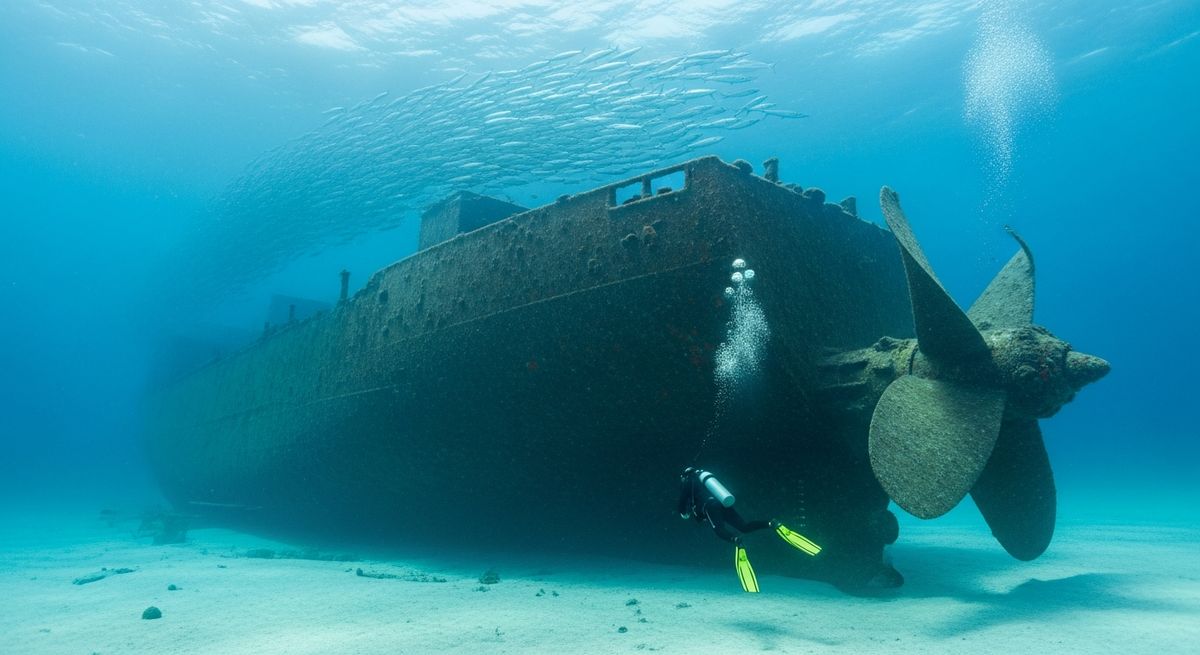
The HMS Bayonet is one of our favourite shallow wrecks along this stretch of coast, a real standout for something a bit different. She’s sitting bolt upright in a mere five metres of water, making her ridiculously accessible, even for newer divers getting their first taste of a proper wreck. We love how intact she is for such a shallow site, you can still trace the outline of her deck and superstructure, even though she’s well-colonised by the local invertebrates. You’re pretty much guaranteed to find crabs scuttling over the plates, often a few lobsters tucked into any available crevice, and a surprising amount of small fish darting in and out of the rusted metalwork. It’s a site where you can take your time, really explore the nooks and crannies, and just enjoy the sensation of diving a piece of history that’s now a thriving artificial reef. Our top tip: go on a calm day with good light; the colours on the wreck and the surrounding kelp are much more vibrant.
Typical HMS BAYONET Dive Profile
Illustrative profile based on site depth and type. Actual dive profiles vary - always follow your dive computer and training.
Safety Notes
Wreck site - avoid penetration without wreck diving certification. Watch for sharp metal and entanglement hazards.
Nearest Dive Centres to HMS BAYONET
Dive shops near HMS BAYONET
Deep Blue Scuba
Deep Sea World Aquarium
Libertas Scuba Stirling
Reviews for HMS BAYONET
Conditions
Ocean conditions, forecast and tides for HMS BAYONET
Plan & book
Ways to dive Scottish East Coast & Borders, from day trips to liveaboards.
Day trips & courses
via GetYourGuideGuided dives, courses and snorkel trips with instant booking.
Find dive trips in Scottish East Coast & BordersPlaces to stay
via Booking.comHotels and dive resorts near Scottish East Coast & Borders.
Search stays in Scottish East Coast & BordersDive insurance
Most travel insurance excludes or limits scuba. Check what you need before you go.
Dive insurance explainedPartner links: we may earn a commission if you book, at no extra cost to you. How we make money
Where to Stay near HMS BAYONET
Prices from Booking.com. We may earn a commission at no extra cost to you.