HMS CAMPANIA (PART OF)
Protected Area
Firth of Forth
Why dive here
With 112+ marine species recorded in the area - including dolphins, dwarf minke whales, humpback whales, ocean sunfish (mola mola) and orcas - HMS CAMPANIA (PART OF) offers some of Scottish East Coast & Borders's richest wreck diving.
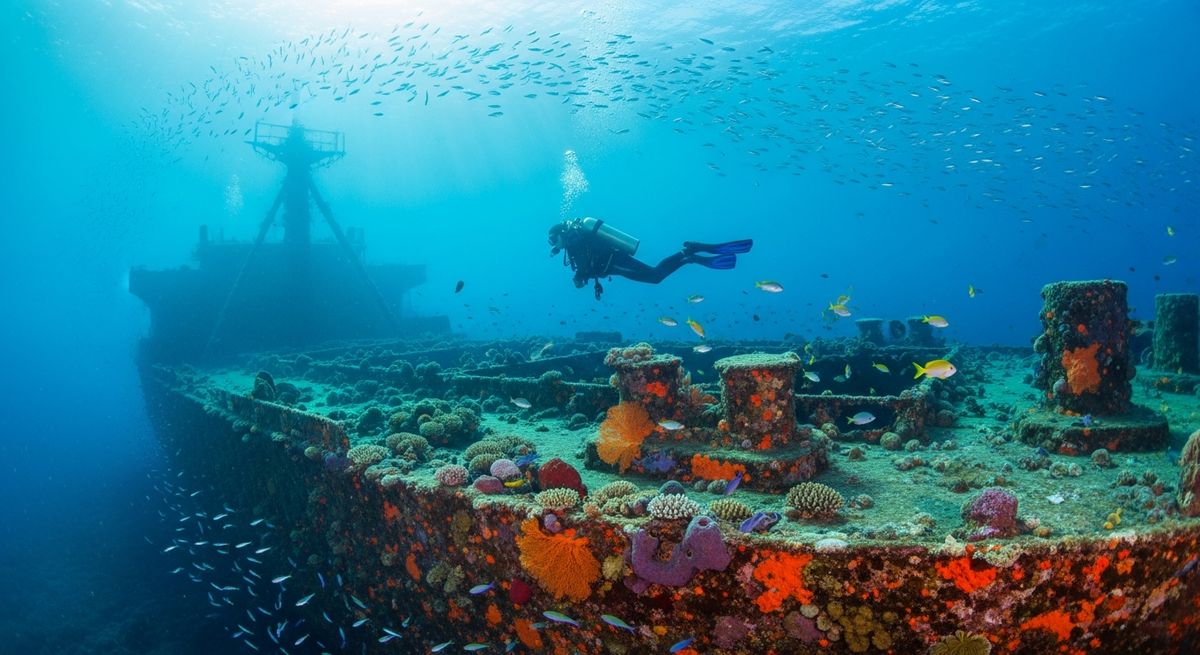
The HMS Campania, or what’s left of her anyway, sits in the Firth of Forth and she's a proper brute of a wreck. We love this site not for delicate corals, but for the sheer scale of the historical ironwork. Dropping down, the first thing you notice is the gloom, then the vast, skeletal ribs of the hull emerging from the silt. She was an aircraft carrier, originally a Cunard liner, and even in pieces, you feel the history. Visibility can be a real mixed bag here, but when it's good, you can follow sections of plating, massive frames, and twisted bulkheads that stretch into the distance. It’s an enormous site, scattered after a collision, so you’re picking a part to explore. Look for the cracks and crevices where conger eels lurk, sometimes a dogfish, and plenty of those pale plumose anemones clinging to the metal. Our favourite experience is navigating through the more intact sections, feeling the cold water press in, and imagining the vastness of the ship when she was whole. This one suits experienced wreck divers who appreciate history and don't mind a bit of a low-visibility challenge.
Typical HMS CAMPANIA (PART OF) Dive Profile
Illustrative profile based on site depth and type. Actual dive profiles vary - always follow your dive computer and training.
Safety Notes
Depth of 24m - Advanced Open Water certification recommended.
Wreck site - avoid penetration without wreck diving certification. Watch for sharp metal and entanglement hazards.
Always perform a 3-minute safety stop at 5m before surfacing.
Nearest Dive Centres to HMS CAMPANIA (PART OF)
Dive shops near HMS CAMPANIA (PART OF)
Deep Sea World Aquarium
Deep Blue Scuba
Libertas Scuba Stirling
Reviews for HMS CAMPANIA (PART OF)
Conditions
Ocean conditions, forecast and tides for HMS CAMPANIA (PART OF)
Plan & book
Ways to dive Scottish East Coast & Borders, from day trips to liveaboards.
Day trips & courses
via GetYourGuideGuided dives, courses and snorkel trips with instant booking.
Find dive trips in Scottish East Coast & BordersPlaces to stay
via Booking.comHotels and dive resorts near Scottish East Coast & Borders.
Search stays in Scottish East Coast & BordersDive insurance
Most travel insurance excludes or limits scuba. Check what you need before you go.
Dive insurance explainedPartner links: we may earn a commission if you book, at no extra cost to you. How we make money
Where to Stay near HMS CAMPANIA (PART OF)
Prices from Booking.com. We may earn a commission at no extra cost to you.