HMS IVANHOE
Protected Area
Imperial Dock Lock, Leith
Why dive here
With 112+ marine species recorded in the area - including dolphins, dwarf minke whales, humpback whales, ocean sunfish (mola mola) and orcas - HMS IVANHOE offers some of Scottish East Coast & Borders's richest wreck diving.
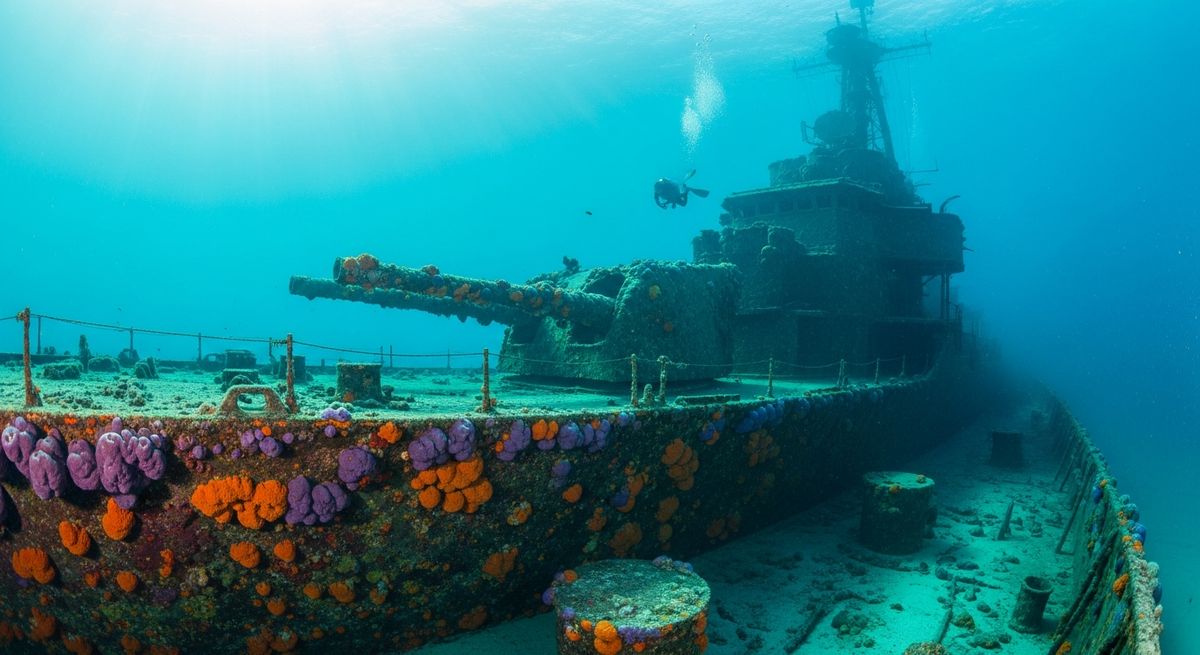
The HMS Ivanhoe is a proper little time capsule, sitting in just two metres of water near Eyemouth. We love a wreck you can actually spend some time on without deep decompression, and this trawler, pressed into service as a minesweeper, fits the bill perfectly. Built in 1898, she went down in 1914, so you’re looking at over a century of history right there. Even in the shallow East Coast water, the wreck has held up well. You can still trace the outline of the hull, and we’ve found the triple expansion engine surprisingly intact, a solid chunk of industrial heritage now coated in green algae and anemones. Visibility can swing a bit here, but on a good day, the sunlight filters right through to the seabed, illuminating crabs scuttling over the plates and small wrasse darting between the frames. It’s an easy dive, perfect for photographers wanting to play with ambient light or anyone who enjoys pottering about a bit of history. We’d suggest timing your dive for slack water, just to avoid any surge, though at this depth, it’s rarely a problem.
Typical HMS IVANHOE Dive Profile
Illustrative profile based on site depth and type. Actual dive profiles vary - always follow your dive computer and training.
Safety Notes
Wreck site - avoid penetration without wreck diving certification. Watch for sharp metal and entanglement hazards.
Nearest Dive Centres to HMS IVANHOE
Dive shops near HMS IVANHOE
Deep Blue Scuba
Deep Sea World Aquarium
Libertas Scuba Stirling
Reviews for HMS IVANHOE
Conditions
Ocean conditions, forecast and tides for HMS IVANHOE
Plan & book
Ways to dive Scottish East Coast & Borders, from day trips to liveaboards.
Day trips & courses
via GetYourGuideGuided dives, courses and snorkel trips with instant booking.
Find dive trips in Scottish East Coast & BordersPlaces to stay
via Booking.comHotels and dive resorts near Scottish East Coast & Borders.
Search stays in Scottish East Coast & BordersDive insurance
Most travel insurance excludes or limits scuba. Check what you need before you go.
Dive insurance explainedPartner links: we may earn a commission if you book, at no extra cost to you. How we make money
Where to Stay near HMS IVANHOE
Prices from Booking.com. We may earn a commission at no extra cost to you.