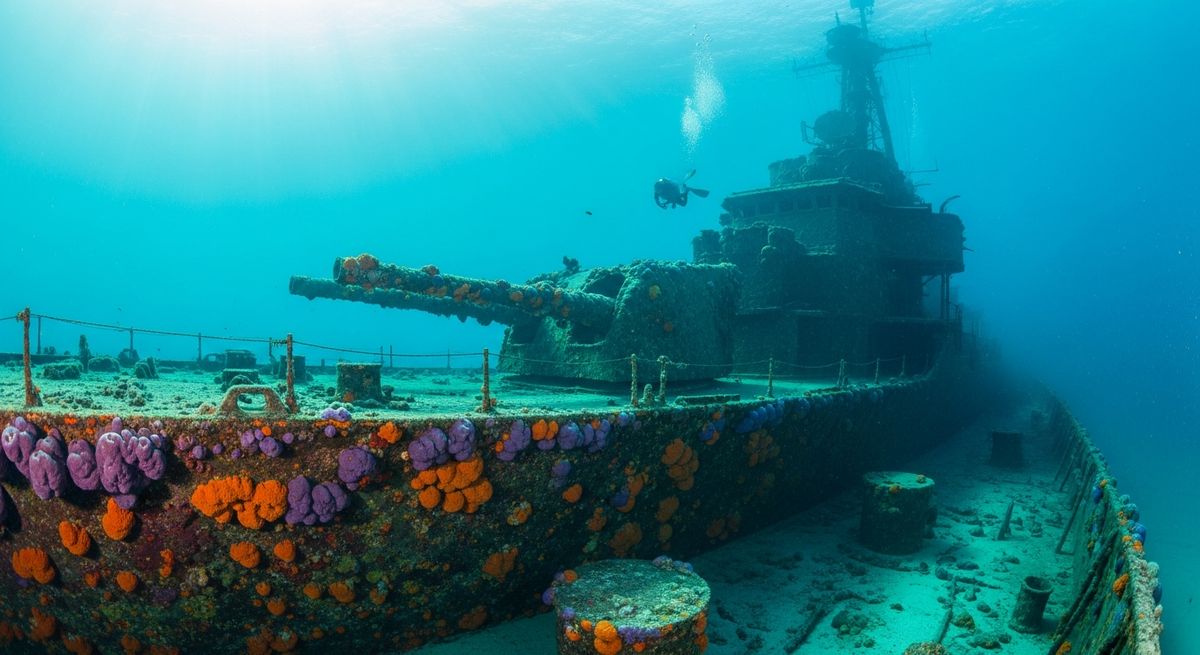
HMS KNOT
Protected Area
Fife Ness Coast
Why dive here
With 112+ marine species recorded in the area - including dolphins, dwarf minke whales, humpback whales, ocean sunfish (mola mola) and orcas - HMS KNOT offers some of Scottish East Coast & Borders's richest wreck diving.
The HMS Knot is one of those wrecks that just grabs you, sitting upright and mostly intact in a manageable 10 metres. We love how the whole structure is draped in dead man's fingers, a thick, pulsating blanket of orange and white that truly transforms the old trawler. Descending onto her, you can almost picture her in her working days, before she hit a mine in 1916. Our favourite thing to do is weave through the superstructure, where the light plays off the rust and the anemones, creating these fleeting patterns. Look closely and you’ll spot tiny crabs scuttling in the crevices, and we’ve often seen small schools of juvenile coalfish darting in and out of the hold. It’s a site that really rewards a slow, deliberate exploration, perfect for newer wreck divers or those looking for a relaxed bimble with plenty to see without deep decompression obligations. Just be mindful of the occasional surge if there’s a swell running; it can make navigating the interior a bit more lively.
Typical HMS KNOT Dive Profile
Illustrative profile based on site depth and type. Actual dive profiles vary - always follow your dive computer and training.
Safety Notes
Wreck site - avoid penetration without wreck diving certification. Watch for sharp metal and entanglement hazards.
Reviews for HMS KNOT
Conditions
Ocean conditions, forecast and tides for HMS KNOT
Plan & book
Ways to dive Scottish East Coast & Borders, from day trips to liveaboards.
Day trips & courses
via GetYourGuideGuided dives, courses and snorkel trips with instant booking.
Find dive trips in Scottish East Coast & BordersPlaces to stay
via Booking.comHotels and dive resorts near Scottish East Coast & Borders.
Search stays in Scottish East Coast & BordersDive insurance
Most travel insurance excludes or limits scuba. Check what you need before you go.
Dive insurance explainedPartner links: we may earn a commission if you book, at no extra cost to you. How we make money
Where to Stay near HMS KNOT
Prices from Booking.com. We may earn a commission at no extra cost to you.