HMS LUDLOW (EX USN STOCKTON)
Protected Area
Forth Islands
Why dive here
With 112+ marine species recorded in the area - including dolphins, dwarf minke whales, humpback whales, ocean sunfish (mola mola) and orcas - HMS LUDLOW (EX USN STOCKTON) offers some of Scottish East Coast & Borders's richest wreck diving.
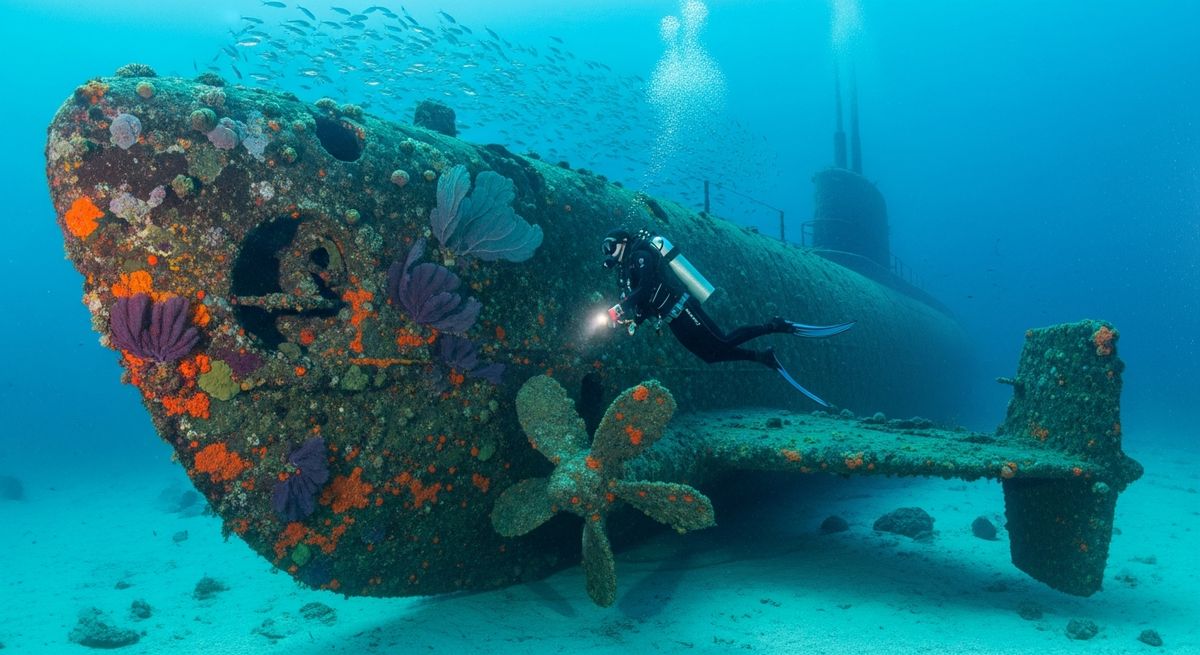
The HMS Ludlow, formerly the USS Stockton, isn't your typical graceful wreck dive. This destroyer was built in 1917, declared surplus, then beached and blown apart by rockets. What you’ll find now, spread across the seabed, is a fascinating debris field rather than an intact vessel. We love the sheer scale of the destruction. Twisted metal plates, sections of hull, and mangled machinery lie scattered, hinting at the force that tore her apart. It’s a site for divers who appreciate history and enjoy piecing together a story from fragments. You'll spend your dive navigating through the wreckage, imagining the ship’s final moments. Our favourite time to visit is during calmer tides, when the North Sea's notorious surge eases off a bit, letting you get a closer look at the smaller details. Expect to find conger eels lurking in the larger crevices and an abundance of crabs scuttling amongst the plates. The visibility can be variable, but even on a murky day, the Ludlow’s stark silhouette against the gloom has a powerful presence.
Safety Notes
Wreck site - avoid penetration without wreck diving certification. Watch for sharp metal and entanglement hazards.
Nearest Dive Centres to HMS LUDLOW (EX USN STOCKTON)
Dive shops near HMS LUDLOW (EX USN STOCKTON)
Deep Blue Scuba
Deep Sea World Aquarium
Rock House Diving
Reviews for HMS LUDLOW (EX USN STOCKTON)
Conditions
Ocean conditions, forecast and tides for HMS LUDLOW (EX USN STOCKTON)
Plan & book
Ways to dive Scottish East Coast & Borders, from day trips to liveaboards.
Day trips & courses
via GetYourGuideGuided dives, courses and snorkel trips with instant booking.
Find dive trips in Scottish East Coast & BordersPlaces to stay
via Booking.comHotels and dive resorts near Scottish East Coast & Borders.
Search stays in Scottish East Coast & BordersDive insurance
Most travel insurance excludes or limits scuba. Check what you need before you go.
Dive insurance explainedPartner links: we may earn a commission if you book, at no extra cost to you. How we make money
Where to Stay near HMS LUDLOW (EX USN STOCKTON)
Prices from Booking.com. We may earn a commission at no extra cost to you.