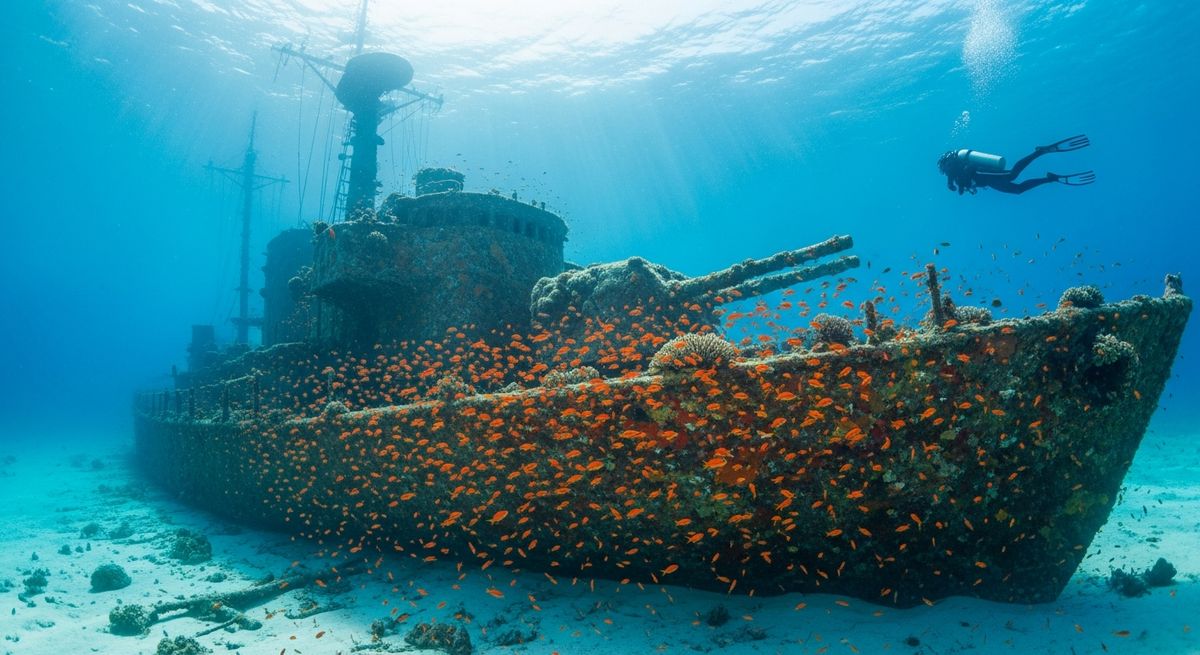
HMS SUCCESS
Protected Area
Fife Ness Coast
Why dive here
With 112+ marine species recorded in the area - including dolphins, dwarf minke whales, humpback whales, ocean sunfish (mola mola) and orcas - HMS SUCCESS offers some of Scottish East Coast & Borders's richest wreck diving.
The HMS Success, resting off Fifeness, is a proper slice of naval history. Built by Doxford and Sons, she was a true Edwardian destroyer, launched in 1901 and sunk in 1914. While she’s been heavily salvaged over the years, what remains gives you a real sense of her scale: 64 metres long, a sleek 6.1 metres wide. We love the way the hull plates peel back in places, revealing internal ribs. It's a structure you can really get inside, poking around the debris of what was once her engine room. Visibility can be a bit of a lottery here, as with many sites on the Scottish East Coast. We’d suggest aiming for neap tides; slack water gives you the best chance to properly explore without fighting a current. Look for the resident conger eels tucked into the larger sections, often just a pair of eyes peering out from a dark opening. Crabs scuttle across the seabed, and you’ll often spot decent-sized cod patrolling the deeper sections of the wreck. It’s a dive that rewards patience and a good torch, perfect for those who enjoy the historical detective work of a good wreck.
Safety Notes
Wreck site - avoid penetration without wreck diving certification. Watch for sharp metal and entanglement hazards.
Reviews for HMS SUCCESS
Conditions
Ocean conditions, forecast and tides for HMS SUCCESS
Plan & book
Ways to dive Scottish East Coast & Borders, from day trips to liveaboards.
Day trips & courses
via GetYourGuideGuided dives, courses and snorkel trips with instant booking.
Find dive trips in Scottish East Coast & BordersPlaces to stay
via Booking.comHotels and dive resorts near Scottish East Coast & Borders.
Search stays in Scottish East Coast & BordersDive insurance
Most travel insurance excludes or limits scuba. Check what you need before you go.
Dive insurance explainedPartner links: we may earn a commission if you book, at no extra cost to you. How we make money
Where to Stay near HMS SUCCESS
Prices from Booking.com. We may earn a commission at no extra cost to you.