HMSM G 11
Protected Area
Castle Point to Cullernose Point
Why dive here
With 112+ marine species recorded in the area - including dolphins, dwarf minke whales, humpback whales, ocean sunfish (mola mola) and orcas - HMSM G 11 offers some of Scottish East Coast & Borders's richest wreck diving.
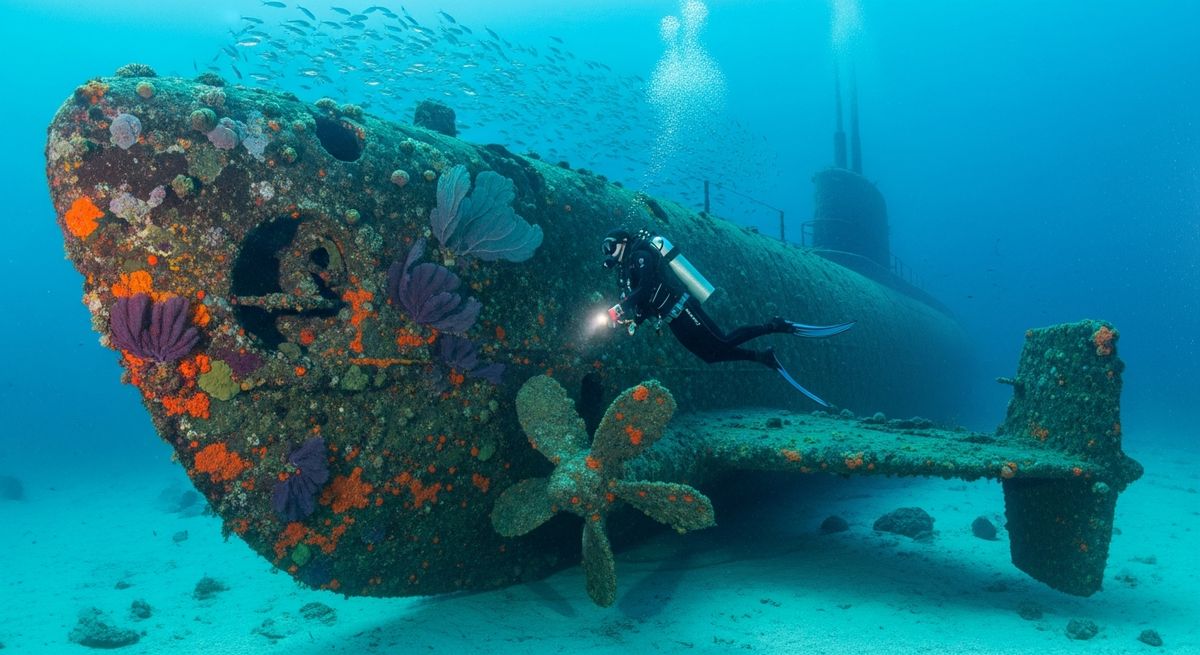
The G11. Now, she’s a proper piece of history, just off the Scottish East Coast, and surprisingly accessible. We love that she sits so shallow, topping out at 10 metres, making her perfect for an extended rummage even on air. Built by Vickers in 1916, this G-class submarine went down in 1918, and you can still feel that era when you’re down there. You’ll find the G11 mostly broken up, but still clearly a submarine, scattered across the seabed. We often spend our bottom time picking out sections of her hull, the strong frames, and imagining her original form. The twin shafts are usually visible, and we’ve spotted her torpedo tubes, often encrusted and acting as mini-reefs. Look closely and you’ll find dead man’s fingers clinging to the steel, often with small velvet crabs scuttling over them. Cod and wrasse dart in and out of the deeper crevices. It's not a pristine, intact wreck, but that's precisely her charm – a historical puzzle to piece together on the seabed, ideal for divers who appreciate a good story and a relaxed, shallow exploration.
Typical HMSM G 11 Dive Profile
Illustrative profile based on site depth and type. Actual dive profiles vary - always follow your dive computer and training.
Safety Notes
Wreck site - avoid penetration without wreck diving certification. Watch for sharp metal and entanglement hazards.
Nearest Dive Centres to HMSM G 11
Dive shops near HMSM G 11
View all dive centres in Scottish East Coast & BordersReviews for HMSM G 11
Conditions
Ocean conditions, forecast and tides for HMSM G 11
Plan & book
Ways to dive Scottish East Coast & Borders, from day trips to liveaboards.
Day trips & courses
via GetYourGuideGuided dives, courses and snorkel trips with instant booking.
Find dive trips in Scottish East Coast & BordersPlaces to stay
via Booking.comHotels and dive resorts near Scottish East Coast & Borders.
Search stays in Scottish East Coast & BordersDive insurance
Most travel insurance excludes or limits scuba. Check what you need before you go.
Dive insurance explainedPartner links: we may earn a commission if you book, at no extra cost to you. How we make money
Where to Stay near HMSM G 11
Prices from Booking.com. We may earn a commission at no extra cost to you.