HOLDERNESS
Protected Area
St Mary's Island
Why dive here
With 112+ marine species recorded in the area - including dolphins, dwarf minke whales, humpback whales, ocean sunfish (mola mola) and orcas - HOLDERNESS offers some of Scottish East Coast & Borders's richest wreck diving.
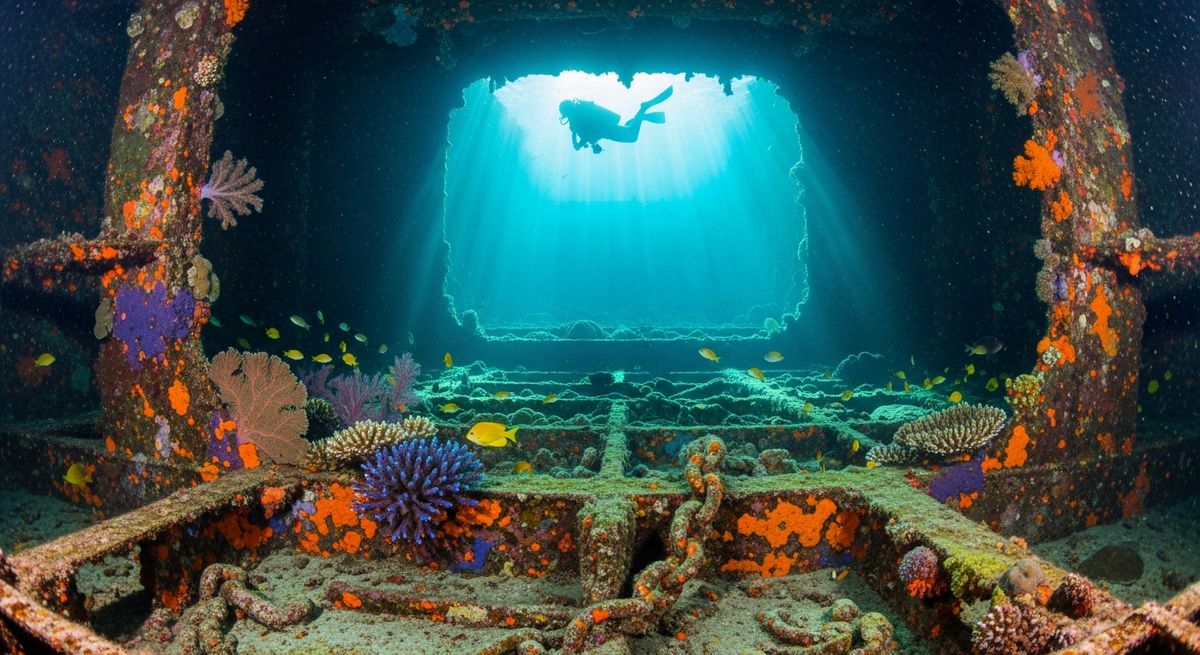
Holderness isn’t about depth, it’s about character. Sunk in 1959, this old steamship sits remarkably intact in just six metres of water. We love a shallow wreck, especially one that tells a story, and you can really spend some time poking around here. The bow and stern are pretty distinct, though the midsection has collapsed a bit over time. What makes Holderness a standout for us is the sheer amount of life that has moved in. Spend some time peering into the gloom of the holds and you’ll often spot a grumpy conger eel or a lurking pollack. The metalwork is completely encrusted with anemones and dead man's fingers, creating a riot of colour, particularly when the sunlight filters down. We’d suggest a slack water dive to really appreciate the details – the currents can pick up here, making it a bit of a workout. It’s perfect for newer wreck divers or those who just want a relaxed potter, and we reckon it’s one of the best shallow dives on the Scottish East Coast.
Typical HOLDERNESS Dive Profile
Illustrative profile based on site depth and type. Actual dive profiles vary - always follow your dive computer and training.
Safety Notes
Wreck site - avoid penetration without wreck diving certification. Watch for sharp metal and entanglement hazards.
Nearest Dive Centres to HOLDERNESS
Dive shops near HOLDERNESS
Northumbria Scuba Divers
Aquanorth
Scuba-Life
Aqua Purists
Newcastle University Sub Aqua Society
The Diving Centre Ltd
Reviews for HOLDERNESS
Conditions
Ocean conditions, forecast and tides for HOLDERNESS
Plan & book
Ways to dive Scottish East Coast & Borders, from day trips to liveaboards.
Day trips & courses
via GetYourGuideGuided dives, courses and snorkel trips with instant booking.
Find dive trips in Scottish East Coast & BordersPlaces to stay
via Booking.comHotels and dive resorts near Scottish East Coast & Borders.
Search stays in Scottish East Coast & BordersDive insurance
Most travel insurance excludes or limits scuba. Check what you need before you go.
Dive insurance explainedPartner links: we may earn a commission if you book, at no extra cost to you. How we make money
Where to Stay near HOLDERNESS
Prices from Booking.com. We may earn a commission at no extra cost to you.