JAN VAN RYSWYCK
Protected Area
Farne Islands
Why dive here
With 112+ marine species recorded in the area - including dolphins, dwarf minke whales, humpback whales, ocean sunfish (mola mola) and orcas - JAN VAN RYSWYCK offers some of Scottish East Coast & Borders's richest wreck diving.
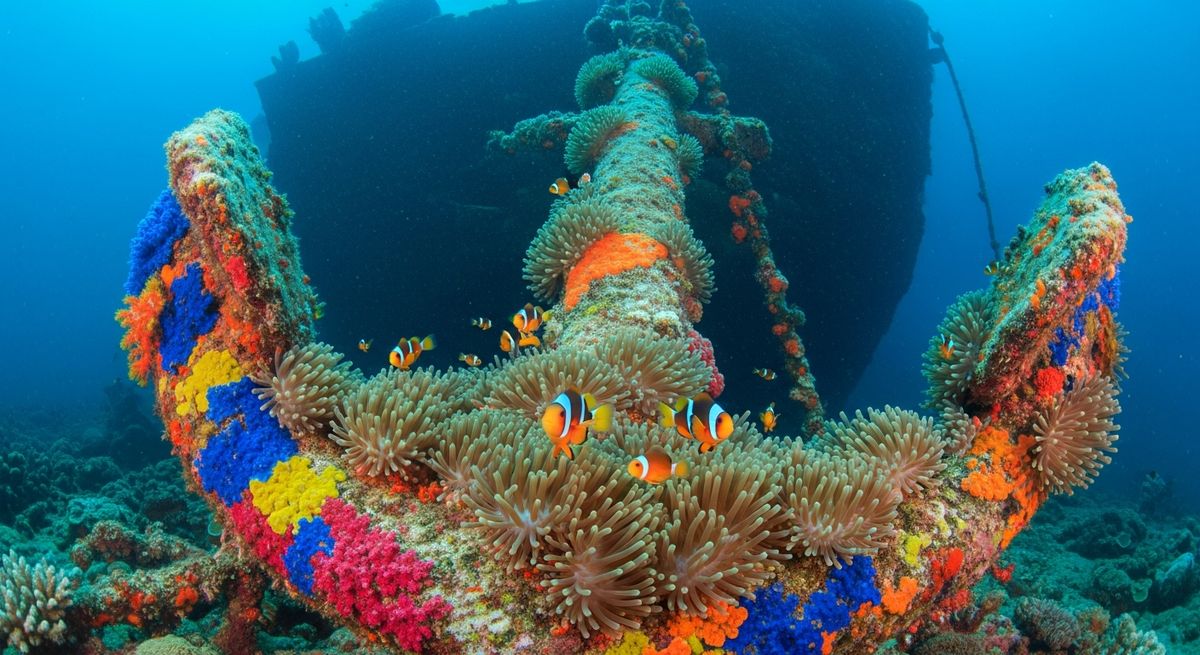
The Jan van Ryswyck, resting at 18 metres, is a proper Scottish wreck dive, moody and utterly compelling. We love how much of her remains intact, given she went down in thick fog back in 1924. You drop onto a huge steel hull, 87.5 metres long, and the scale immediately hits you. The twin boilers are still prominent, standing proud of the seabed, and we often find conger eels peering out from gaps in the plates. Exploring the engine room is a highlight. You can follow the drive shaft for a good stretch, imagining the triple-expansion engine at work, though now it's home to shoals of pouting and squat lobsters. We always check the bow for ling lurking in the shadows, and the stern often has a decent current running, bringing in crabs and starfish. It’s a site for those who appreciate history and don't mind a bit of chill in the water; the low visibility, typical of the East Coast, only adds to the atmosphere. We’d suggest a good torch and a keen eye for detail.
Typical JAN VAN RYSWYCK Dive Profile
Illustrative profile based on site depth and type. Actual dive profiles vary - always follow your dive computer and training.
Safety Notes
Wreck site - avoid penetration without wreck diving certification. Watch for sharp metal and entanglement hazards.
Always perform a 3-minute safety stop at 5m before surfacing.
Nearest Dive Centres to JAN VAN RYSWYCK
Dive shops near JAN VAN RYSWYCK
View all dive centres in Scottish East Coast & BordersReviews for JAN VAN RYSWYCK
Conditions
Ocean conditions, forecast and tides for JAN VAN RYSWYCK
Plan & book
Ways to dive Scottish East Coast & Borders, from day trips to liveaboards.
Day trips & courses
via GetYourGuideGuided dives, courses and snorkel trips with instant booking.
Find dive trips in Scottish East Coast & BordersPlaces to stay
via Booking.comHotels and dive resorts near Scottish East Coast & Borders.
Search stays in Scottish East Coast & BordersDive insurance
Most travel insurance excludes or limits scuba. Check what you need before you go.
Dive insurance explainedPartner links: we may earn a commission if you book, at no extra cost to you. How we make money
Where to Stay near JAN VAN RYSWYCK
Prices from Booking.com. We may earn a commission at no extra cost to you.