LOCH-NA-GAR (PROBABLY)
Protected Area
Durham Coast
Why dive here
With 112+ marine species recorded in the area - including dolphins, dwarf minke whales, humpback whales, ocean sunfish (mola mola) and orcas - LOCH-NA-GAR (PROBABLY) offers some of Scottish East Coast & Borders's richest wreck diving.
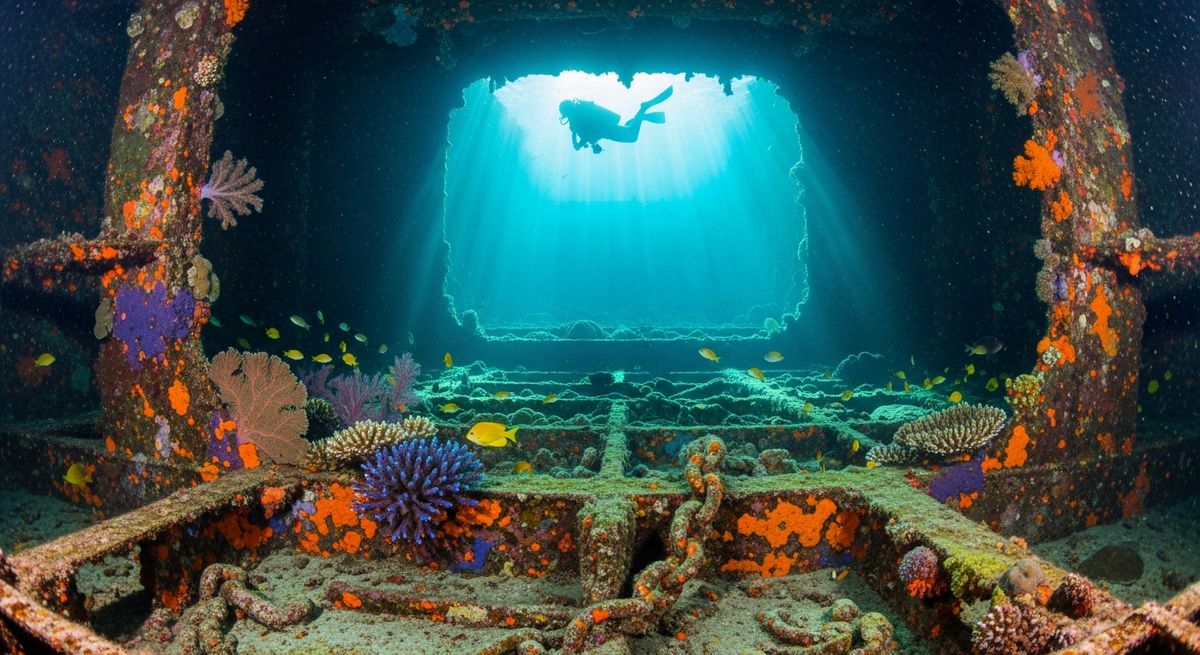
The Loch-Na-Gar, or what we’re pretty sure is the Loch-Na-Gar, is one of those wrecks that just screams history. Lying in 26 metres, this iron barque turned dumb barge is a proper chunky beast. Dropping down, the first thing you notice is the sheer scale – 49 metres of iron structure that’s been down there since 1901. We love how the hull plates are still largely intact, creating these dark, inviting internal spaces for us to peer into. It’s an atmospheric dive, currents permitting, with light filtering through the North Sea gloom, giving everything a muted, ancient feel. You’ll spend your time tracing the length of the deck, imagining what life was like on board before she went down. Expect to see plenty of local residents: wrasse darting between the frames, decent-sized cod hanging out in the darker sections, and sometimes even a conger eel peeking from a pipe. Our favourite detail is the way the ironwork has become encrusted with soft corals and anemones, painting splashes of colour onto the rust. It's a dive that suits those who appreciate a solid, historical wreck, and who don't mind a bit of a chill in the water. Go on a slack tide for the best experience; it makes exploring those internal areas much more enjoyable.
Typical LOCH-NA-GAR (PROBABLY) Dive Profile
Illustrative profile based on site depth and type. Actual dive profiles vary - always follow your dive computer and training.
Safety Notes
Depth of 26m - Advanced Open Water certification recommended.
Wreck site - avoid penetration without wreck diving certification. Watch for sharp metal and entanglement hazards.
Always perform a 3-minute safety stop at 5m before surfacing.
Nearest Dive Centres to LOCH-NA-GAR (PROBABLY)
Dive shops near LOCH-NA-GAR (PROBABLY)
Sunderland Scuba Centre
The Diving Centre Ltd
Aquanorth
Scuba-Life
Aqua Purists
Newcastle University Sub Aqua Society
Reviews for LOCH-NA-GAR (PROBABLY)
Conditions
Ocean conditions, forecast and tides for LOCH-NA-GAR (PROBABLY)
Plan & book
Ways to dive Scottish East Coast & Borders, from day trips to liveaboards.
Day trips & courses
via GetYourGuideGuided dives, courses and snorkel trips with instant booking.
Find dive trips in Scottish East Coast & BordersPlaces to stay
via Booking.comHotels and dive resorts near Scottish East Coast & Borders.
Search stays in Scottish East Coast & BordersDive insurance
Most travel insurance excludes or limits scuba. Check what you need before you go.
Dive insurance explainedPartner links: we may earn a commission if you book, at no extra cost to you. How we make money
Where to Stay near LOCH-NA-GAR (PROBABLY)
Prices from Booking.com. We may earn a commission at no extra cost to you.