MARNE (PART OF)(POSSIBLY)
Protected Area
Tynemouth to Seaton Sluice
Why dive here
With 112+ marine species recorded in the area - including dolphins, dwarf minke whales, humpback whales, ocean sunfish (mola mola) and orcas - MARNE (PART OF)(POSSIBLY) offers some of Scottish East Coast & Borders's richest wreck diving.
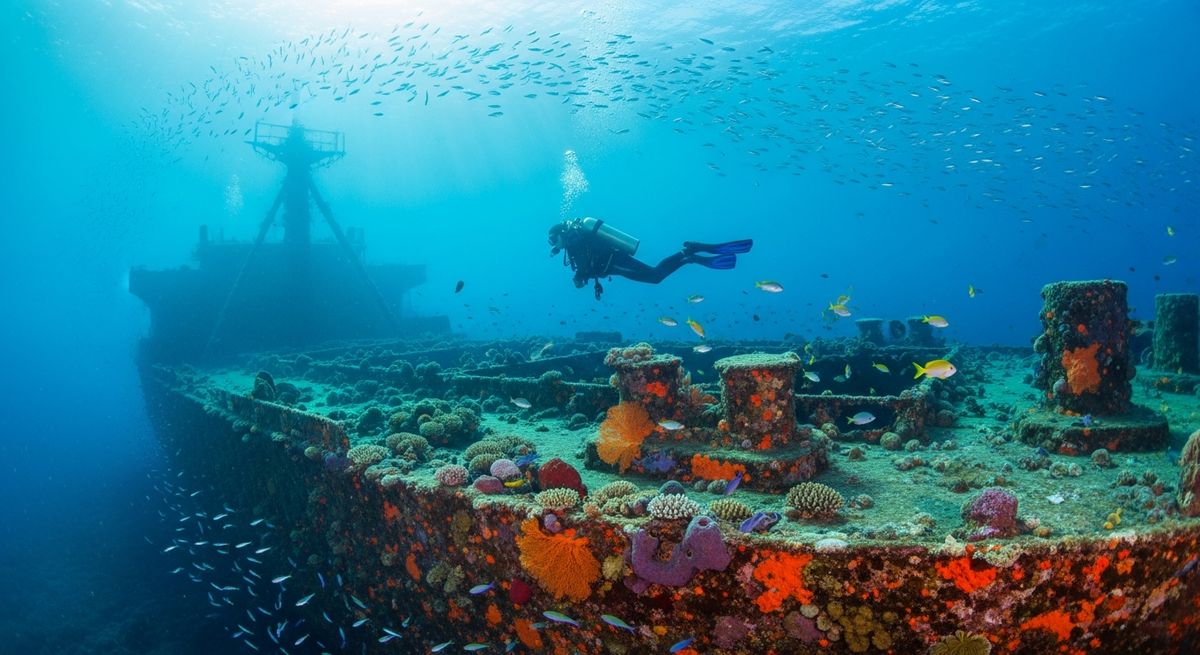
The Marne isn't a dive for everyone, but if you appreciate a piece of history on the seabed, she delivers. Resting at 17 metres, she’s a wooden vessel, an auxiliary oil engine ship sunk in 1940. You can feel the age of the timbers, a surprisingly tactile experience as you trace the hull line. We love how the wooden structure has softened over time, offering a myriad of nooks and crannies for life to hide. Expect to spot plenty of crabs scuttling amongst the frames and the occasional inquisitive wrasse darting between the planks. It’s a gentle dive, making it suitable for those newer to wreck diving, provided the conditions are calm. We’d suggest timing your dive for slack water; the Scottish East Coast can get a bit frisky with currents, and you want to be able to really take your time and explore this old girl without fighting the push and pull. It's not about big pelagics here, it’s about the quiet contemplation of a ship’s final resting place.
Typical MARNE (PART OF)(POSSIBLY) Dive Profile
Illustrative profile based on site depth and type. Actual dive profiles vary - always follow your dive computer and training.
Safety Notes
Wreck site - avoid penetration without wreck diving certification. Watch for sharp metal and entanglement hazards.
Always perform a 3-minute safety stop at 5m before surfacing.
Nearest Dive Centres to MARNE (PART OF)(POSSIBLY)
Dive shops near MARNE (PART OF)(POSSIBLY)
Aquanorth
The Diving Centre Ltd
Northumbria Scuba Divers
Scuba-Life
Sunderland Scuba Centre
Aqua Purists
Reviews for MARNE (PART OF)(POSSIBLY)
Conditions
Ocean conditions, forecast and tides for MARNE (PART OF)(POSSIBLY)
Plan & book
Ways to dive Scottish East Coast & Borders, from day trips to liveaboards.
Day trips & courses
via GetYourGuideGuided dives, courses and snorkel trips with instant booking.
Find dive trips in Scottish East Coast & BordersPlaces to stay
via Booking.comHotels and dive resorts near Scottish East Coast & Borders.
Search stays in Scottish East Coast & BordersDive insurance
Most travel insurance excludes or limits scuba. Check what you need before you go.
Dive insurance explainedPartner links: we may earn a commission if you book, at no extra cost to you. How we make money
Where to Stay near MARNE (PART OF)(POSSIBLY)
Prices from Booking.com. We may earn a commission at no extra cost to you.