METANOL
Protected Area
Forth Islands
Why dive here
With 112+ marine species recorded in the area - including dolphins, dwarf minke whales, humpback whales, ocean sunfish (mola mola) and orcas - METANOL offers some of Scottish East Coast & Borders's richest wreck diving.
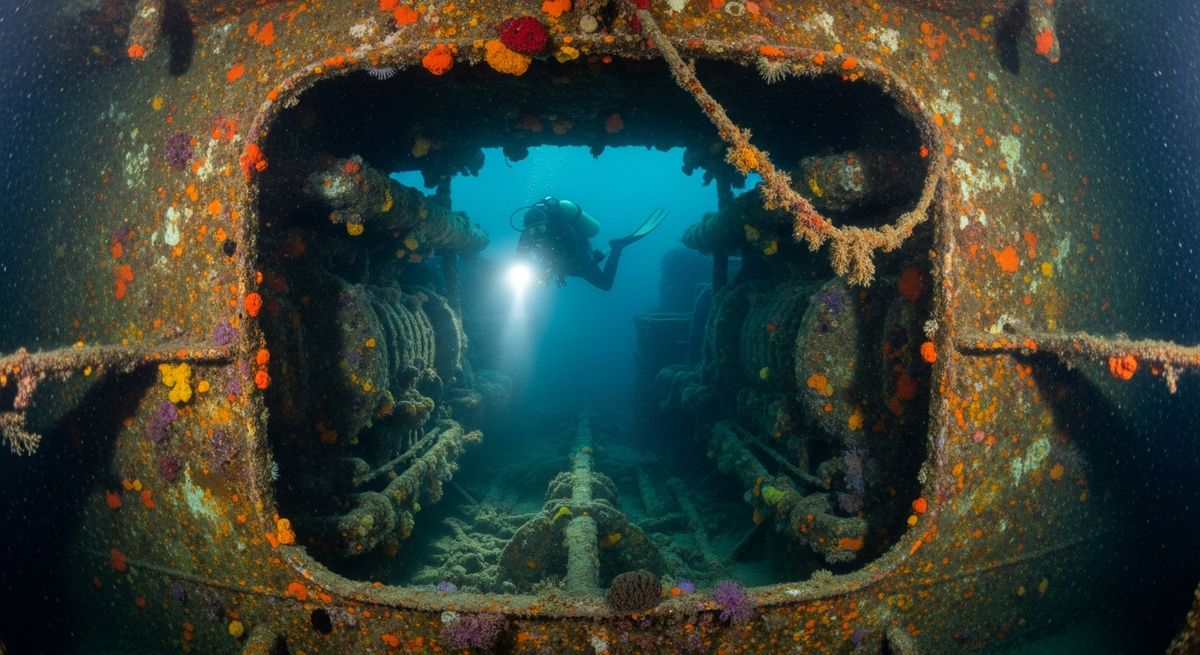
The Metanol. Now, we know what you’re thinking: a wreck that’s only 1m deep? You read that right. Sunk in 1974 after a nitric acid leak, this 68-meter tanker lies so shallow its superstructure often breaks the surface, especially at low tide. This isn't a dive for exploring deep holds or complex machinery. Instead, it’s a brilliant shore dive for those days when you just want to grab your kit, wade in, and experience a proper wreck without the faff of a boat. We love it for its sheer accessibility and the way it introduces you to temperate wreck diving without the usual Scottish chill factor of depth. You’ll spend your time crisscrossing the deck, weaving through the exposed metalwork that now serves as an artificial reef. Think kelp fronds swaying over rusted plating, small wrasse darting between the beams, and sometimes, if you’re lucky, a curious seal popping its head up to see what you’re doing. It’s perfect for new wreck divers, photographers looking for interesting light play, or anyone keen to spot the smaller stuff that takes refuge in the nooks and crannies of a very much land-based wreck. Our best tip? Go on a calm day, close to high tide, for the clearest views and the most comfortable entry.
Typical METANOL Dive Profile
Illustrative profile based on site depth and type. Actual dive profiles vary - always follow your dive computer and training.
Safety Notes
Wreck site - avoid penetration without wreck diving certification. Watch for sharp metal and entanglement hazards.
Nearest Dive Centres to METANOL
Dive shops near METANOL
Deep Blue Scuba
Deep Sea World Aquarium
Rock House Diving
Reviews for METANOL
Conditions
Ocean conditions, forecast and tides for METANOL
Plan & book
Ways to dive Scottish East Coast & Borders, from day trips to liveaboards.
Day trips & courses
via GetYourGuideGuided dives, courses and snorkel trips with instant booking.
Find dive trips in Scottish East Coast & BordersPlaces to stay
via Booking.comHotels and dive resorts near Scottish East Coast & Borders.
Search stays in Scottish East Coast & BordersDive insurance
Most travel insurance excludes or limits scuba. Check what you need before you go.
Dive insurance explainedPartner links: we may earn a commission if you book, at no extra cost to you. How we make money
Where to Stay near METANOL
Prices from Booking.com. We may earn a commission at no extra cost to you.