NIDELVEN
Protected Area
Castle Point to Cullernose Point
Why dive here
With 112+ marine species recorded in the area - including dolphins, dwarf minke whales, humpback whales, ocean sunfish (mola mola) and orcas - NIDELVEN offers some of Scottish East Coast & Borders's richest wreck diving.
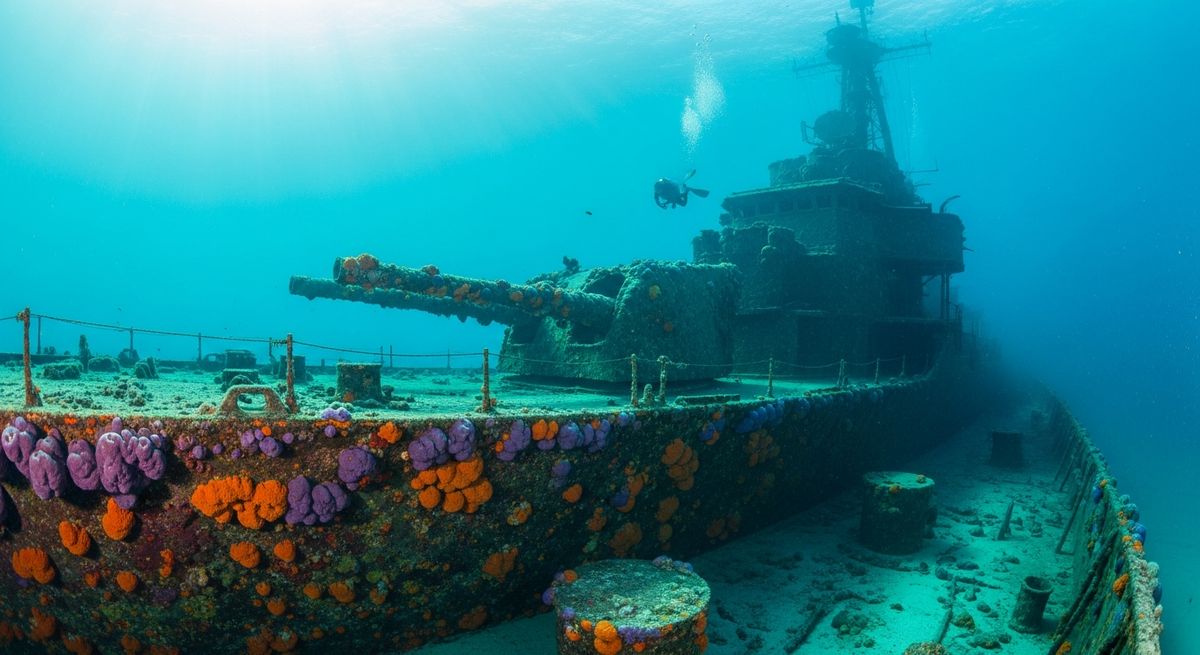
Nidelven, off the Scottish East Coast, is a proper dive, a deep one at 39 metres, and exactly what we love about UK wreck diving. She’s a steamship, sunk back in 1917, and even after all that time on the seabed, there’s still plenty of her to explore. We particularly enjoy the bow section, often standing proud, and you can usually make out the anchor chains leading off into the gloom. The triple expansion engine is a highlight, quite often with a resident conger eel peering out from the cylinders, and the single boiler is very much present. Visibility here can be a bit of a lottery, as it is in the North Sea, but on a good day, when the light penetrates, the wreck takes on a ghostly quality. It’s the kind of dive where you feel the history, a proper journey back in time. This isn't a beginner’s wreck, mind you. That depth and the potential for current means you need to be comfortable with your skills, but for experienced wreck enthusiasts, Nidelven delivers a truly rewarding dive. Look closely around the superstructure for plumose anemones, their white tentacles reaching into the current.
Typical NIDELVEN Dive Profile
Illustrative profile based on site depth and type. Actual dive profiles vary - always follow your dive computer and training.
Safety Notes
Deep dive (39m) - monitor air consumption closely. Advanced certification recommended.
Wreck site - avoid penetration without wreck diving certification. Watch for sharp metal and entanglement hazards.
Always perform a 3-minute safety stop at 5m before surfacing.
Nearest Dive Centres to NIDELVEN
Dive shops near NIDELVEN
View all dive centres in Scottish East Coast & BordersReviews for NIDELVEN
Conditions
Ocean conditions, forecast and tides for NIDELVEN
Plan & book
Ways to dive Scottish East Coast & Borders, from day trips to liveaboards.
Day trips & courses
via GetYourGuideGuided dives, courses and snorkel trips with instant booking.
Find dive trips in Scottish East Coast & BordersPlaces to stay
via Booking.comHotels and dive resorts near Scottish East Coast & Borders.
Search stays in Scottish East Coast & BordersDive insurance
Most travel insurance excludes or limits scuba. Check what you need before you go.
Dive insurance explainedPartner links: we may earn a commission if you book, at no extra cost to you. How we make money
Where to Stay near NIDELVEN
Prices from Booking.com. We may earn a commission at no extra cost to you.