PHAEACIAN
Protected Area
Outer Firth of Forth and St Andrews Bay Complex
Why dive here
With 112+ marine species recorded in the area - including dolphins, dwarf minke whales, humpback whales, ocean sunfish (mola mola) and orcas - PHAEACIAN offers some of Scottish East Coast & Borders's richest wreck diving.
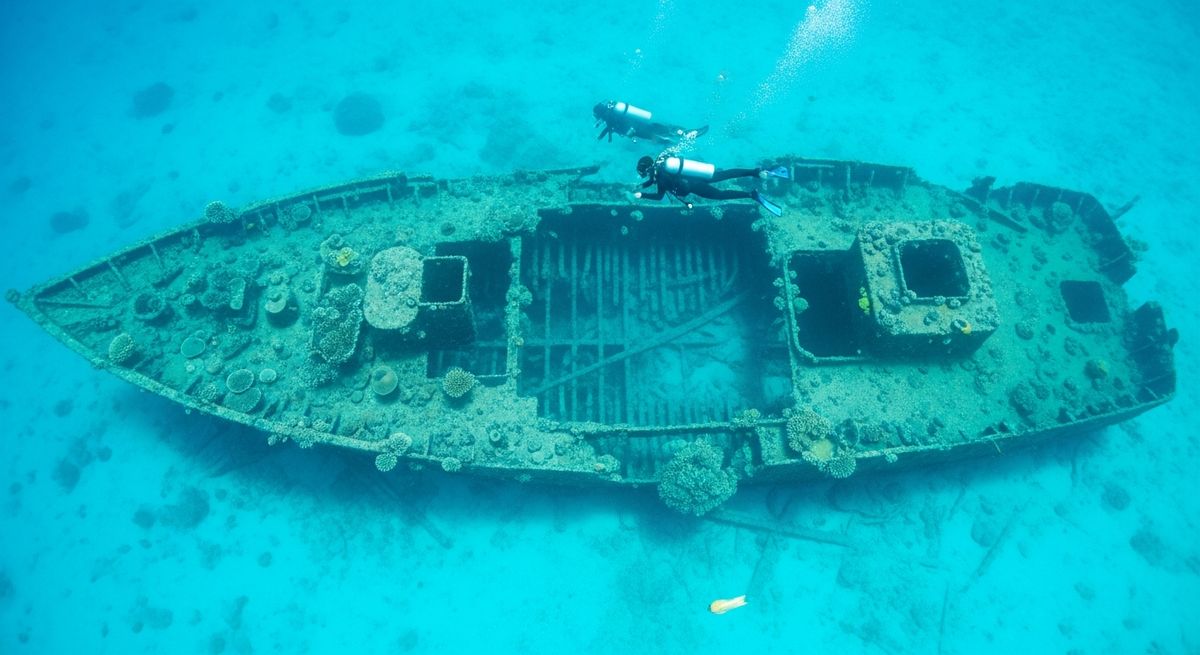
The Phaeacian is a fascinating, if sombre, dive on Scotland’s East Coast. Lying at 29 metres, this steamship, built in 1920, went down in 1943 after a collision, taking a few lives with her. We find it’s a site that really makes you feel the weight of history. The wreck itself is pretty broken up, but you can still make out the distinct triple-expansion engine, which is always a highlight for us. There are parts of the superstructure scattered around, creating little nooks and crannies that are home to some surprisingly robust local life. Think squat lobsters tucked into every crevice, velvet swimming crabs scuttling over corroded plates, and sometimes a curious conger eel peering out from beneath a beam. The visibility can be hit-or-miss, as is often the way here, but on a good day, with sunlight filtering down, the greens and browns of the wreck are beautifully muted. We’d suggest diving this one on a slack tide, if possible, to really take your time exploring the debris field. It’s a site that rewards patience, giving you a quiet moment to reflect on the ship’s past and the life it now hosts.
Typical PHAEACIAN Dive Profile
Illustrative profile based on site depth and type. Actual dive profiles vary - always follow your dive computer and training.
Safety Notes
Depth of 29m - Advanced Open Water certification recommended.
Wreck site - avoid penetration without wreck diving certification. Watch for sharp metal and entanglement hazards.
Always perform a 3-minute safety stop at 5m before surfacing.
Nearest Dive Centres to PHAEACIAN
Dive shops near PHAEACIAN
View all dive centres in Scottish East Coast & BordersReviews for PHAEACIAN
Conditions
Ocean conditions, forecast and tides for PHAEACIAN
Plan & book
Ways to dive Scottish East Coast & Borders, from day trips to liveaboards.
Day trips & courses
via GetYourGuideGuided dives, courses and snorkel trips with instant booking.
Find dive trips in Scottish East Coast & BordersPlaces to stay
via Booking.comHotels and dive resorts near Scottish East Coast & Borders.
Search stays in Scottish East Coast & BordersDive insurance
Most travel insurance excludes or limits scuba. Check what you need before you go.
Dive insurance explainedPartner links: we may earn a commission if you book, at no extra cost to you. How we make money
Where to Stay near PHAEACIAN
Prices from Booking.com. We may earn a commission at no extra cost to you.