QUEENSBURY (POSSIBLY)
Protected Area
Milton Ness
Why dive here
With 112+ marine species recorded in the area - including dolphins, dwarf minke whales, humpback whales, ocean sunfish (mola mola) and orcas - QUEENSBURY (POSSIBLY) offers some of Scottish East Coast & Borders's richest wreck diving.
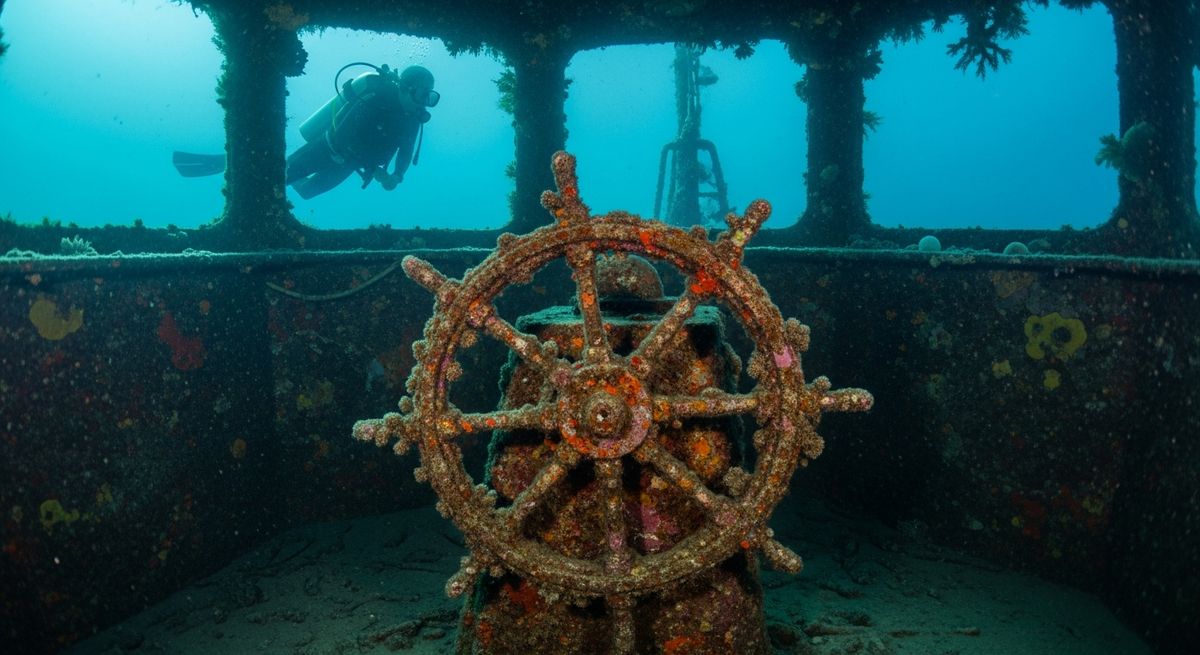
The Queensbury sits in deep, dark water off the Scottish East Coast, a proper technical dive and one we hold in high regard. It’s a huge vessel, 113.5m long, and when you descend into that 55m gloom, the sheer scale of her really hits you. We love dropping down the shotline, feeling the temperature drop, and then seeing the looming superstructure emerge from the murk. The visibility here can be challenging, but on a good day, it’s dramatic. We’d suggest heading straight for the stern. The propellers are still there, massive blades encrusted with anenomes, and it’s a brilliant photo opportunity if you're quick with your strobes. Exploring the engine room, with its triple-expansion engine, is our favourite part. The feeling of history in that space is palpable, and you can almost hear the hum of the machinery. Look out for conger eels hiding in the pipes and the occasional anglerfish lurking on the deck. This is a dive for experienced technical divers, comfortable with cold, deep conditions, and who appreciate a proper expedition into history.
Typical QUEENSBURY (POSSIBLY) Dive Profile
Illustrative profile based on site depth and type. Actual dive profiles vary - always follow your dive computer and training.
Safety Notes
Maximum depth 55m exceeds recreational limits (40m). Technical diving certification and equipment required.
Wreck site - avoid penetration without wreck diving certification. Watch for sharp metal and entanglement hazards.
Always perform a 3-minute safety stop at 5m before surfacing.
Reviews for QUEENSBURY (POSSIBLY)
Conditions
Ocean conditions, forecast and tides for QUEENSBURY (POSSIBLY)
Plan & book
Ways to dive Scottish East Coast & Borders, from day trips to liveaboards.
Day trips & courses
via GetYourGuideGuided dives, courses and snorkel trips with instant booking.
Find dive trips in Scottish East Coast & BordersPlaces to stay
via Booking.comHotels and dive resorts near Scottish East Coast & Borders.
Search stays in Scottish East Coast & BordersDive insurance
Most travel insurance excludes or limits scuba. Check what you need before you go.
Dive insurance explainedPartner links: we may earn a commission if you book, at no extra cost to you. How we make money
Where to Stay near QUEENSBURY (POSSIBLY)
Prices from Booking.com. We may earn a commission at no extra cost to you.