RFA CREOSOL
Protected Area
Durham Coast
Why dive here
With 112+ marine species recorded in the area - including dolphins, dwarf minke whales, humpback whales, ocean sunfish (mola mola) and orcas - RFA CREOSOL offers some of Scottish East Coast & Borders's richest wreck diving.
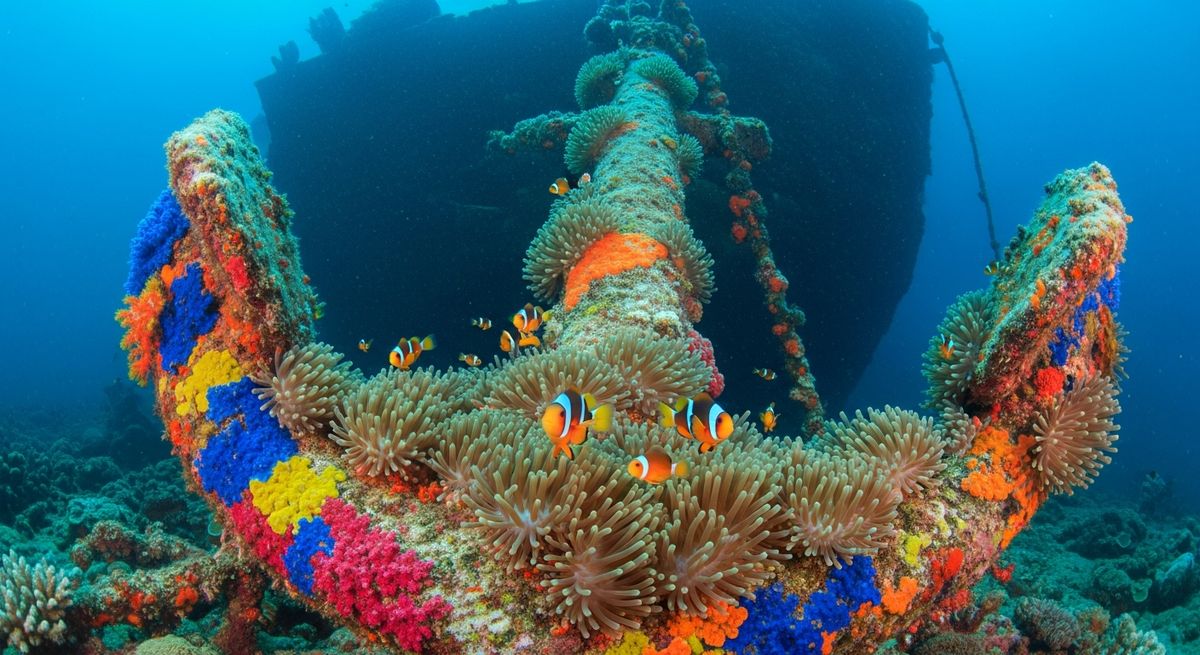
The RFA Creosol, a tanker sunk in 1918, lies upright at 44 meters, a proper dive for those who appreciate history and depth. We love this site for its intactness; the structure is remarkably preserved, offering a fantastic sense of scale as you descend. Expect to see the bow pointing north, the stern to the south, with the triple-expansion engine a prominent feature midships. This wreck, roughly 67 meters long, provides plenty to explore without feeling overwhelming. Our favourite part is navigating the cargo holds, now home to a surprising number of wrasse and ling, and the odd conger eel peeking from behind twisted metal. Visibility can be hit or miss, typical for the East Coast, but on a good day, the Creosol looms out of the green, an impressive artificial reef colonised by plumose anemones and dead man’s fingers. This is a dive for experienced wreck enthusiasts comfortable with deeper profiles and the often-chilly Scottish waters.
Typical RFA CREOSOL Dive Profile
Illustrative profile based on site depth and type. Actual dive profiles vary - always follow your dive computer and training.
Safety Notes
Maximum depth 44m exceeds recreational limits (40m). Technical diving certification and equipment required.
Wreck site - avoid penetration without wreck diving certification. Watch for sharp metal and entanglement hazards.
Always perform a 3-minute safety stop at 5m before surfacing.
Nearest Dive Centres to RFA CREOSOL
Dive shops near RFA CREOSOL
Sunderland Scuba Centre
The Diving Centre Ltd
Aquanorth
Scuba-Life
Aqua Purists
Newcastle University Sub Aqua Society
Reviews for RFA CREOSOL
Conditions
Ocean conditions, forecast and tides for RFA CREOSOL
Plan & book
Ways to dive Scottish East Coast & Borders, from day trips to liveaboards.
Day trips & courses
via GetYourGuideGuided dives, courses and snorkel trips with instant booking.
Find dive trips in Scottish East Coast & BordersPlaces to stay
via Booking.comHotels and dive resorts near Scottish East Coast & Borders.
Search stays in Scottish East Coast & BordersDive insurance
Most travel insurance excludes or limits scuba. Check what you need before you go.
Dive insurance explainedPartner links: we may earn a commission if you book, at no extra cost to you. How we make money
Where to Stay near RFA CREOSOL
Prices from Booking.com. We may earn a commission at no extra cost to you.