RICHARD DE LARRINAGA
Protected Area
Tynemouth to Seaton Sluice
Why dive here
With 112+ marine species recorded in the area - including dolphins, dwarf minke whales, humpback whales, ocean sunfish (mola mola) and orcas - RICHARD DE LARRINAGA offers some of Scottish East Coast & Borders's richest wreck diving.
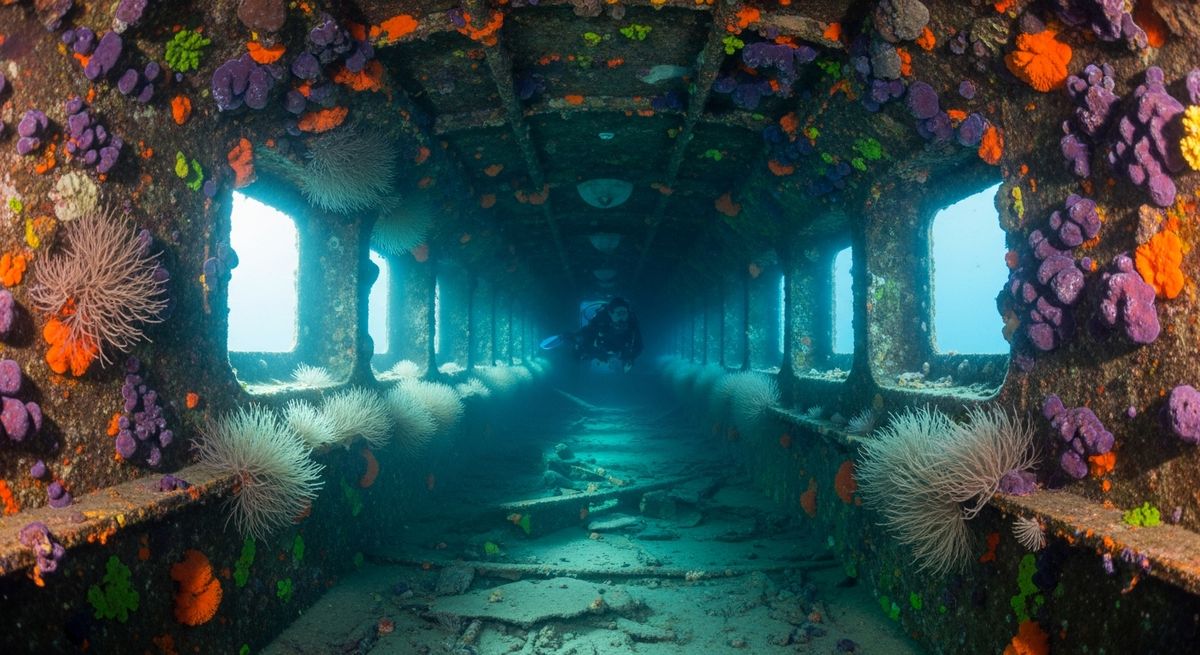
Diving the *Richard de Larrinaga* isn't about deep blue water or tropical fish; it’s about a piece of history, just below the surface. This steamship, sunk by an aerial mine in 1941, rests in a mere 6 meters, making it incredibly accessible for pretty much any diver comfortable with a drysuit and a bit of current. We love how the shallow depth means long bottom times, giving you ages to pick through the wreckage. The ship lies broken, but its sheer size is still impressive, over 126 meters long. You’ll find girders twisted like spaghetti, plates peeling back, and the exposed ribs of her hull creating dark, intriguing swim-throughs. Keep an eye out for the three massive boilers, a real highlight, often draped in dead man's fingers and home to squat lobsters tucked into every crevice. Visibility can swing dramatically with the tides and recent weather, so we always aim for slack water on a rising tide for the best chance of a clear view. It's a proper British wreck dive; gritty, atmospheric, and full of the quiet life that thrives in these cold, rich waters. Think robust crabs, blennies peering from holes, and always, always the chance of a curious seal zipping past.
Typical RICHARD DE LARRINAGA Dive Profile
Illustrative profile based on site depth and type. Actual dive profiles vary - always follow your dive computer and training.
Safety Notes
Wreck site - avoid penetration without wreck diving certification. Watch for sharp metal and entanglement hazards.
Nearest Dive Centres to RICHARD DE LARRINAGA
Dive shops near RICHARD DE LARRINAGA
Aquanorth
The Diving Centre Ltd
Sunderland Scuba Centre
Scuba-Life
Northumbria Scuba Divers
Aqua Purists
Reviews for RICHARD DE LARRINAGA
Conditions
Ocean conditions, forecast and tides for RICHARD DE LARRINAGA
Plan & book
Ways to dive Scottish East Coast & Borders, from day trips to liveaboards.
Day trips & courses
via GetYourGuideGuided dives, courses and snorkel trips with instant booking.
Find dive trips in Scottish East Coast & BordersPlaces to stay
via Booking.comHotels and dive resorts near Scottish East Coast & Borders.
Search stays in Scottish East Coast & BordersDive insurance
Most travel insurance excludes or limits scuba. Check what you need before you go.
Dive insurance explainedPartner links: we may earn a commission if you book, at no extra cost to you. How we make money
Where to Stay near RICHARD DE LARRINAGA
Prices from Booking.com. We may earn a commission at no extra cost to you.