SKULDA (POSSIBLY)
Protected Area
Inchmickery
Why dive here
With 112+ marine species recorded in the area - including dolphins, dwarf minke whales, humpback whales, ocean sunfish (mola mola) and orcas - SKULDA (POSSIBLY) offers some of Scottish East Coast & Borders's richest wreck diving.
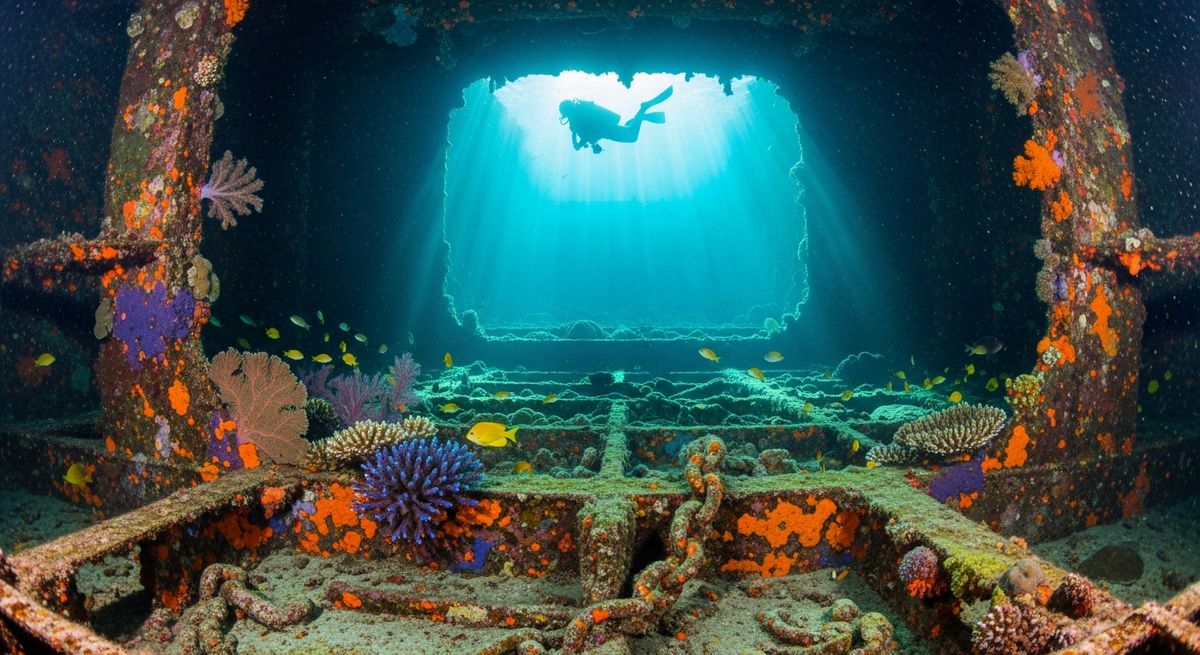
Dropping onto the Skulda, you’re hitting a piece of maritime history right off the Scottish coast. This steamship, built in Leith back in 1882, went down in 1906 and now rests at 30 metres. It’s a good-sized wreck, 69.2 metres long, so there's plenty to explore, though it’s classified as dangerous in parts, meaning overhead environments are best left to those with proper training and equipment. We’ve found the single boiler and the compound expansion engine are still pretty discernible, making for some interesting swim-arounds. The wreck has taken on an artificial reef role, attracting plenty of local fish and crabs, and the encrusting life adds a surprising amount of colour down there, a stark contrast to the often-grey Scottish water. It’s a solid dive for experienced wreck enthusiasts looking for a proper northern European wreck without too much current fuss.
Typical SKULDA (POSSIBLY) Dive Profile
Illustrative profile based on site depth and type. Actual dive profiles vary - always follow your dive computer and training.
Safety Notes
Depth of 30m - Advanced Open Water certification recommended.
Wreck site - avoid penetration without wreck diving certification. Watch for sharp metal and entanglement hazards.
Always perform a 3-minute safety stop at 5m before surfacing.
Nearest Dive Centres to SKULDA (POSSIBLY)
Dive shops near SKULDA (POSSIBLY)
Deep Sea World Aquarium
Deep Blue Scuba
Libertas Scuba Stirling
Reviews for SKULDA (POSSIBLY)
Conditions
Ocean conditions, forecast and tides for SKULDA (POSSIBLY)
Plan & book
Ways to dive Scottish East Coast & Borders, from day trips to liveaboards.
Day trips & courses
via GetYourGuideGuided dives, courses and snorkel trips with instant booking.
Find dive trips in Scottish East Coast & BordersPlaces to stay
via Booking.comHotels and dive resorts near Scottish East Coast & Borders.
Search stays in Scottish East Coast & BordersDive insurance
Most travel insurance excludes or limits scuba. Check what you need before you go.
Dive insurance explainedPartner links: we may earn a commission if you book, at no extra cost to you. How we make money
Where to Stay near SKULDA (POSSIBLY)
Prices from Booking.com. We may earn a commission at no extra cost to you.