REMUS - Tobago

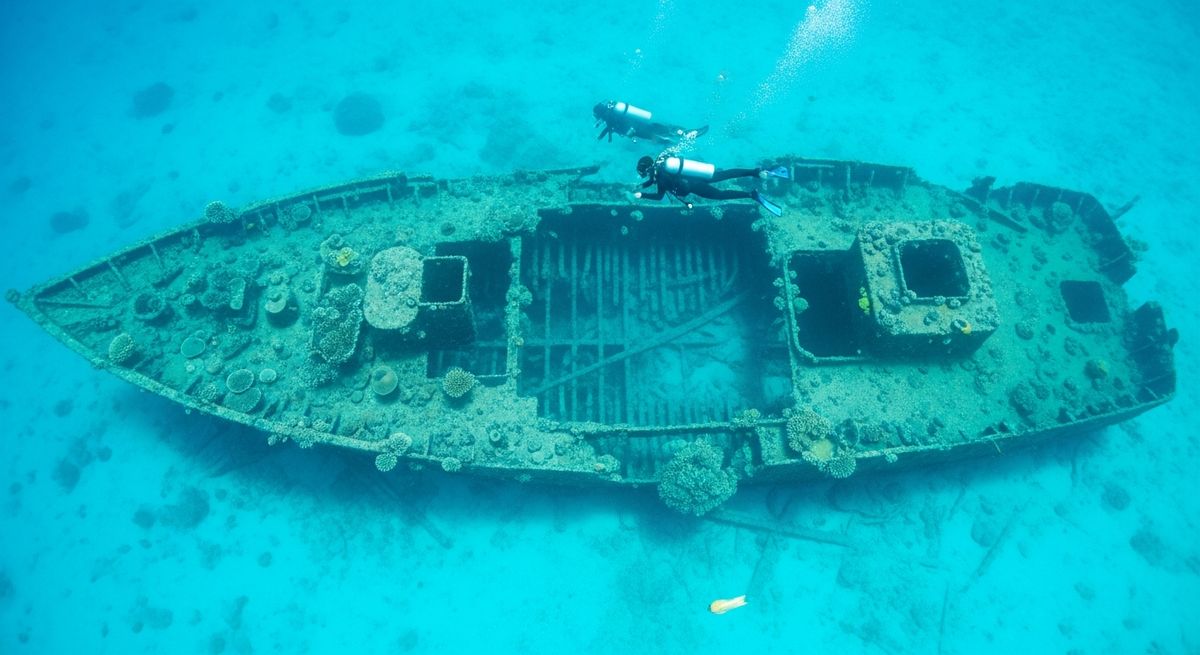
The *Remus* sits upright in just two metres of water, a real shallow-water treat if you're into history. This old carrier vessel, grounded on Darien Rock in 1968, stretches out 150 metres, creating a massive artificial reef. You'll spend your time exploring the deck, spotting lobsters tucked into crevices and parrotfish grazing on the soft corals now growing over the metal. It’s perfect for snorkelers, freedivers, or divers looking for a very relaxed second dive, especially when the light is good. Expect to see plenty of schooling fish darting through the superstructure.

Location
Tobago, Trinidad & Tobago, Caribbean
Coordinates
10.524933, -60.630050
Type
wreck
Maximum Depth
2m

Best Time to Dive in Tobago

The warmest water temperatures in Tobago occur in January, averaging 28.1°C. The coolest conditions are in December at 28.1°C.

Monthly Water Temperatures

  • January: 28.1°C (air: 24.4°C)
  • February: 28.1°C (air: 24.3°C)
  • March: 28.1°C (air: 24.6°C)
  • April: 28.1°C (air: 25.1°C)
  • May: 28.1°C (air: 25.6°C)
  • June: 28.1°C (air: 25.4°C)
  • July: 28.1°C (air: 25.4°C)
  • August: 28.1°C (air: 25.8°C)
  • September: 28.1°C (air: 26.5°C)
  • October: 28.1°C (air: 26.1°C)
  • November: 28.1°C (air: 25.3°C)
  • December: 28.1°C (air: 24.8°C)

Nearby Dive Sites in Tobago

Nearest Dive Centres to REMUS

Marine Life in Tobago

Home to 344 recorded species including 323 reef fish, 5 other, 4 whales & dolphins, 4 sharks & rays, 2 hard corals, 2 sea snails & nudibranchs.

Notable Species

Recommended Packing List for REMUS

Based on average water temperature of 28.1°C.

  • Shorty or Rashguard - warm 28°C water needs minimal exposure protection
  • Mask - essential for every dive
  • Fins
  • BCD - buoyancy compensator
  • Regulator - your most safety-critical piece of gear
  • Dive Computer - tracks depth, time, and NDL
  • Surface Marker Buoy (SMB) - essential for boat pickups
  • Dive Torch - useful for crevices and colour at depth
  • Underwater Camera - capture your diving memories

Frequently Asked Questions

What is the typical diving depth at the REMUS dive site?
The REMUS dive site is quite shallow, with a typical diving depth of 2 meters. This makes it highly accessible for many divers, offering a unique opportunity to explore a historical wreck in very shallow water. Its minimal depth provides extended bottom time for exploration.
What kind of marine life and underwater features can divers expect to see at REMUS?
The REMUS dive site is primarily known for its significant underwater feature: a large carrier vessel wreck. Divers can explore the remains of this 149.7m x 18.6m ship, which sank in 1968. While specific marine life isn't detailed in the provided data, wrecks commonly serve as artificial reefs, attracting a diverse array of species over time.
How challenging is the REMUS dive site for recreational divers?
The REMUS dive site is classified as an intermediate difficulty dive for recreational divers. It is also specifically noted as a "Dangerous wreck," indicating that divers should approach it with appropriate training and caution. This classification suggests it is best suited for divers with some experience rather than beginners.
What is the best time of year to dive at REMUS for optimal conditions?
The provided data for the REMUS dive site does not specify the best time of year for optimal diving conditions. For general guidance on diving in the region, you might consult resources on when to dive in the Caribbean or specific information for Trinidad & Tobago. We recommend checking with local dive operators for current conditions and seasonal recommendations.
Are there any specific certifications required to dive at the REMUS site?
While specific certification requirements are not explicitly listed for the REMUS site, its classification as an intermediate dive and a "Dangerous wreck" strongly suggests that divers should possess at least an Advanced Open Water certification or equivalent experience. Always consult with local dive operators in Tobago to confirm any specific prerequisites before planning your dive.
What are the usual currents and visibility conditions like at the REMUS dive site?
The available data for the REMUS dive site does not include specific information regarding usual currents or visibility conditions. For the most accurate and up-to-date details on these factors, it is always best to consult with local dive centers in Tobago before planning your dive. They can provide real-time insights into the prevailing conditions.