Thaa Atoll
Protected Area
L.Bodu Finolhu adhi Vadinolhu Kan'duolhi Sarahahdhu
Why dive here
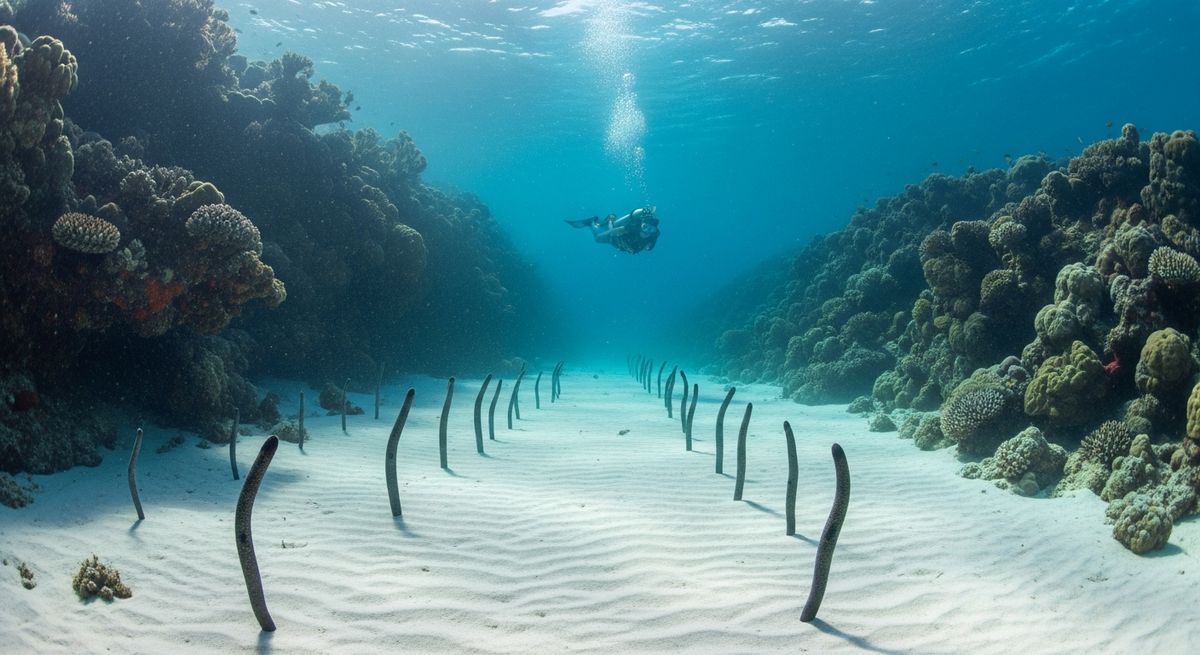
With 45+ marine species recorded in the area - including barracuda, blacktip reef sharks, blue sharks, sea turtles and whale sharks - Thaa Atoll offers some of Vaavu Atoll's richest drift diving. Water ranges 29-31°C, warmest April, May, July.
Olhugiri Kandu in Thaa Atoll is a proper channel dive, perfect for when you’re looking for a bit of a push. We've often hooked in to watch the white tips patrolling, sometimes with eagle rays cruising by in the blue. Keep an eye on the channel walls; the Napoleon wrasse here are genuinely inquisitive, often coming quite close. While Vaavu Atoll is famous for its nurse sharks, Thaa Atoll gives you a better chance of spotting whale sharks, particularly during specific seasons.
Typical Thaa Atoll Dive Profile
Illustrative profile based on site depth and type. Actual dive profiles vary - always follow your dive computer and training.
Safety Notes
Depth of 20m - Advanced Open Water certification recommended.
Drift dive - carry a surface marker buoy (SMB) and stay with your group. Brief the current direction before entry.
Always perform a 3-minute safety stop at 5m before surfacing.
Nearest Dive Centres to Thaa Atoll
Dive shops near Thaa Atoll
View all dive centres in Vaavu AtollReviews for Thaa Atoll
Conditions
Ocean conditions, forecast and tides for Thaa Atoll
Thaa Atoll Ocean Conditions
Monthly averages for Thaa Atoll, sourced from Open-Meteo marine data + Copernicus Marine (EU) - nearest station: Open-Meteo marine grid (1.8, 73.35) (23km away)
October Averages
Sea Temperature
30°C
85°F · Range: 28.5–30.9°C
Current Speed
9.85 cm/s
Direction: NE (66°)
Chlorophyll-a
0.137 mg/m³
Clear water
Salinity
35.12 PSU
Based on 4 years of monitoring data · Data sources: Open-Meteo marine data + Copernicus Marine (EU)
Plan & book
Ways to dive Vaavu Atoll, from day trips to liveaboards.
Day trips & courses
via GetYourGuideGuided dives, courses and snorkel trips with instant booking.
Find dive trips in Vaavu AtollPlaces to stay
via Booking.comHotels and dive resorts near Vaavu Atoll.
Search stays in Vaavu AtollDive insurance
Most travel insurance excludes or limits scuba. Check what you need before you go.
Dive insurance explainedPartner links: we may earn a commission if you book, at no extra cost to you. How we make money
Where to Stay near Thaa Atoll
Prices from Booking.com. We may earn a commission at no extra cost to you.