ATHENS
Protected Area
Robben island Marine Protected Area
Why dive here
With 269+ marine species recorded in the area - including blue sharks, blue whales, dolphins, dwarf minke whales and great white sharks - ATHENS offers some of Cape Town & Western Cape's richest wreck diving. Water ranges 14-16°C, warmest February, March, April.
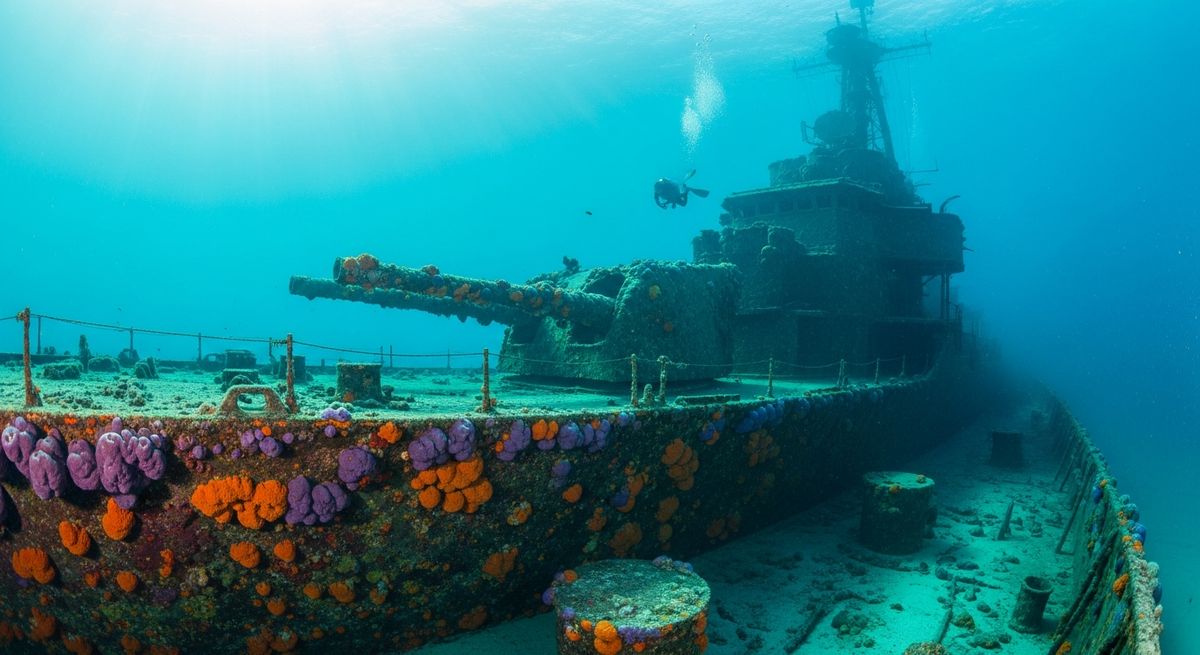
Diving the *Athens* is less about depth and more about history. You’re essentially snorkelling a time capsule here, just off the shore at Green Point. The wreck itself, a steamship that went down in 1865, sits in just two metres of water. We love the sheer accessibility; it’s perfect for a calm day when you want a casual dip with a story attached. What you'll see are the scattered remains of the hull, mostly ribbed metalwork and plating, now thoroughly encrusted. Schools of hottentot dart in and out of the skeletal frames, and we’ve spotted small octopuses tucked into crevices among the plates. The beauty is in imagining the ship’s past, the journey it made, while the cool Atlantic water washes over you. It's a fantastic spot for snorkelers, freedivers, or even just a calm surface swim, especially if you’re looking for a quick, interesting dip without the full scuba kit. Our tip? Go at high tide on a sunny day; the light penetration really makes the old iron glow.
Typical ATHENS Dive Profile
Illustrative profile based on site depth and type. Actual dive profiles vary - always follow your dive computer and training.
Safety Notes
Wreck site - avoid penetration without wreck diving certification. Watch for sharp metal and entanglement hazards.
Cold water this month (avg 15°C). Drysuit or thick wetsuit (7mm+) recommended.
ATHENS Wreck History
Year Sunk
1865
Vessel Type
passenger ship
Cause
storm
Tonnage
739 GRT
The RMS Athens was a sturdy iron-hulled screw steamer built in 1856, serving the Union Line's mail route between Southampton and Cape Town. She was a workhorse of the early steamship era, bridging continents for nearly a decade. Her final voyage ended in one of the most infamous maritime disasters in South African history.
On the evening of May 16, 1865, a ferocious north-westerly gale struck Table Bay, driving ships from their anchors. The Athens fought the storm valiantly, her engines at full power, but the anchor chains snapped one by one. Helpless against the immense waves, she was driven ashore near Mouille Point and battered to pieces by the surf, with the loss of all 29 people on board. She was one of over 15 ships wrecked in the 'Great Gale of 1865'.
Resting in just 2 metres of water, the remains of the Athens are now scattered and flattened by more than a century of relentless wave action. While not a traditional wreck dive, the site is an excellent shore dive or snorkel. Divers can explore the ship's flattened hull plates, ribs, and the distinctive block of her engine, a tangible link to a dramatic night in Cape Town's maritime past.
Nearest Dive Centres to ATHENS
Dive shops near ATHENS
Two Oceans Aquarium
Into the Blue Scuba
Coral Wetsuits
Dive Action
University of Cape Town Underwater Club
UCT Underwater Club
Reviews for ATHENS
Conditions
Ocean conditions, forecast and tides for ATHENS
ATHENS Ocean Conditions
Monthly averages for ATHENS, sourced from Open-Meteo marine data - nearest station: Open-Meteo marine grid (-33.92, 18.46) (8km away)
October Averages
Sea Temperature
15°C
59°F · Range: 12.4–17.2°C
Air Temperature
17°C
62°F
Wind Speed
7.33 m/s
14.2 knots
Atmospheric Pressure
1018.1 hPa
Based on 4 years of monitoring data · Data sources: Open-Meteo marine data
Plan & book
Ways to dive Cape Town & Western Cape, from day trips to liveaboards.
Day trips & courses
via GetYourGuideGuided dives, courses and snorkel trips with instant booking.
Find dive trips in Cape Town & Western CapePlaces to stay
via Booking.comHotels and dive resorts near Cape Town & Western Cape.
Search stays in Cape Town & Western CapeDive insurance
Most travel insurance excludes or limits scuba. Check what you need before you go.
Dive insurance explainedPartner links: we may earn a commission if you book, at no extra cost to you. How we make money
Where to Stay near ATHENS
Prices from Booking.com. We may earn a commission at no extra cost to you.